Crisp dill pickles come down to three things: trim the blossom end off every cucumber, add a measured pinch of calcium chloride to each jar, and give the brine enough 5% acidity vinegar before a water-bath process. Knowing how to make dill pickles that stay crunchy is mostly about getting those three right, because the pectin in the cucumber walls stays intact instead of breaking down into mush. The whole batch takes about two hours of active work, and most of that is waiting.
The reason this matters is that the softening enzyme in a cucumber survives canning. It keeps working in the jar, slowly dissolving the pectin that gives a pickle its snap, which is why a batch can look fine on day one and be floppy by week two. Nobody has to live with that.
The version below is the one I come back to, and it usually comes out with a clean snap that holds for months. I write the details down every time, which is why I recommend keeping a note of your own: cucumber source, cucumber size, salt measured, vinegar acidity, process time, and the date each jar went on the shelf.
Table of Contents
- What You Need
- How much calcium chloride to use
- Step-by-Step
- 1. Choose cucumbers for the best crunch
- 2. Make the salt treatment and dill brine
- 3. Pack the jars without crushing the cucumbers
- 4. Process and cool the jars safely
- 5. Give the pickles time to stay crisp
- 6. Store the finished pickles
- Common Mistakes
- Tips for Extra-Crisp Dill Pickles
- Frequently Asked Questions
- Why are my dill pickles soft?
- How long do homemade dill pickles take to become crunchy?
- Can I use rice vinegar or apple cider vinegar instead of white vinegar?
- What is the difference between refrigerator dill pickles and canned dill pickles?
- How long should homemade dill pickles last in the refrigerator?
- What signs mean homemade pickles should be discarded?
- Conclusion
What You Need
The base batch below makes about eight pint jars, and every quantity is scaled for five pounds of small cucumbers. Measure the salt by weight-volume with a level cup, and do not substitute.
- Cucumbers: 5 pounds small pickling cucumbers, 3 to 4 inches long, firm and heavy for their size. Avoid anything soft, bruised, yellowing or overmature.
- Pickling salt: 1/2 cup, plus more for the water treatment if you use one.
- Vinegar: 2 cups distilled white vinegar at 5% acidity. Check the label; anything weaker will not keep the pickles safe.
- Water: 1 cup, plus extra if your tap water is very hard.
- Sugar: 3/4 cup, which balances the acid. It is optional for pure sour pickles but it takes the sharp edge off.
- Dill: 4 to 6 heads of fresh dill with flowers, or 2 tablespoons dill seed. Fresh dill gives the classic flavor; seed is the shelf-stable option.
- Garlic: 1 to 2 whole heads, optional.
- Calcium chloride: sold as Pickle Crisp or canning calcium chloride. See the dosage table below.
- Jars: eight pint jars with two-piece lids, washed in hot soapy water and kept warm.
- Equipment: a large stainless steel or enameled pot, a canning funnel, a ladle, jar lifter, bubble remover or clean chopstick, and a rack. A water-bath canner or a pot deep enough to hold jars with 1 to 2 inches of water above the lids.
How much calcium chloride to use
This is the number beginners get wrong most often. A vague pinch turns into salty brine or a bitter jar, so measure it. The figures below are the standard amounts for calcium chloride, sold under the name Pickle Crisp.
| Jar size | Calcium chloride per jar | Approximate equivalent |
|---|---|---|
| Half-pint (8 oz) | 1/4 teaspoon | 1 gram |
| Pint (16 oz) | 1/2 teaspoon | 2 grams |
| Quart (32 oz) | 1 teaspoon | 4 grams |
If you want to compare additives, the short version is that calcium chloride firms the pectin directly, while alum does a milder version of the same job and grape or horseradish leaves work through tannins that slow the softening enzyme. Calcium chloride is the one I rely on, and the leaves are optional once the blossom end is gone.
Step-by-Step
Learning how to make dill pickles that stay crunchy comes down to a handful of details in the right order, and the order matters more than any single ingredient. Wash everything first, measure the vinegar by acidity rather than by brand, and leave the cucumber skins on. Pricking is optional and largely a safety habit; a whole cucumber packed tightly in vinegar does not need it, but slices do benefit from a quick prick so liquid reaches every piece.
1. Choose cucumbers for the best crunch
Size matters more than most people expect. Small cucumbers are cut into fewer pieces, have less exposed surface for water to move across, and heat up more evenly in the canner. If you are using a large garden cucumber, slice it and expect a softer result.
Wash the cucumbers under cool running water and scrub away any dirt. Do not soak them, because water already inside the cucumber is water that will soften it later.
Trim the blossom end, not the stem end. The blossom end is the pale, flower-scarred side opposite the stem, and the softening enzyme concentrates there. Cut at least 1/16 inch off it, or a thin coin about the thickness of a nickel. Beginners in home canning groups frequently cut the stem end by mistake and then wonder why nothing changed.
2. Make the salt treatment and dill brine
Toss the trimmed cucumbers with 1/2 cup pickling salt in a large bowl. Let them sit in a cool place for several hours or overnight, then drain them and rinse briefly in cold water. This draws excess water out of the cucumbers ahead of time, so the finished pickle sits in brine rather than in diluted cucumber juice. Skipping the treatment is the most common reason refrigerator pickles go limp in the first few days.
For the brine, combine 2 cups 5% white vinegar, 1 cup water, 3/4 cup sugar and 2 tablespoons pickling salt in a pot. Bring it to a rolling boil, stirring until the salt and sugar dissolve, then reduce the heat and keep it warm while you pack the jars.
Two rules here. Use pickling salt, not iodized or table salt, because the anti-caking additive clouds the brine and darkens the cucumbers. And never use a potassium chloride salt substitute, which causes bitterness no amount of extra vinegar will fix. If your tap water is hard, swap in distilled or purified water, since minerals in hard water leave a slightly slimy cucumber.
3. Pack the jars without crushing the cucumbers
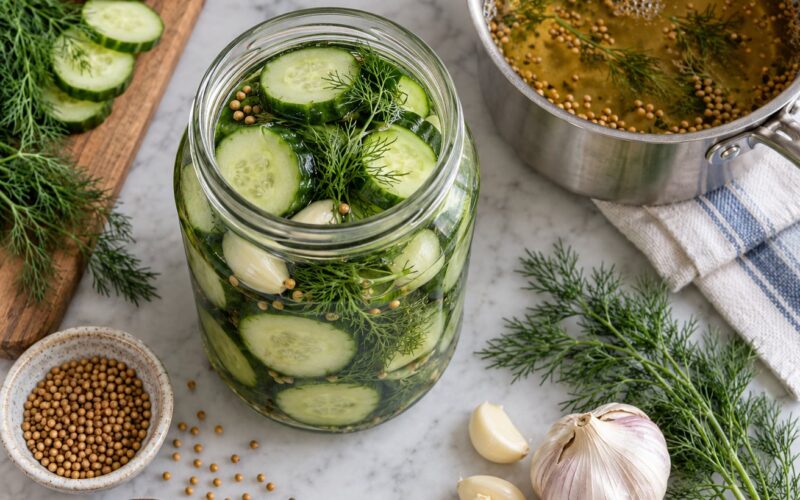
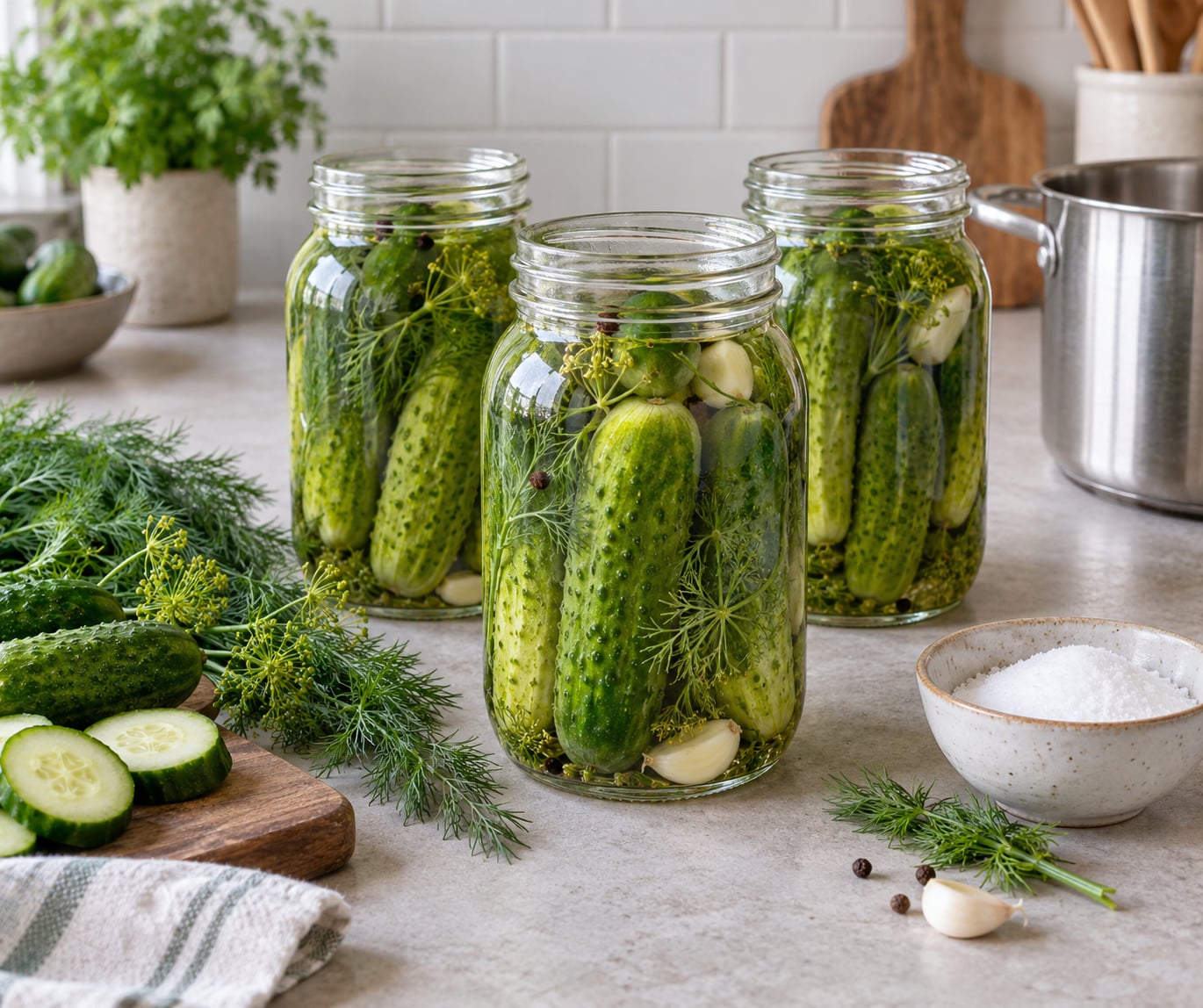
Place dill and garlic at the bottom of each hot jar, then pack the cucumbers in as tightly as you reasonably can. Tight packing keeps the cucumbers from floating up into the head space, and floating cucumbers sit above the brine and turn soft and discolored.
Add the measured calcium chloride to each jar before the cucumbers go in, so it dissolves evenly rather than settling at the bottom. Ladle the hot brine in until the cucumbers are covered and leave 1/2 inch of head space, which the vacuum needs as the jar cools. Then run a clean chopstick or bubble remover around the inside of the jar to release trapped air, wipe the rim with a damp paper towel, and screw the band on until it is snug and fingertip tight.
A properly packed jar looks like the cucumbers are fully submerged, the brine is clear, and there is a consistent half inch of empty glass at the top. Mushy batches usually show one of three things: visible air pockets, cucumbers stacked above the brine line, or a jar packed so loosely that the pieces drift.
4. Process and cool the jars safely
Use a water bath and nothing else. Pickles are an acidified food, and a pressure canner runs hot enough to cook cucumbers into paste. This is the number one beginner mistake in home canning forums, and it is not a preference, it is a mistake. Never pressure can pickles.
Set the jars on a rack in the canner, bring the water to a boil and process at a rolling boil for the time the tested recipe specifies. For acidified pickles, that is typically 10 minutes for half-pint and pint jars and 12 minutes for quart jars. If you live above 1,000 feet, add time according to the current altitude chart from the National Center for Home Food Preservation or the USDA Complete Guide to Home Canning, since boiling point drops with altitude and the processing time has to grow.
Start the timer when the water returns to a rolling boil, not when you lower the jars in. When time is up, turn off the heat, wait five minutes, and lift the jars out. Let them cool 12 to 24 hours on a towel, untouched. Check the seals by pressing gently on the center of each lid; a good seal does not flex, and a jar that fails the test goes straight into the refrigerator rather than the pantry.
Refrigerator pickles skip all of this. Pour the same brine over the cucumbers in a clean jar, cool it, and refrigerate. Those pickles are not shelf-stable and must stay cold from that point forward. They keep well over a period of weeks, and they stay crisper than canned pickles because they never take heat at all.
5. Give the pickles time to stay crisp
Fresh pack pickles, packed with hot brine and processed, are crisper right out of the canner than cold pack pickles, where the brine and cucumbers go in room temperature. With a calcium chloride treatment in the jar, the crunch holds through the first year in a cool, dark pantry, and it fades slowly after that.
Expect the color to shift from fresh green toward an olive or yellow-green as the pickles sit. That is normal and it is the vinegar reacting with the chlorophyll, which is also why white vinegar keeps the color truer than cider vinegar. The brine may go faintly cloudy from calcium and pectin, which is expected. What should not change is the bite.
If the flavor tastes flat after three weeks, give it more time. Dill and garlic keep developing for a month or two, and many people give up on a batch long before it tastes like the jar they remember from childhood.
6. Store the finished pickles
Sealed jars go in a cool, dark pantry or cellar away from heat and direct sun, with the bands still on. Expect the crunch to hold a year or more in a proper tested canned pickle, with gradual softening after that. A home refrigerator runs warmer than a cellar, and jars stored in a refrigerator will be good for well under a year, so move sealed jars to the coolest dark space you have.
Refrigerator pickles keep about two to three months in the fridge, sometimes longer, as long as they stay submerged in brine. Top the brine back up with cooled brine or plain water if it drops below the cucumbers.
Discard the whole jar if the lid is unsealed and bulging, if brine is spurting or fizzing when opened, if a film or white fuzzy growth appears below the brine line, or if the pickles smell of nothing but nail polish remover. Salt preserves food well enough that spoilage is rare, but botulism shows up in home-canned food and the smell test is not a substitute for caution. If in doubt, throw it out. An already-soft batch cannot be re-crisped, but it is usually still fine to eat if nothing above applies; drain it, chop it, and turn it into a relish rather than a pickle.
Common Mistakes
Almost every limp jar traces back to one of the rows below. The National Center for Home Food Preservation publishes this same problem and cause pairing, and it matches what home canners describe in the forums.
| Problem | Likely cause | Fix |
|---|---|---|
| Soft or slippery pickles | Blossom end not trimmed, or cucumber was already overmature | Cut at least 1/16 inch off the blossom end and use small, firm cucumbers |
| Soft or slippery pickles | Overprocessing, or pressure canning used by mistake | Water bath only, for the tested time, no extra minutes |
| Soft or slippery pickles | Soft or hard tap water, or no salt treatment before brining | Use distilled water and salt the cucumbers for several hours first |
| Shriveled pickles | Brine too weak or too little of it | Measure vinegar at 5% acidity and cover cucumbers fully |
| Strong bitter taste | Too much pickling salt, or a potassium chloride salt substitute | Measure salt by cup, and skip salt substitutes entirely |
| Cloudy brine or dull color | Table or iodized salt, hard water, or ground spices | Use pickling salt, distilled water, and whole spices in a spice bag |
| Floating cucumbers | Loose pack, or not enough head space management | Pack tightly, leave 1/2 inch head space, remove air bubbles |
| Pickles too bitter overall | Dill seeds or spices used at heavy doses | Use a small quantity of whole dill seed and taste-test first |
One more worth naming, since it comes up constantly: a batch that tastes fine at packing and turns unpleasant later usually sat too long before processing. Pickles are not a project for a warm afternoon you keep meaning to finish.
Tips for Extra-Crisp Dill Pickles
- Match the cucumber to the cut. Whole small cucumbers in a quart jar come out crunchiest. Slices soften faster because they expose far more cut surface to the brine.
- Skip the Burpless variety. Slicing cucumbers including many Burpless types carry a softening enzyme and turn limp quickly, especially in fermented pickles.
- Keep the brine hot, not boiling. Once the brine reaches a boil, turn it down to a warm simmer while you pack. A rolling boil cooks the cucumbers before they ever reach the jar.
- Dose calcium chloride with a measuring spoon. The difference between 1/2 teaspoon and a heaping teaspoon is the difference between crisp pickles and a jar you cannot eat.
- Use white vinegar. Distilled white vinegar at 5% acidity holds the color best. Cider and rice vinegars will pickle fine but the pickles turn tan faster.
- Grape leaves are optional. University extension services note that once the blossom end is removed, the tannin leaves add less than most recipes suggest. They are a nice extra, not the fix.
- Label with the date and the method. Write the process time and the packing date on the lid with a marker. Crunch questions a year from now get answered instantly.
Frequently Asked Questions
Why are my dill pickles soft?
Soft dill pickles almost always trace back to the cucumber’s blossom end, which carries a softening enzyme that survives canning and slowly breaks down the pectin giving the pickle its snap. Trim at least 1/16 inch off the blossom end, not the stem end. Other causes include overprocessing, using a pressure canner by mistake, soft or hard tap water, and skipping the salt treatment that draws excess water out first.
How long do homemade dill pickles take to become crunchy?
Refrigerator pickles feel crunchiest after two to seven days, once the brine has fully penetrated the cucumber. Canned pickles are crisp when they come out of the canner and stay that way, because processing firms the pectin before the jar cools. Either way, if pickles are still limp after a week, the cause will not fix itself later, so check the blossom end, the process time and the water you used.
Can I use rice vinegar or apple cider vinegar instead of white vinegar?
You can, as long as the vinegar is 5% acidity and you are not relying on the pickle for long-term pantry storage of a tested recipe. Cider vinegar turns the pickles a darker tan color faster, and rice vinegar is milder, so both need the salt and sugar levels adjusted to taste. For water-bath canning, follow a tested recipe that was developed for that vinegar, or use distilled white vinegar.
What is the difference between refrigerator dill pickles and canned dill pickles?
Refrigerator pickles are packed with brine but never processed, so they must stay refrigerated and are not shelf-stable. Canned dill pickles go through a water bath, which makes them safe for pantry storage and tends to leave them slightly softer at first but stable for a year or more. Refrigerator pickles usually have the crisper texture because they never take heat.
How long should homemade dill pickles last in the refrigerator?
Refrigerator dill pickles keep about two to three months when they stay covered in brine, and often longer if the cucumbers were salted first and the jar was handled cleanly. Sealed water-bath jars should not be refrigerated for storage, because a cool refrigerator is not the same as a controlled pantry environment. Keep the cucumbers submerged and top the brine back up if it drops.
What signs mean homemade pickles should be discarded?
Discard the jar if the lid is unsealed and bulging, if brine sprays or fizzes when opened, if you see a film or white fuzzy growth below the brine line, or if the smell is only nail polish remover. A soft or mushy pickle on its own is a texture problem, not a safety problem, provided the seal held and no spoilage signs are present. When in doubt, throw it out.
Conclusion
Start with small, firm cucumbers and cut at least 1/16 inch off the blossom end, then measure your brine, use 5% acidity vinegar, and follow a tested water-bath process without a pressure canner anywhere near it. If you want to know how to make dill pickles that stay crunchy without guessing, those four steps do most of the work. Add the measured calcium chloride and the crunch holds. Everything else on this page is a refinement on those four steps.
Write down what you did this year: the cucumber size, the vinegar, the salt, the process time and the packing date. Next season you will know exactly which change helped, and the batch that stays crisp becomes the one you make by feel instead of by guesswork.