The single best habit is a freezer scrap bag: drop every peel, stem, stalk and end into a labeled bag as you cook, then simmer the bag’s contents in water for about three hours whenever it fills up. That one system turns scraps you used to lose into stock, sauces, snacks and compost, without buying anything extra.
Most people don’t need a compost bin to make this work. They need a bag in the freezer and twenty minutes on a weekend. The whole approach takes about five minutes a day of collection and one cooking session a month.
Table of Contents
- What You Need
- Step-by-Step: How to Use Vegetable Scraps Instead of Throwing Them Away
- 1. Separate the Scraps You Can Use From the Ones You Should Discard
- 2. Give Stems, Peels, and Ends a Quick Rinse
- 3. Freeze Scraps Until You Have Enough
- 4. Make Vegetable Scrap Stock
- 5. Turn Scraps Into Meals, Sauces, and Seasonings
- 6. Compost Only What Cannot Be Reused
- Common Mistakes
- Tips for Using Every Healthy Scrape
- Frequently Asked Questions
- How long can vegetable scraps be stored before making stock?
- Can carrot, onion, and celery peelings be used in vegetable stock?
- Is vegetable scrap stock as nutritious as a traditional stock?
- Can cooked vegetable leftovers be composted?
- Which vegetable scraps should never be reused or composted?
- Can I freeze vegetable scraps individually instead of collecting them together?
- Conclusion
What You Need
You need less than most people expect. Here’s the short list:
- A clean cutting board and a sharp knife, so you cut produce into pieces small enough to cook through quickly.
- A large stockpot, ideally 6 quarts or bigger, plus a fine-mesh strainer for the finished stock.
- A stack of freezer bags or a single lidded container that sits in the freezer door, where you’ll actually see it.
- Glass jars or containers with lids for storing cooked stock in the fridge.
- An airtight countertop compost bin for the scraps that genuinely cannot be cooked.
A permanent marker matters more than it sounds. Write the date on every freezer bag, because an undated bag in a freezer is a bag you eventually toss.
Step-by-Step: How to Use Vegetable Scraps Instead of Throwing Them Away
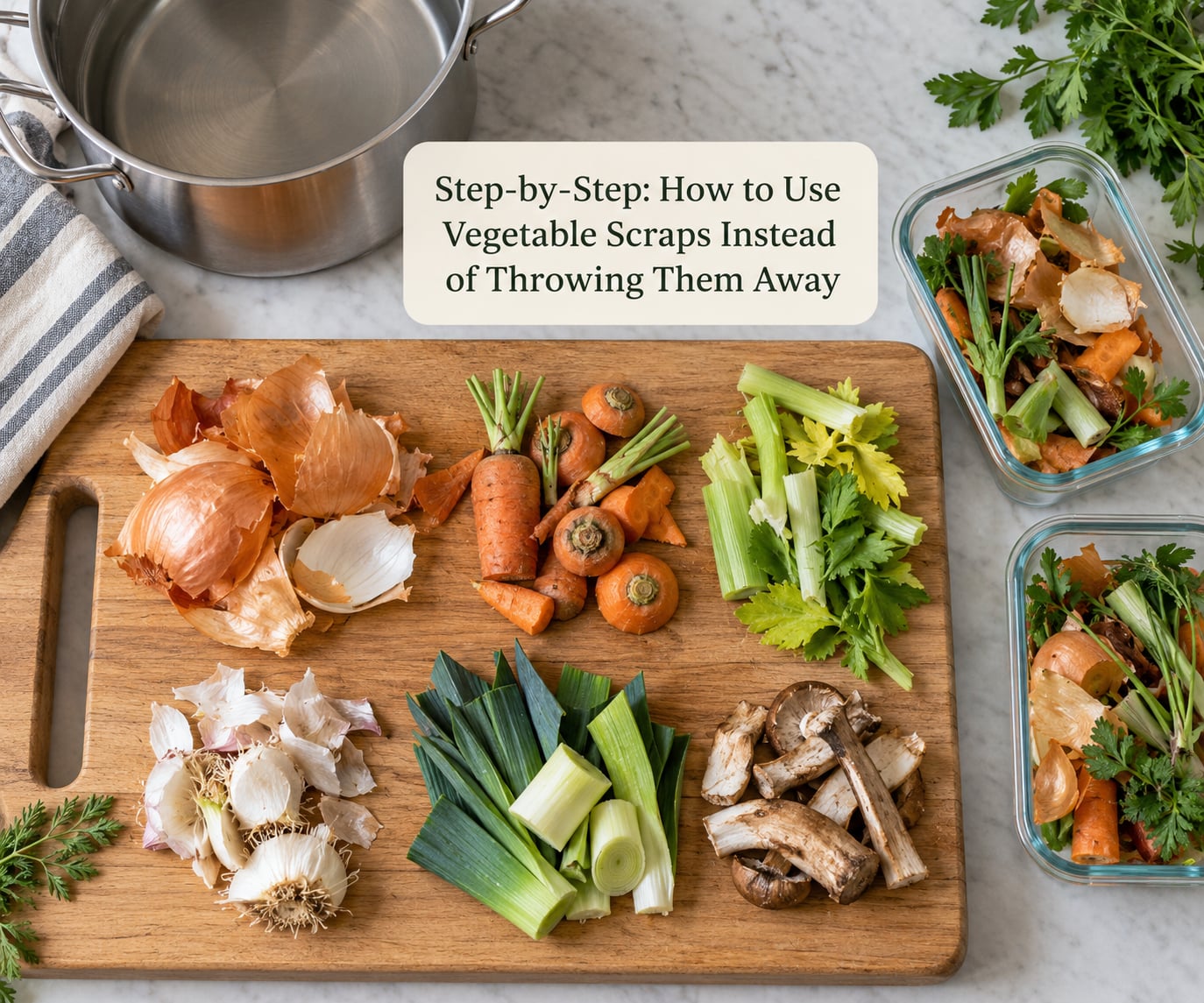
1. Separate the Scraps You Can Use From the Ones You Should Discard
Sort as you go, not at the end of the week. Fresh trimmings from produce you just bought are almost all usable, and cooked vegetables from a finished meal are usually usable too if they came out of the fridge within a few days.
Send these to the trash instead: anything moldy, slimy, or leaking; produce that sat at room temperature for more than a couple of hours; and leafy greens with a blackened edge. Soft is fine. Smelly and fuzzy is not.
Two items never go in stock, a pan, or a salad. Rhubarb leaves are toxic because of their oxalic acid content, and the pits inside cherries, peaches, plums and apricots contain amygdalin, which releases cyanide when crushed. Skip both entirely, and never feed them to a dog.
2. Give Stems, Peels, and Ends a Quick Rinse
Rinse firm scraps under cool running water and rub away any dirt. Trim off bruised spots with your knife rather than trying to wash them clean.
Skip the soap and skip the soaking. A long soak in water makes watery vegetables waterier, and they’ll thin out your finished stock. Delicate things like fresh herbs and salad greens need only a shake and a pat dry with a towel.
3. Freeze Scraps Until You Have Enough
Two or three carrot ends will not make a pot of stock, and this is where most people quit. Freezing solves that. Toss scraps into a bag as you cook dinner, squeeze out the air, seal it flat and write the date across the top.
Frozen scraps keep about three to six months, and in my experience they cook down to nothing softer and more flavorful than fresh ones. Use a bag inside three months if you can. After six, or if the bag smells sour when you open it, it goes to compost rather than the pot.
One thing to watch: watery vegetables. Cucumber, zucchini, tomato and eggplant release a lot of water as they thaw, and a bag full of them makes thin, watery stock. Keep those for sauces and cooked dishes instead, and let watery scraps drain in a colander before they go in the freezer.
4. Make Vegetable Scrap Stock
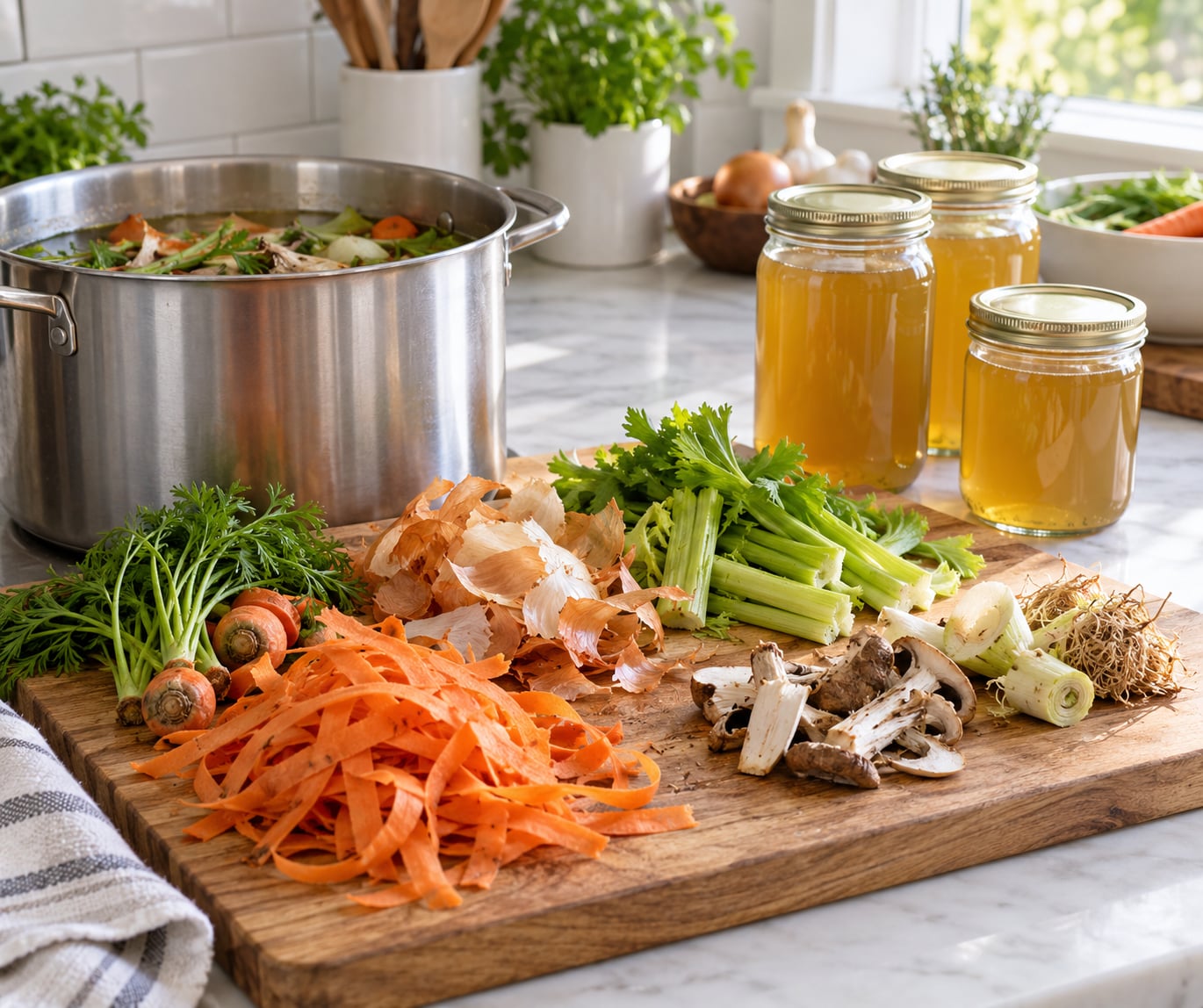
Empty the bag into a pot. Cover everything with cold water by about two inches, add a couple of bay leaves and a teaspoon of salt, then bring it to a bare simmer.
Hold it there for roughly three hours, uncovered. Skim the foam that rises in the first fifteen minutes, and don’t boil hard the whole time or the stock turns cloudy and bitter. A lid tipped slightly ajar works well.
Working combinations are simple and forgiving:
- Carrot ends, celery leaves, onion skins and pepper tops for a balanced everyday stock.
- Corn cobs, leek greens and celery ends for a sweeter, summery broth that makes excellent risotto.
- Mushroom stems, garlic cloves and tomato ends for a deeper, saucier version.
- Broccoli stalks and potato peelings, both of which add real body and starch.
Strain through a fine mesh and funnel into jars. Refrigerated stock keeps three to four days; freeze it in portions for two to three months. A pressure cooker cuts the simmer down to about 45 minutes and gives you a deeper flavor, because the higher temperature pulls more out of the tough stems.
This is the route most home cooks land on because it needs no extra time, no special equipment and no extra ingredients. In r/Cooking, the pattern people repeat most often is saving every scrap for broth rather than trying to cook from them directly.
5. Turn Scraps Into Meals, Sauces, and Seasonings
Stock is the priority, not the only option. Once a batch is in the freezer, you have room to give the nicer-looking scraps somewhere better.
| Scrap | Where it goes | How to use it |
|---|---|---|
| Carrot and celery peels | Roasted snack | Toss with oil and salt at 425 F until curled, about 12 minutes |
| Celery leaves and leek greens | Stock, pesto, chimichurri | Blend with olive oil and lemon, or shred into soup |
| Broccoli and cauliflower stems | Frittata, fritters | Grate raw into eggs, or slice thin and saute |
| Potato peelings | Crisps, stock | Bake thin-sliced peels until they snap |
| Onion skins | Stock, infused oil | Simmer into broth, or steep in warm oil |
| Corn cobs | Stock | Simmer alone for a lightly sweet broth |
| Radish, beet and carrot tops | Chimichurri, tabbouleh, saute | Chop and dress with lemon and olive oil |
| Citrus peels | Zest, marmalade, quick pickle | Dry the peel, zest it, or brine it |
| Watermelon rind | Pickled rind | Slice thin and boil briefly before pickling |
Broccoli stems and celery ends are the most underrated. Grate them straight into a frittata, or slice them thin and let them hit a hot pan with olive oil for three or four minutes. r/foodwaste readers regularly report that carrot, beet and radish peels add genuine flavor to soups and stocks rather than tasting like leftovers.
For soft leftovers from the fridge, the same logic applies with a shorter timeline. Cooked vegetables keep three to four days refrigerated, and users on r/Frugal routinely turn a pile of softening veg into curry, soup, stew, pasta sauce or fried rice depending on what’s in the cupboard.
Two more options worth knowing. Shredded cabbage and carrot peel make quick pickles in a half-and-half vinegar brine with a spoon of sugar, and a few days in the fridge. Toasted squash, pumpkin and melon seeds dry well on a baking sheet and keep for weeks, which matters for anyone already buying those fruits whole.
6. Compost Only What Cannot Be Reused
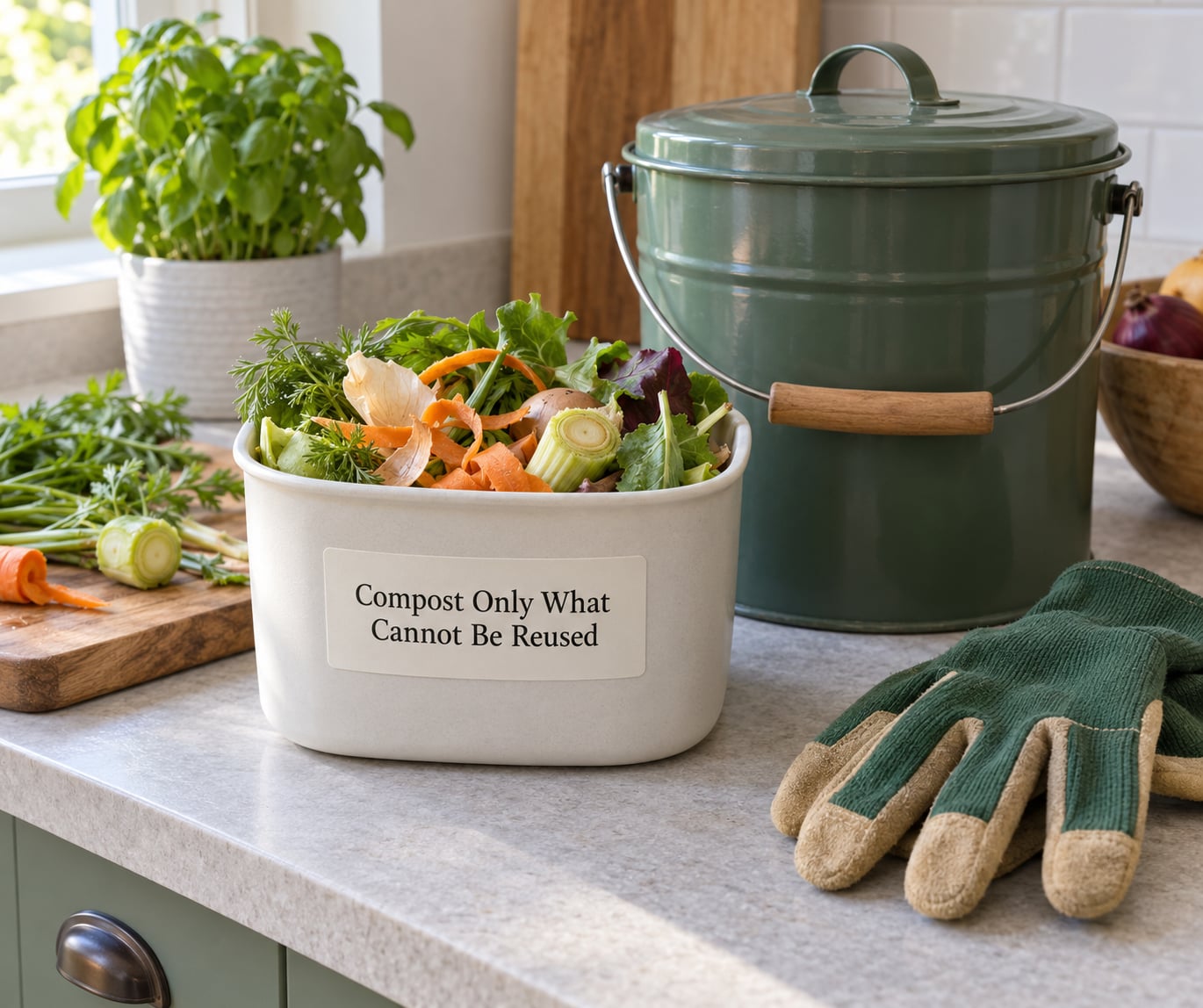
Composting is the correct last stop for the true leftovers, not the first one. If you’ve already frozen a scrap, used it for stock, or cooked it into a sauce, it isn’t compost, it’s food.
Skip the compost bin for anything oily or cooked in fat. Bones, cheese, meat, dairy and oily scraps attract pests and smell in a basic pile, and they break down far too slowly for most home systems. Rhubarb leaves and stone fruit pits stay out for the safety reasons above.
If you have no bin and no yard, most cities now run curbside organics collection, often in a compostable bag your waste hauler supplies. Check your hauler’s rules before you start, because some still exclude animal products and some require a separate bin. Without either, the honest answer is that a small amount of soft, uncooked vegetable matter going in the trash is a reasonable outcome.
Common Mistakes
Using scraps that have gone bad is the one that actually matters. If it smells off, has fuzz, or has sat out for hours, it goes in the trash no matter how much waste it feels like. Stock is not a way to rescue spoiled food.
Simmering for twelve to twenty-four hours is the other big one. Long cooking pulls bitterness out of stems and peels and clouds the broth. Three hours at a bare simmer is the sweet spot, and pressure cookers do it in under an hour.
Unsealed freezer bags lose their shape and their contents get lost in a freezer burn. Seal them flat, press the air out, date them, and keep them in the door where you’ll see them.
Then there’s confusing vegetable stock with meat stock. Vegetable stock has no gelatin, so it won’t set in the fridge, and a carton marketed as broth was made with actual meat. Use yours for soups, sauces and grains rather than expecting it to behave like a bone broth.
Finally, don’t skip prep out of laziness. Scraps straight from the garden can carry soil, and scraps straight from the fridge can carry everything else in the crisper.
Tips for Using Every Healthy Scrape
Keep one bag, not five. A single freezer bag you fill every night gets cooked; four bags slowly rotating in the back of the freezer get forgotten.
Cook the oldest bag first, not the newest. Date them for exactly this reason, and check the door of the freezer on Sundays when you’re already in there.
Strain your finished stock twice if clarity matters to you. A second pass through a clean fine-mesh strainer catches the fine pulp that makes homemade stock look cloudy in a bowl.
Carrot peels and onion skins are worth a dedicated roast. Toss them with oil and salt at 425 F, and they turn crisp in about twelve minutes, which is the snack my kids actually ask for.
Make one batch of quick pickles or dried zest a month. It’s the habit that keeps stock week from being the only thing on the list.
Frequently Asked Questions
How long can vegetable scraps be stored before making stock?
Fresh scraps stay usable in a sealed bag in the fridge for about two days. Frozen, they keep three to six months, with three months giving the cleanest flavor. Cooked vegetable leftovers keep three to four days refrigerated. If a freezer bag smells sour when opened, or is older than six months, compost it instead of cooking it.
Can carrot, onion, and celery peelings be used in vegetable stock?
Yes, and they are the backbone of a good stock. Carrot and celery peels add sweetness and body, and onion skins add a rounded savoriness most people think only comes from the bulb. The one exception is onion skins that have been burned or heavily soiled, which taste acrid.
Is vegetable scrap stock as nutritious as a traditional stock?
It carries the same minerals and some vitamin C from the vegetables, but noticeably less gelatin and less protein than a bone broth, because vegetable scraps contribute little collagen. That makes it excellent for soups, sauces, grains and risotto. If you need the body of a traditional stock, cook it longer or add a handful of dried seaweed.
Can cooked vegetable leftovers be composted?
Small amounts of cooked vegetables are fine in a compost pile, but skip anything oily, sauced, cheesed, or meat-based, since those attract pests and break down too slowly. Clear cooking liquid from the container first so it doesn’t sour the pile. In a worm bin, stick to uncooked fruit and vegetable scraps, since cooked foods can heat up enough to harm the worms.
Which vegetable scraps should never be reused or composted?
Never use rhubarb leaves, which are toxic from oxalic acid, and never crush or eat the pits from cherries, peaches, plums and apricots, which contain amygdalin. Avoid any scrap that is moldy, slimy, or has sat at room temperature for hours. Cooked scraps with oil or dairy belong in the trash, not a basic home compost pile.
Can I freeze vegetable scraps individually instead of collecting them together?
You can, but single-scrap bags take far more freezer space and rarely hold enough for one batch. Freezing them together in a dated freezer bag is the method most home cooks land on. If you prefer separation, freeze in small silicone cubes on a tray, then transfer the frozen cubes to one bag, which keeps watery vegetables from melting into everything else.
Conclusion
Start tonight: put a labeled bag in the freezer and drop in the clean ends, peels and stalks from dinner. Keep anything moldy or spoiled out of it. When the bag has enough in it, simmer it for three hours and you’ve got stock you made from food you’d otherwise have paid to throw away.