Bringing a cooler to the farmers market is simple once you treat it as a small cold chain: chill everything at home, load more cold source than feels necessary, keep the lid shut and the cooler in shade, and unpack it the minute you get home. The whole job takes about 15 minutes the night before plus five minutes each side of the market.
The reason it matters is arithmetic. Bacteria can double roughly every 20 minutes in the danger zone between 40°F and 140°F, and the standard two-hour rule for perishables out of refrigeration shrinks to one hour once the air temperature passes 90°F. A cooler that sits in direct sun at a July market is not just holding your cheese warm; it is running out that clock.
This guide covers both halves of the market: vendors hauling a day of stock in a car, and shoppers who want raw chicken and greens to survive the trip home. Nothing here needs electricity.
Table of Contents
- What You Need
- Step-by-Step: How to Bring a Cooler to the Farmers Market
- Choose the right cooler for the trip
- Pre-chill and pack the cooler before leaving
- Separate foods by temperature and type
- Fill the cooler in the order you shop
- Keep the cooler cold and unpack it quickly at home
- Common Mistakes
- Not enough cold source
- Raw meat left unsealed
- Overpacking with no air circulation
- Leaving the cooler in direct sun
- Opening it constantly
- Putting warm food back into a cooler that already gave up
- Frequently Asked Questions
- How long can food stay cold in a cooler at the farmers market?
- Do I need a separate cooler for raw meat and seafood?
- How much ice should I put in a cooler for a farmers market trip?
- Can I use a regular picnic cooler to transport market groceries?
- How should I transport frozen food home from the market?
- What should I do if food in the cooler is still warm when I get home?
What You Need
The gear list is short, and every item on it solves a specific failure. Most people start with the cooler and then improvise the rest, which is where meltwater and warm food come from.
- A leak-resistant cooler with a tight-fitting lid. A gasketed hard-sided cooler beats an open camp cooler because cold sinks. For a shopper carrying two bags of groceries, an insulated tote with a zip closure works fine.
- More cold source than you think. Frozen gel packs, frozen water bottles, or bagged ice. Plan on roughly a quarter of the cooler’s volume per person-hour of market time.
- A towel or absorbent mat. Loose ice melts into water, and that water turns packaging soggy and unsellable. Gel packs and frozen bottles eliminate the problem entirely.
- Separate leak-proof containers. Raw poultry, ground meat, whole cuts, and seafood each get their own sealed bin. Produce and ready-to-eat items need their own space too.
- An instant-read food thermometer. Guessing is the most common reason vendors find out too late that their cooler gave up at 1 p.m.
- A cooler riser or bench. Many health departments require food holding containers to stay at least 12 inches off the ground, and lifting at waist height beats crouching into a cooler all day.
Step-by-Step: How to Bring a Cooler to the Farmers Market
Choose the right cooler for the trip
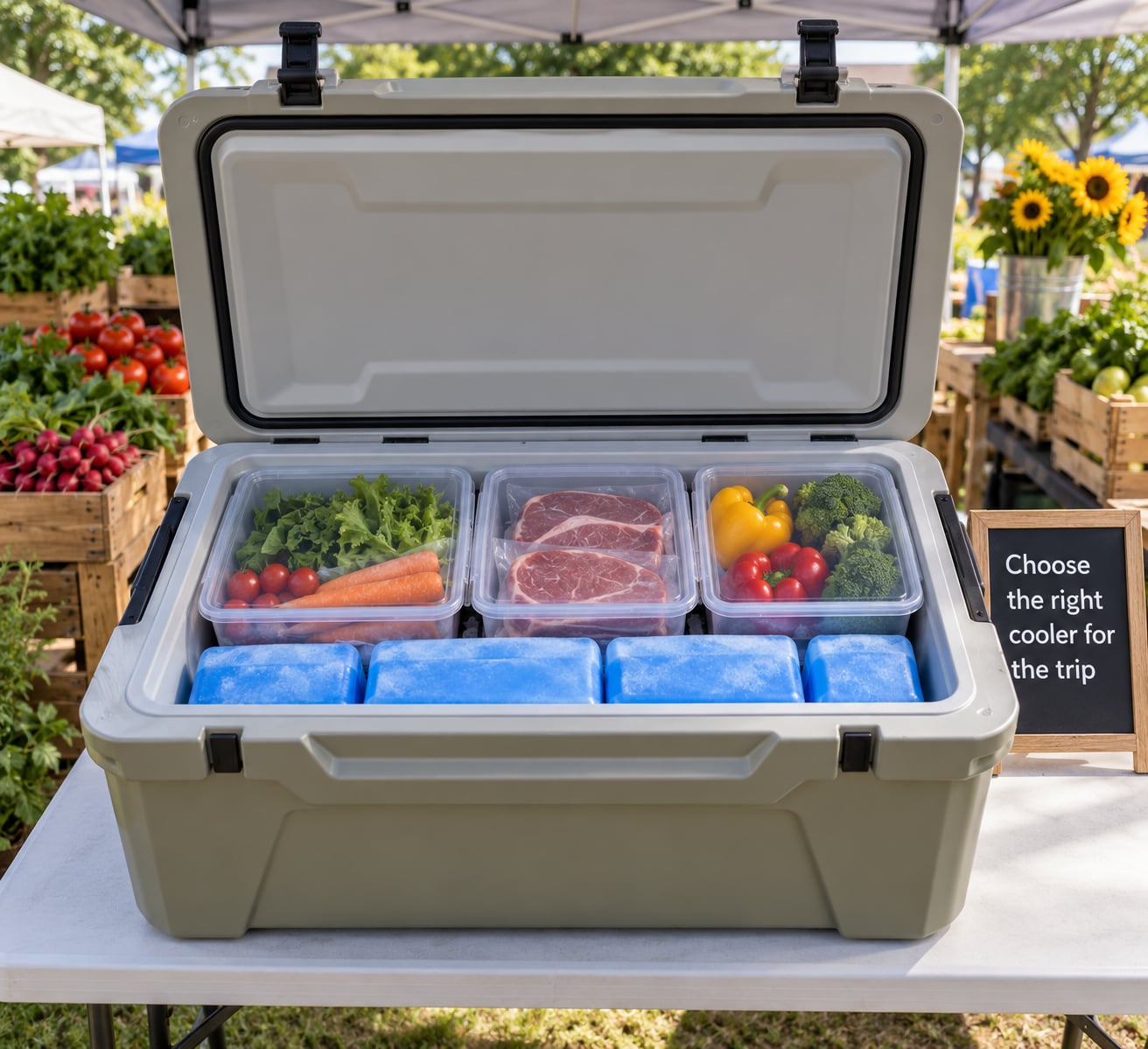
Match the cooler to what you are moving, not to how much you hope to buy. A shopper walking the loop with eggs, a bundle of greens, and a wrapped steak needs a soft-sided tote or a small hard cooler and one or two frozen packs. A vendor moving a full day of meat or frozen prepared food needs a heavy-duty hard cooler with a gasketed lid, and room for a second one for rotation.
Insulation thickness matters more than volume. A well-insulated cooler packed completely full holds cold noticeably longer than a bigger cooler half empty, because there is less air space for warmth to fill.
Pre-chill and pack the cooler before leaving
Coolers maintain temperature; they don’t bring it down. A warm product dropped into a cold cooler will sit in the danger zone long enough to be a problem, so chill the food in your refrigerator overnight and set the empty cooler out with the lid closed before you pack it.
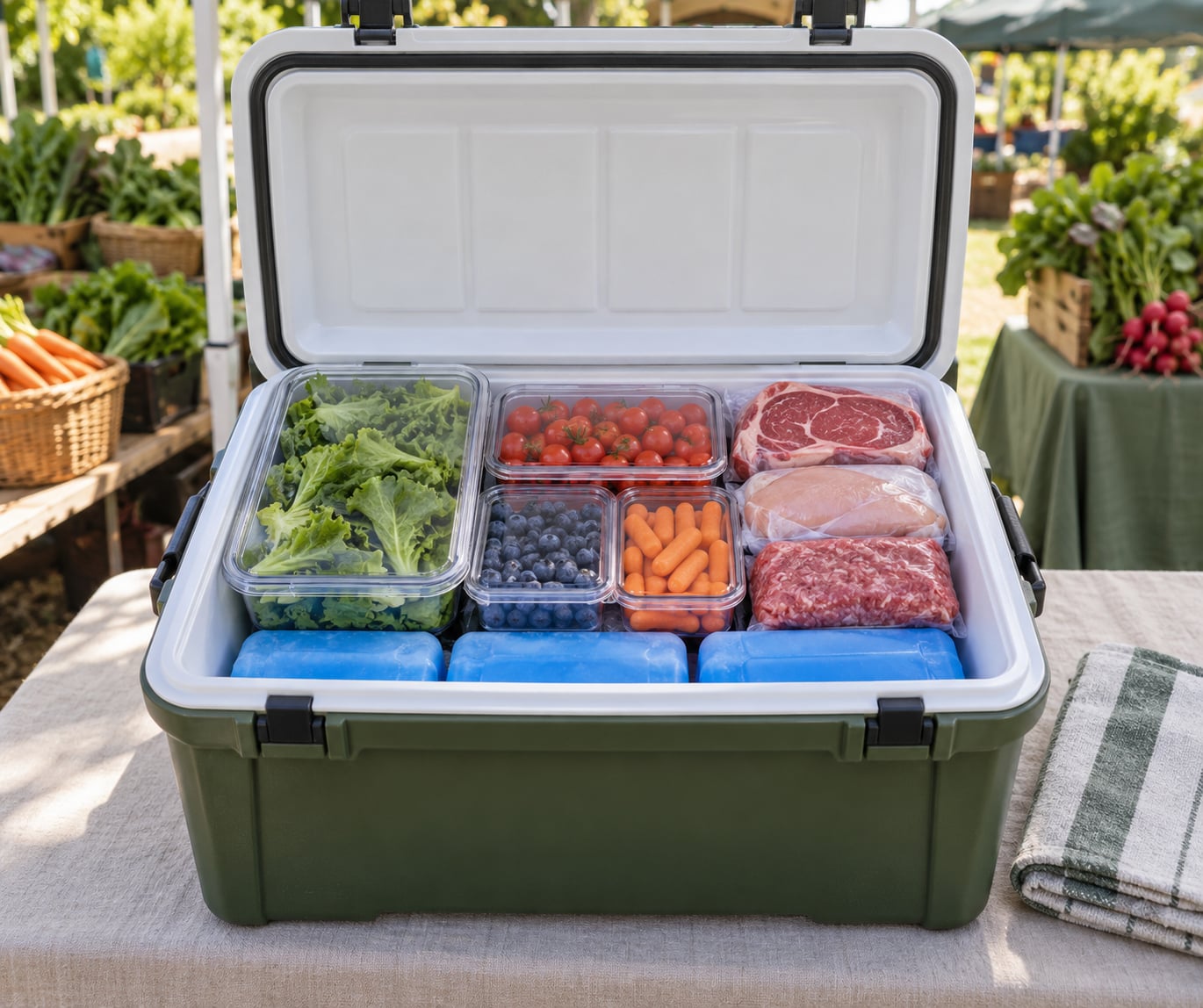
Load cold sources at the bottom, sealed containers in the middle, and leave a hand’s width of air space at the top for what you pick up at the market. Put the coldest, most sensitive items against the frozen packs.
Back at the vehicle, the cooler rides inside the air-conditioned cabin. A hot trunk or truck bed works against you the entire drive.
Separate foods by temperature and type
Raw poultry and ground meat go in their own sealed container, below anything that will be eaten ready-to-eat. Whole cuts of beef, pork, and lamb can share a bin, and seafood should be separate from red meat if you can manage it.
Produce, herbs, and cut flowers need protection from bruising and contact with meltwater, not just cold, so pack them in rigid bins rather than loose plastic bags. Bakery items, jams, honey, and other cottage food products are usually shelf-stable, which makes them the easiest thing to display and the safest to rotate from.
Frozen items deserve their own frozen pack budget. If they are going straight into a home freezer, they can ride on top with a frozen bottle pressed against them.
Fill the cooler in the order you shop
Buy first the things that tolerate warmth: canned goods, dry goods, sturdy squash, potatoes, and anything shelf-stable. Then move to the protein counter and the dairy case, and get those into the cooler right away rather than carrying them around the market while you keep browsing.
Keep the cooler with you, closed, in the shade. If you are driving home after shopping, load the car so the cooler is the last thing out and the first thing in.
Keep the cooler cold and unpack it quickly at home
At the booth, set the cooler in shade, not in direct sun, and keep the lid closed as the default state. Open it to restock in small batches rather than browsing through it. The cooler-community rule of thumb is cold source at the bottom, food in the middle, and a towel or ice on top, and that order holds up.
Read the temperature at least twice during the day and log it. Once you see a reading drift upward, add cold source instead of hoping. Here is the reference for what that number should mean:
- At or below 40°F: safe cold holding. Nothing to do, keep going.
- 41°F to 45°F: borderline for TCS foods. Add cold source and check again in 30 minutes.
- Above 45°F: the product is no longer safely cold. Fix the cooler now, and plan shorter holding windows next time.
- Over 140°F: deep in the danger zone, and discard decisions follow. Never taste-test to check.
At home, unload the cooler first and put food away before you do anything else. Frozen items go into the freezer, refrigerated items onto the middle or top shelf, and the cooler gets a rinse and an open lid to dry.
Because market air can sit well above 90°F, plan for a shorter safe window than you would at home. USDA guidance is a two-hour limit for perishables above 40°F, and one hour when the outdoor temperature is over 90°F. Dry ice pushes frozen products well below that range if your market allows it, but handle it with gloves and never seal it in an airtight container.
Common Mistakes
Nearly every ruined market cooler comes down to one of these.
Not enough cold source
The single most repeated complaint in vendor discussions: gel packs that hold a couple of hours and then quit. Load more than you think is needed, then keep resupplying in the shade throughout the day.
Raw meat left unsealed
One leaky package ruins everything above it. Seal raw proteins in their own container and keep that container at the bottom of the cooler.
Overpacking with no air circulation
A packed solid cooler with no cold air moving around it holds unevenly. Leave headroom and keep cold sources in contact with the food, not floating above it.
Leaving the cooler in direct sun
Coolers on tables in full sun act like solar ovens. A canopy sidewall or a piece of shade cloth solves a problem that no amount of ice can.
Opening it constantly
Every lid lift lets warm air in and lets cold air fall out. Restock in batches and close it.
Putting warm food back into a cooler that already gave up
Once a cooler warms past 40°F, adding food back does not reverse the time it spent there. Fix the temperature first, then restock, and keep a note about how long it was warm.
A couple of smaller habits help too. Shade the cooler even on mild days, keep an extra frozen pack in reserve, and lift the whole cooler onto a riser rather than tipping it to dig out one container at the bottom.
Frequently Asked Questions
How long can food stay cold in a cooler at the farmers market?
A well-insulated cooler packed full with frozen packs holds food safely cold for roughly four to six hours in typical summer market conditions. Above 90°F ambient air, treat that as closer to three to four hours. Check with a thermometer at midday and again in the afternoon, and add cold source rather than guessing.
Do I need a separate cooler for raw meat and seafood?
You do not need a whole extra cooler, but raw poultry, ground meat, and seafood should sit in their own sealed, leak-proof containers, kept below anything that will be eaten without cooking. If your market requires a separate cooler for raw proteins, check your organizer or health department rules before load-in.
How much ice should I put in a cooler for a farmers market trip?
For a six-hour market day, most vendors use cold source equal to about a quarter to a third of the cooler’s volume, which is often a full layer. Gel packs and frozen water bottles keep packaging dry and stay colder than loose ice. In sustained heat above 90°F, add a backup pack and refill during the day.
Can I use a regular picnic cooler to transport market groceries?
Yes, for a normal shopping trip. A picnic cooler with a tight lid and a couple of frozen packs will handle eggs, greens, and wrapped meat on the drive home. For a full vendor day of selling, a thickly insulated hard cooler with a gasket holds temperature far longer and usually has a lid that survives being opened all day.
How should I transport frozen food home from the market?
Keep frozen items in a separate insulated bag or cooler with frozen packs pressed directly against them, and make that the last thing loaded into the car and the first thing out at home. If your drive home is longer than 30 minutes, ask the vendor for an insulated bag or use a separate cooler so it does not share with raw meat.
What should I do if food in the cooler is still warm when I get home?
Take a reading with a thermometer rather than guessing. Above 40°F but under 140°F, refrigerate or freeze it immediately and count the time it was warm against the two-hour rule, or one hour above 90°F. Perishables that exceed those limits are safest to discard.
If you do one thing differently this season, pre-chill everything the night before and pack the cooler fuller of cold source than feels right. Set it in shade at the booth, keep the lid closed between restocks, check the thermometer twice, and put everything away before you unpack the car. That single routine covers nearly every problem vendors run into at the market in 2026.