A dry rub for pork is a fat-free blend of ground spices that you press onto the surface of the meat before smoking, grilling or roasting. Learning how to make a dry rub for pork takes about five minutes and gives you full control over salt, sugar and heat, which is more than most store-bought blends offer. Updated for 2026.
Table of Contents
- What You Need
- Optional Flavor Accents
- Step-by-Step: How to Make a Dry Rub for Pork
- How to Make a Dry Rub for Pork
- Choose the Right Pork Cut
- Apply the Rub Evenly
- Cook Pork Safely
- Common Mistakes
- Frequently Asked Questions
- How long can a dry rub sit on pork before cooking?
- Should a pork dry rub contain salt?
- How much dry rub do I need per pound of pork?
- Should I rinse pork before applying a dry rub?
- Which spices work best for different cuts of pork?
- Conclusion
What You Need
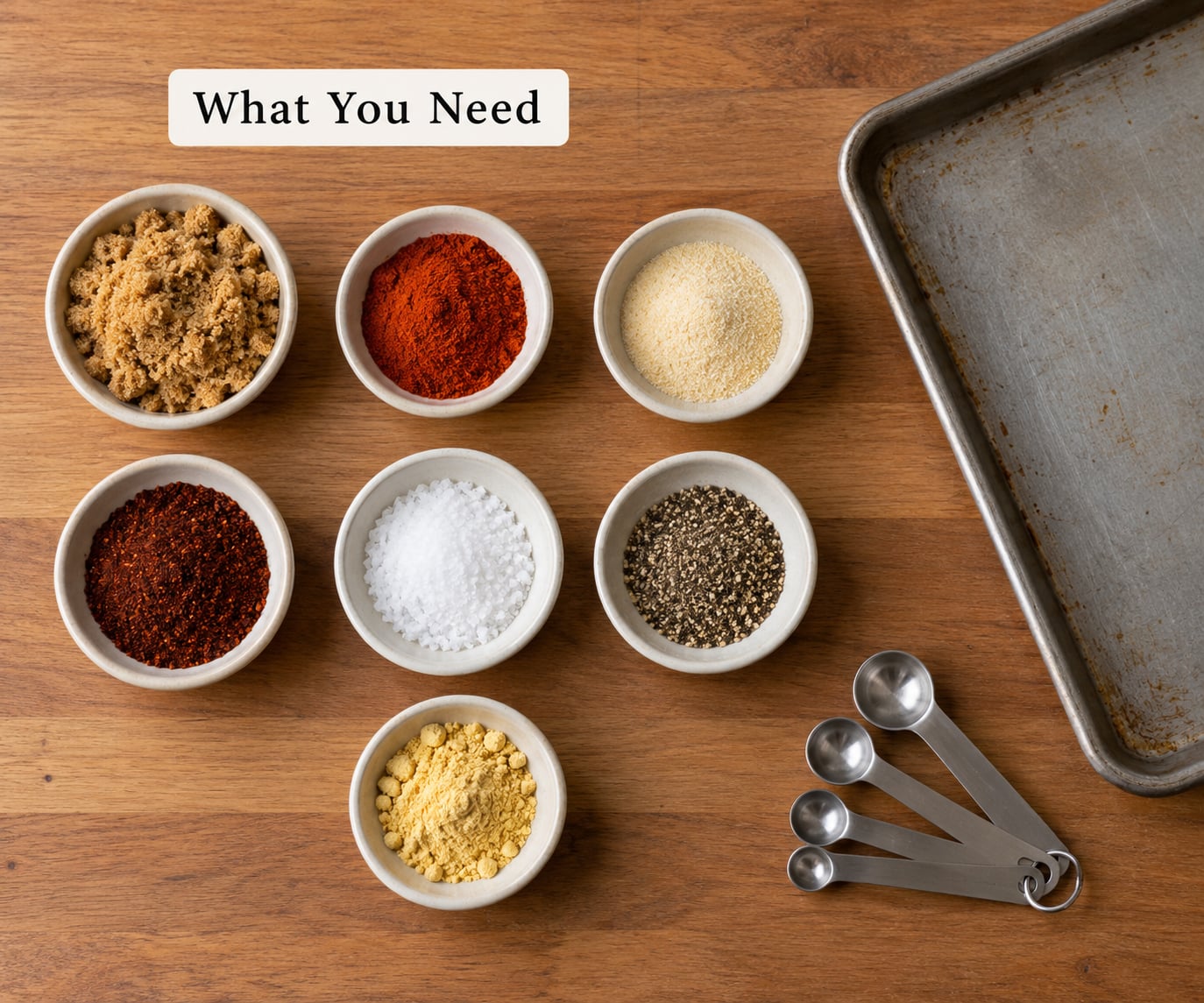
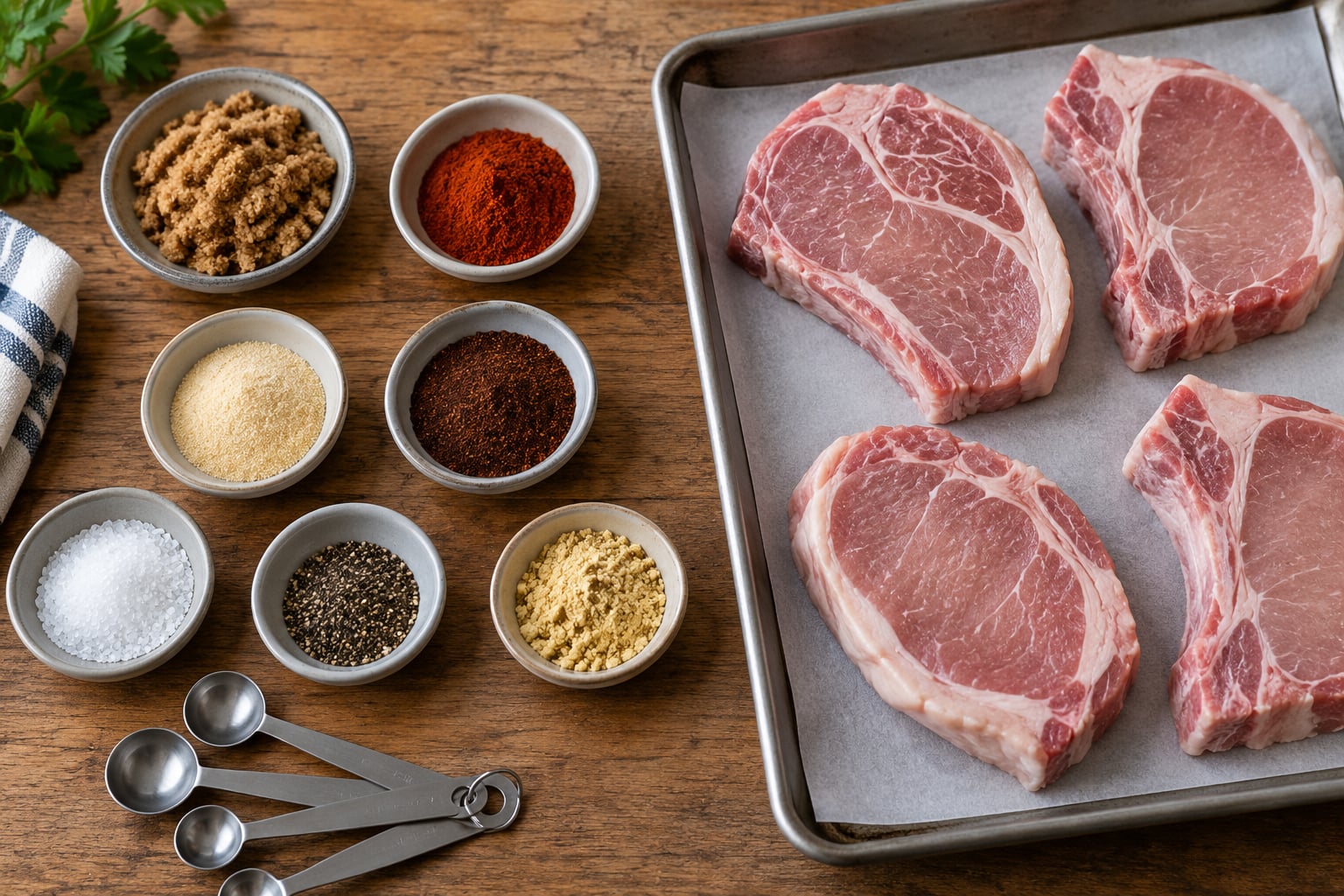
Start with a small batch so you can adjust it to your own taste, then scale up once you know what you like. This base formula covers roughly 4 pounds of pork.
| Ingredient | Amount | What it does |
|---|---|---|
| Coarse kosher salt | 2 tablespoons | Seasoning base |
| Brown sugar | 2 tablespoons | Caramelized bark |
| Smoked paprika | 2 teaspoons | Woodsy depth |
| Garlic powder | 2 teaspoons | Savory punch |
| Onion powder | 1 teaspoon | Sweet sharpness |
| Chili powder | 2 teaspoons | Mild warmth |
| Coarse ground black pepper | 1 teaspoon | Peppery bite |
| Dry mustard powder | 1 teaspoon | Sharp tang |
A kitchen scale is the one tool worth owning. Salt behaves differently when it dissolves, and measuring by volume is how a tablespoon quietly becomes a heaped one. If you are using a mortar or a coffee grinder for a coarser grind, add a teaspoon of salt at the end so the blades do not grind it into dust.
Optional Flavor Accents
Chipotle powder adds smoke and moderate heat, cayenne sharpens the chili powder, ground cumin brings earthiness to shoulder and tenderloin, and dried thyme or oregano suit roast and chops. Add any of them in teaspoon amounts after the base blend is mixed, then taste again.
Step-by-Step: How to Make a Dry Rub for Pork
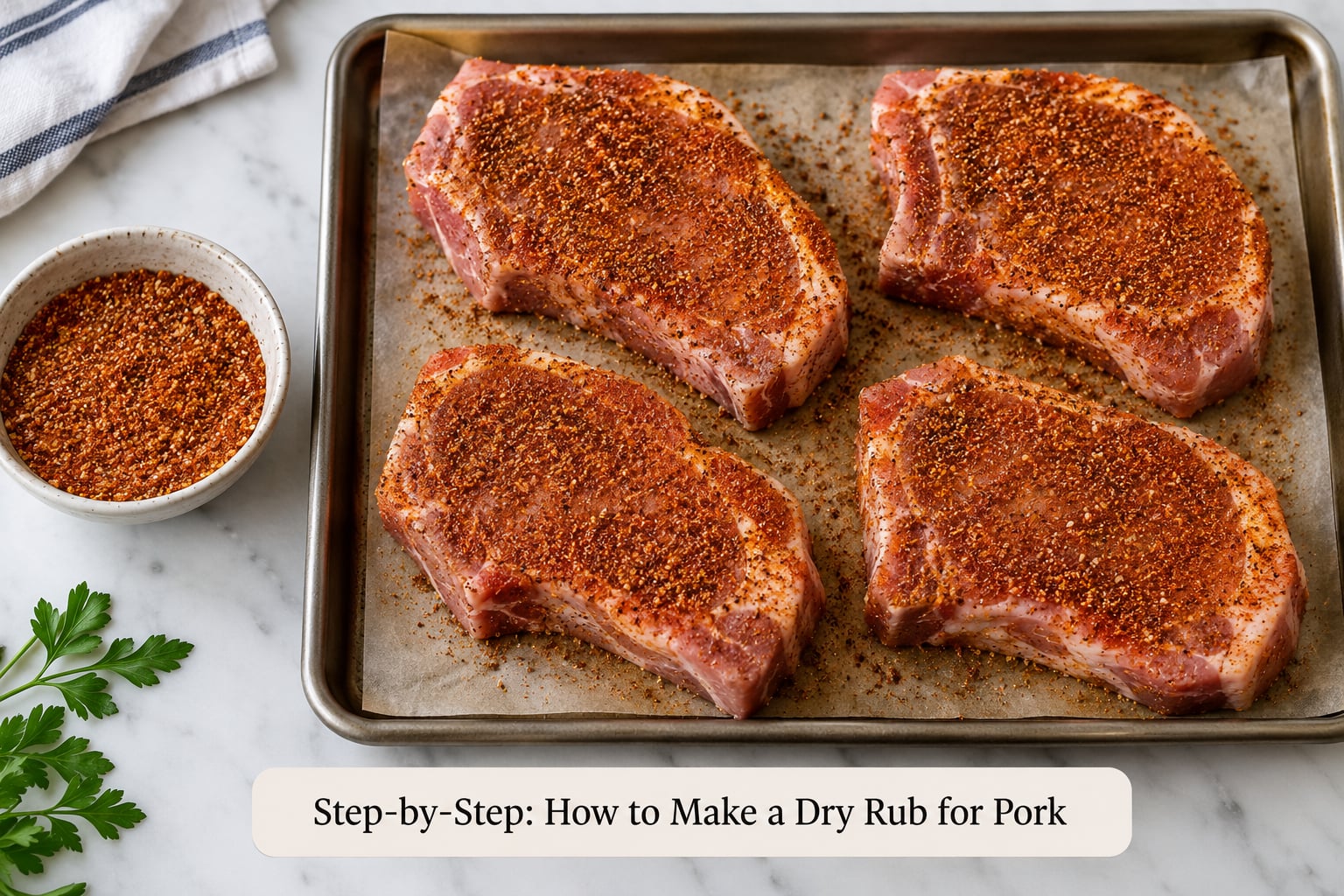
How to Make a Dry Rub for Pork
Measure by weight where you can, mix until the color is even, and break up every clump before the blend ever touches meat.
- Measure everything first. Line up the bowls before you start. Salt and sugar hide mistakes, and mixing twice is slower than measuring twice.
- Combine the salt and sugar. Rub them together with your fingertips so the sugar dissolves into the crystals and no hard sugar lumps survive.
- Add the ground spices. Paprika, garlic powder, onion powder, chili powder, mustard and pepper go in next. Stir with a spoon for a full minute until the color is completely uniform.
- Break up lumps. Brown sugar and powdered spices cake together on the shelf. Use the back of a spoon, a fork, or a sieve to work them apart. A little patience here pays off in an even coat later.
- Taste before you adjust. Put a pinch on your finger. It should taste savory first, sweet second, with heat arriving last. If it is flat, add salt; if it tastes like a candy shop, add paprika and garlic powder.
- Jar and label it. Store the blend in an airtight jar in a cool, dark place and write the date on masking tape. Most blends keep six months, and the spices will not spoil, they will just fade.
Choose the Right Pork Cut
Thin cuts need less rub and almost no sugar, while thick fatty cuts can carry a heavier, sweeter blend without turning muddy.
- Pork chops at about three-quarters inch take 1 to 1.5 tablespoons each. Hold the brown sugar back and let garlic and black pepper lead.
- Pork tenderloin is lean and mild, so a lighter hand is right. About 3 tablespoons for a whole tenderloin, with mustard powder doing the seasoning work.
- Pork ribs handle a fuller rub. Roughly 1 tablespoon per rack, packed onto the bone side of the membrane before you flip and season the other face.
- Pork shoulder or butt can carry the base blend at full strength. About 1.5 tablespoons per pound works well for a long smoke, where the bark is the point.
- Ham and thicker roasts take a rub with more cumin and dried oregano, and they are the best place to use up the last of a jar.
| Cut weight | Rub needed | Batch coverage |
|---|---|---|
| 1 to 1.5 pounds (chops, tenderloin) | 3 tablespoons | About half a batch |
| 2 to 3 pounds (rack of ribs, small roast) | 1 cup | One batch |
| 4 pounds (bone-in shoulder) | 1.5 cups | One and a half batches |
| 8 pounds (whole butt) | 3 cups | Three batches |
Scale the formula rather than eyeballing it. Double the batch means doubling every measurement, which keeps the balance you already like intact.
Apply the Rub Evenly
Pat the pork dry, press the rub onto every surface, and give it at least an hour before heat. A thin, even coat beats a thick one every time.
- Pat the surface dry. Blot the pork with paper towels. A wet surface turns the rub into paste and it slides off instead of forming bark.
- Add a binder only if you need one. A thin wipe of yellow mustard or neutral oil gives the blend something to grab. Skip it on a dry brined piece and you will be fine.
- Press, do not sprinkle. Push the rub into the meat with the flat of your hand until it feels like it is part of the surface. Avoid thick patches, which scorch before the rest of the piece colors.
- Season the fat cap separately. On a shoulder or ham, work a little extra blend into the fat layer. Rub that is packed under the fat never seasons the meat.
- Rest, covered, in the fridge. Leave the seasoned pork uncovered on a rack for a short rest so the surface stays dry, or wrap it loosely for a long rest.
| Rest time | Best for | Salt note |
|---|---|---|
| 15 minutes | Thick chops, steaks | Full salt amount |
| 1 hour | Most grilling and pan-searing | Full salt amount |
| 12 hours | Overnight smoke or roast | Reduce salt by half |
| 24 to 36 hours | Maximum flavor penetration | Drop the salt and dry brine separately |
That salt column is the part most recipes skip. A rub seasoned for a one-hour cook is twice as salty after a full day in the fridge, because the salt keeps drawing moisture and concentrating. For rests longer than about 12 hours, either halve the salt or remove it entirely and dry brine the pork with salt alone in the covered fridge.
Cook Pork Safely
Cook to a safe internal temperature, not to a timer, and let the meat rest before you slice it.
The USDA safe minimum internal temperature for whole cuts of pork is 145°F (63°C), measured at the thickest part with an instant-read thermometer. Ground pork needs 160°F (71°C). For pulled pork, keep the smoke between 225°F and 250°F and push the internal temperature to 190°F (88°C), then carry on to 200 to 205°F (93 to 96°C) until the shoulder gives way.
On a grill with direct heat, sugar burns fast. Put the seasoned side over indirect heat for most of the cook and only move it over the flames near the end, or build the rub without brown sugar entirely. In the oven, roast at 400°F (205°C) until the temperature is reached, then rest the meat 5 to 10 minutes under loose foil so the juices settle.
Cutting early is the other big one. Resting lets the muscle fibers relax and hold onto moisture, which is the difference between slices that stay juicy and slices that dry out on the board.
Common Mistakes
Most disappointing pork comes down to six repeatable errors, and every one of them has a straightforward fix.
Seasoning too heavily. A heavy coat cannot be corrected later, and the outside burns long before the salt reaches the center. Press on a thin, even layer instead.
Leaving the rub on for days. Twenty-four hours is generous. Past that, the salt keeps concentrating on the surface and the rub turns aggressively salty.
Skipping salt entirely. A salt-free rub can work, but it seasons the surface only. If you leave salt out, dry brine the pork separately for 24 to 36 hours so the seasoning reaches deeper.
Using a blend that is far too sweet. Heavy brown sugar scorches over direct heat and flattens everything behind it. Halve the sugar on grills, or use the swaps below.
Rubbing the pork far too early. Seasoning a day ahead is fine for smoke, but a salty rub on meat that then sits uncovered in the fridge develops a wet, tacky surface. Wrap it, or season later.
Slicing before the temperature is reached. Cutting into pork that is underdone serves it pale and dry at once. Probe the thickest part, then rest it.
| Use this | Instead of | Why |
|---|---|---|
| Granulated sugar or honey | Brown sugar | Less color, less burn |
| No sweetener | Brown sugar | Best over high heat |
| Applewood or cherry wood chips soaked | Smoked paprika | Cleaner smoke flavor |
| Extra cumin and oregano | Chipotle powder | Milder, kid-friendly heat |
| Dried sage | Dried thyme | Better on ham |
Two habits help more than any ingredient. Take the pork out of the fridge 30 minutes before cooking so it is not fighting the heat, and always taste the blend on a scrap of the meat before committing.
Frequently Asked Questions
How long can a dry rub sit on pork before cooking?
Plan on one hour for a grill or pan cook, and up to 12 hours in the fridge for a smoke or roast. If you go longer, cut the salt in your blend by half, or remove it and dry brine the pork with salt alone for 24 to 36 hours. Leaving a full-strength salted rub on for a full day is the most common reason homemade pork turns inedible.
Should a pork dry rub contain salt?
Usually yes. Salt seasons the meat, and over a long rest it draws a thin layer of moisture to the surface that dissolves the rub so it reabsorbs instead of washing off. Without salt you still get bark, but the seasoning stays on top. That is a legitimate style, as long as you dry brine separately and you do not expect the flavor to reach the center.
How much dry rub do I need per pound of pork?
For thin cuts such as chops or a tenderloin, use about 1 tablespoon per pound. For ribs, shoulder, ham and roasts, use 1.5 tablespoons per pound. A standard batch of the base formula above makes roughly 1 cup, which covers about 3 pounds of meat generously.
Should I rinse pork before applying a dry rub?
Skip the rinse. It wets the surface and can spread surface bacteria across the meat when you pour it off. If you want the pork rinsed for texture or smell, pat it completely dry with paper towels before seasoning. A dry surface is what makes the rub adhere and form bark instead of sliding off.
Which spices work best for different cuts of pork?
Thin cuts like chops and tenderloin take mild blends built on garlic powder, onion powder and black pepper, with little sugar. Shoulder, ribs and roasts handle heat and sweetness, so add chili powder, cayenne, cumin and brown sugar. Ham and pork loin respond well to dried oregano, sage or thyme, since their mild flavor needs herbs rather than chile.
Conclusion
Measure the base blend first: two tablespoons each of coarse kosher salt and brown sugar, two teaspoons each of smoked paprika, garlic powder and chili powder, then one teaspoon each of onion powder, black pepper and dry mustard powder. Press it onto every side of the pork, adjust the sweetness, heat and salt to match the cut you are cooking, and let it rest an hour before the heat goes on.