You can freeze tomatoes whole without blanching or peeling them. Wash them, dry them thoroughly, freeze them in a single layer on a baking sheet so they never clump, then move them into heavy-duty freezer bags. It takes about 15 minutes of active work plus a few hours of freezer time, and the payoff is a winter’s worth of sauce material that never touched a boiling canner in August.
Here’s the part most guides skip: whole freezing is a holding method, not a finished method. Freezing pauses ripening and stops spoilage. It does not improve anything. When a tomato thaws, the ice crystals that formed inside it have ruptured the cell walls, so it collapses into a soft, watery, skin-on mass.
That is exactly what you want for sauce, salsa, soup, chili and stew. It is exactly what you don’t want in a salad. Garden tomatoes ripen a few at a time over weeks, so you rarely gather enough for one big canning run — freezing lets you bank the surplus as it arrives and do the real sauce work later, in a cool kitchen, in one organized session.
Table of Contents
- What You Need
- How to Freeze Tomatoes Whole: Step by Step
- How to Freeze Tomatoes Whole
- Can You Freeze Tomatoes Whole Without Blanching Them?
- How to Thaw Frozen Whole Tomatoes
- Common Mistakes
- Frequently Asked Questions
- Do you have to blanch tomatoes before freezing them whole?
- How long can whole tomatoes stay frozen?
- Can I freeze tomatoes without blanching or peeling them?
- Should I freeze tomatoes with the skins on?
- Can frozen tomatoes be roasted without thawing first?
- What is the best way to thaw frozen whole tomatoes?
- Conclusion
What You Need
The equipment list is short, and most of it you already own.
- Ripe but firm tomatoes. Heavy ones with a deep colour and a little give. Avoid anything with soft spots, splits or a sour smell, and skip pale green fruit unless you want it for fried green tomatoes later.
- A baking sheet or sheet pan and a square of parchment paper. The parchment is what keeps the tomatoes from welding themselves to the metal.
- Heavy-duty freezer bags in quart or gallon size, or rigid airtight containers if you prefer stacking. Regular thin bags split more often and let more air through.
- A paring knife for coring and scoring the blossom end.
- A marker and masking tape for variety and date. Freezer contents become archaeological finds by February.
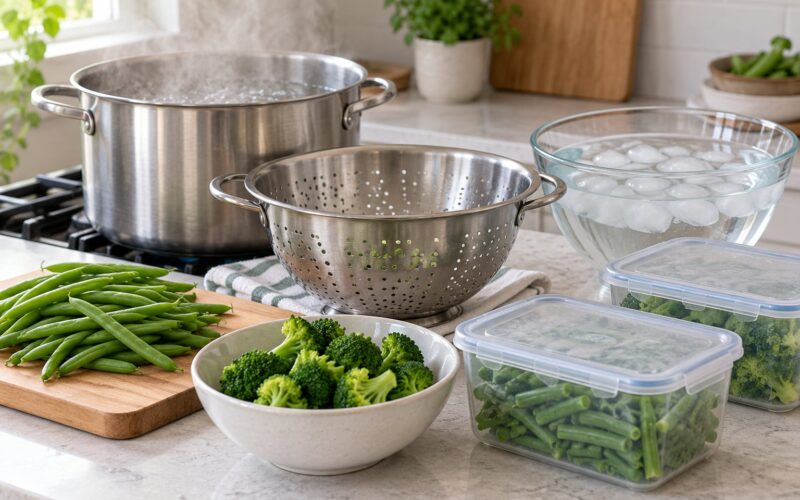
- Ice and a bowl plus a pot of water, only if you plan to blanch.
- A vacuum sealer is optional. It helps with long storage, but a well-sealed bag pressed flat with your hands does nearly as well.
There are four reasonable methods, and they are not equally good for every job.
- Whole, no blanch. The fastest method and the one most home cooks use. Best for sauce, soup and chili. Textures soften and the skins stay on.
- Whole, flash-frozen first. Same result, but the sheet-pan step keeps tomatoes from freezing into one solid brick. Worth it if you want to pull out a few at a time.
- Blanched, peeled and frozen. More work, but the skins slip off and you skip peeling later. Best when a recipe needs smooth sauce with no skin flecks.
- Sauce made first, then frozen. Takes a full simmer-down on the stove, but it uses the least freezer space and portions beautifully.
For most people starting out, the first one wins. It is the least work and the most forgiving.
How to Freeze Tomatoes Whole: Step by Step
How to Freeze Tomatoes Whole
This is the method I use on every market haul that outruns the week.
- Wash and sort. Rinse under cool running water and pat completely dry. Sort out anything bruised or soft.
- Core and score. Cut out the tough stem plug. Score a shallow X in the base of each tomato so the skin splits when you thaw it.
- Blanch if you want easy peeling. Drop tomatoes into boiling water for 30 to 60 seconds, then into ice water. The skins will rub off.
- Dry thoroughly. Blot every surface. Any water left behind freezes into ice crystals that make the tomato icier and icier.
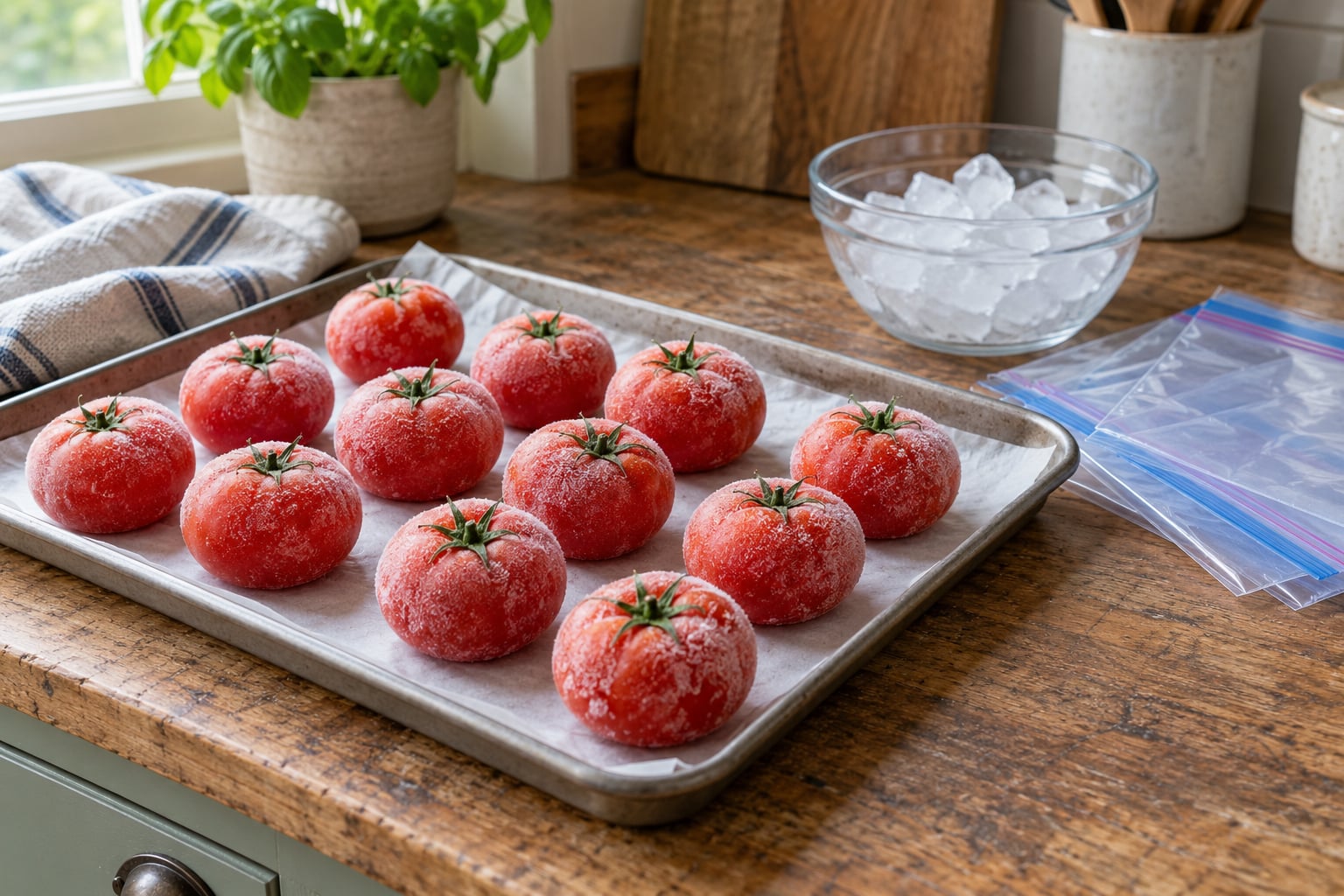
- Flash freeze. Arrange in a single layer on the lined baking sheet and freeze 1 to 4 hours, or overnight, until solid.
- Bag and seal. Transfer to freezer bags, press out the air, leave a half inch of headroom, seal, and label with variety and date.
You will know step five worked when the tomatoes feel like hard little rocks and lift off the parchment without sticking. If one refuses, give it another 30 minutes.
The headspace in step six is not optional. Tomatoes and the air around them expand as they freeze, and a bag sealed to the last inch will split in the freezer.
Can You Freeze Tomatoes Whole Without Blanching Them?
Yes. Freezing tomatoes whole without blanching or peeling is completely safe, and it is what most home cooks do. Blanching stops enzymes that slowly damage flavour, colour and texture, which is why the National Center for Home Food Preservation at the University of Georgia recommends it for vegetables destined for the freezer. In practice, tomatoes tolerate skipping it because nearly every whole-frozen tomato ends up cooked down in a sauce.
The honest trade-off: unblanched tomatoes keep their skins, and the skins soften but never fully break down in a fast sauce. If you want a perfectly smooth pizza sauce, blanch and peel. If you are making chili, goulash, soup or a rustic salsa, skip it and save the twenty minutes.
One question comes up constantly on gardening forums: does cutting a small wedge out of the bottom for a taste test ruin the tomato for freezing? No. Cut where you like. The hole seals itself under the freezing temperatures and it makes no measurable difference to the finished sauce.
How to Thaw Frozen Whole Tomatoes
You have three good options, and a fourth worth knowing about.
- From frozen, straight into the pot. The best method for sauce. Drop the frozen tomatoes into hot oil or a simmering pot and let them melt down. No thawing, no extra dishes.
- Overnight in the refrigerator. Plan for a full day. Moving them to the counter partway through speeds it up, while a straight refrigerator thaw keeps the texture a little firmer.
- In cold water. Submerge the sealed bag in a bowl of cold water for about an hour. Warm or hot water drives flavour out and softens the outside while the centre stays frozen.
- Under warm water to peel. Hold the still-frozen tomato under warm running water for a few seconds and the skin slips right off. This is the trick for a hand-peeled batch.
Partly frozen tomatoes are normal and fine. They will look translucent and slightly slushy at the edges, with hard cores in the middle. Break them apart with your hands, or just drop them in the pot and let the heat finish the job.
The thawed liquid sitting in the bottom of the bowl is not waste. Drain it off for a thicker finished sauce, or pour it into a stockpot with bones and vegetable trimmings.
Common Mistakes
The tomatoes freeze into one solid brick. Skipping the sheet-pan step is the cause. Freeze them in a single layer first, then bag them. If they are already a brick, break the bag on the counter with the heel of your hand and pull out only what you need, returning the rest immediately.
Skins won’t come off. Score a deep X in the base before freezing, and hold the thawed tomato under warm running water. If a recipe needs a truly smooth texture, blanch and peel at freezing time instead of fighting skins later.
The finished sauce is watery. This is cell damage, not a mistake in your technique. Simmer the thawed tomatoes down longer than the recipe suggests, or reduce the added liquid. A spoonful of cornstarch stirred into salsa does the same job.
Freezer burn on the tomatoes. Dry them properly, leave headspace, press the air out, and use heavy-duty bags. White or grey patches and a papery texture mean surface ice sublimated. Safe, just not appetizing — better used in soup.
Flavour fades over time. Expect the freshest flavour in the first six months at 0 °F. Frozen tomatoes stay safe to eat for one to two years as long as they stay frozen solid and are thawed in the refrigerator, but acidity and aroma drop with time. Old bags belong in sauce, not on a plate.
Treating freezing as a canning step. Freezing is not a preservation method and it does not block later canning. You can cook frozen tomatoes into sauce and then can that sauce using a tested recipe. What you cannot do is freeze a low-acid tomato and vegetable mix and then can it, because adding peppers, onions or garlic dilutes the natural acidity that makes plain tomatoes safe to water-bath can. That combination is exactly the kind of mix that supports botulism in a sealed jar. Use a tested recipe from your state extension or the National Center for Home Food Preservation, and never improvise the process or the proportions.
Freezing cherry tomatoes whole. They burst. Halve them first so they hold their shape through the thaw.
Two things that cost me nothing and worked well: chill the tomatoes in the refrigerator for a few hours before freezing so they cool evenly, and bank them in small batches as they come in rather than waiting for one enormous harvest day.
Frequently Asked Questions
Do you have to blanch tomatoes before freezing them whole?
No. Blanching stops enzymes that slowly damage flavour, colour and texture, and the National Center for Home Food Preservation recommends it for most vegetables. Tomatoes are the common exception in practice because almost all of them get cooked down in a sauce anyway. Blanch them if you want the skins to slip off later; skip them for soup, chili and rustic salsa.
How long can whole tomatoes stay frozen?
Frozen tomatoes keep their best flavour for about six months at 0 °F, as long as they stay frozen solid and are thawed in the refrigerator. They remain safe to eat for one to two years, but the acidity, aroma and colour fade noticeably along the way. Older bags still work well in cooked dishes like sauce, goulash and chili.
Can I freeze tomatoes without blanching or peeling them?
That is the standard method and it works well. Wash the tomatoes, dry them thoroughly, score an X in the base, freeze them in a single layer on a baking sheet, then bag and seal them. Unblanched tomatoes keep their skins, which soften but may not fully break down in a fast sauce, so blanch and peel first if you want a perfectly smooth result.
Should I freeze tomatoes with the skins on?
Yes, for almost every use. The skin holds moisture in during freezing and helps the tomato hold its shape, then softens enough in a slow sauce to disappear. If you want the skins gone, score an X in the blossom end before freezing, and the skin will slip off under warm running water after thawing. For a hand-peeled batch, blanch and peel at freezing time instead.
Can frozen tomatoes be roasted without thawing first?
You can, and it works well enough that I do it most of the time. Roast them on a sheet pan at 400 °F until they slump and blister, about 30 to 45 minutes depending on size. Expect the skins to tighten and split, which is fine — they peel away easily afterward. Thawed tomatoes leak more water into the pan, so roasting from frozen actually gives you better caramelization.
What is the best way to thaw frozen whole tomatoes?
Skip thawing for cooked dishes and go straight from the freezer into a hot pot; they melt down in the sauce with no extra work. When you need them thawed, move the bag to the refrigerator overnight, or submerge it in cold water for about an hour. Avoid warm or hot water, which drives flavour out and thins the texture.
Conclusion
Start with the tomatoes in front of you. Pick the ripe, firm ones and skip anything bruised. Decide whether you want easy peeling later — blanch for thirty seconds in boiling water if so, and skip it if the tomatoes are headed for chili or soup. Dry every tomato completely, because water is what turns them to ice.
That is how to freeze tomatoes whole in a way that actually holds up: a single layer before bagging, and airtight storage after. From here they wait for you — six months for the best flavour, a couple of years before the taste really fades, and a pot of simmering sauce whenever you need one.