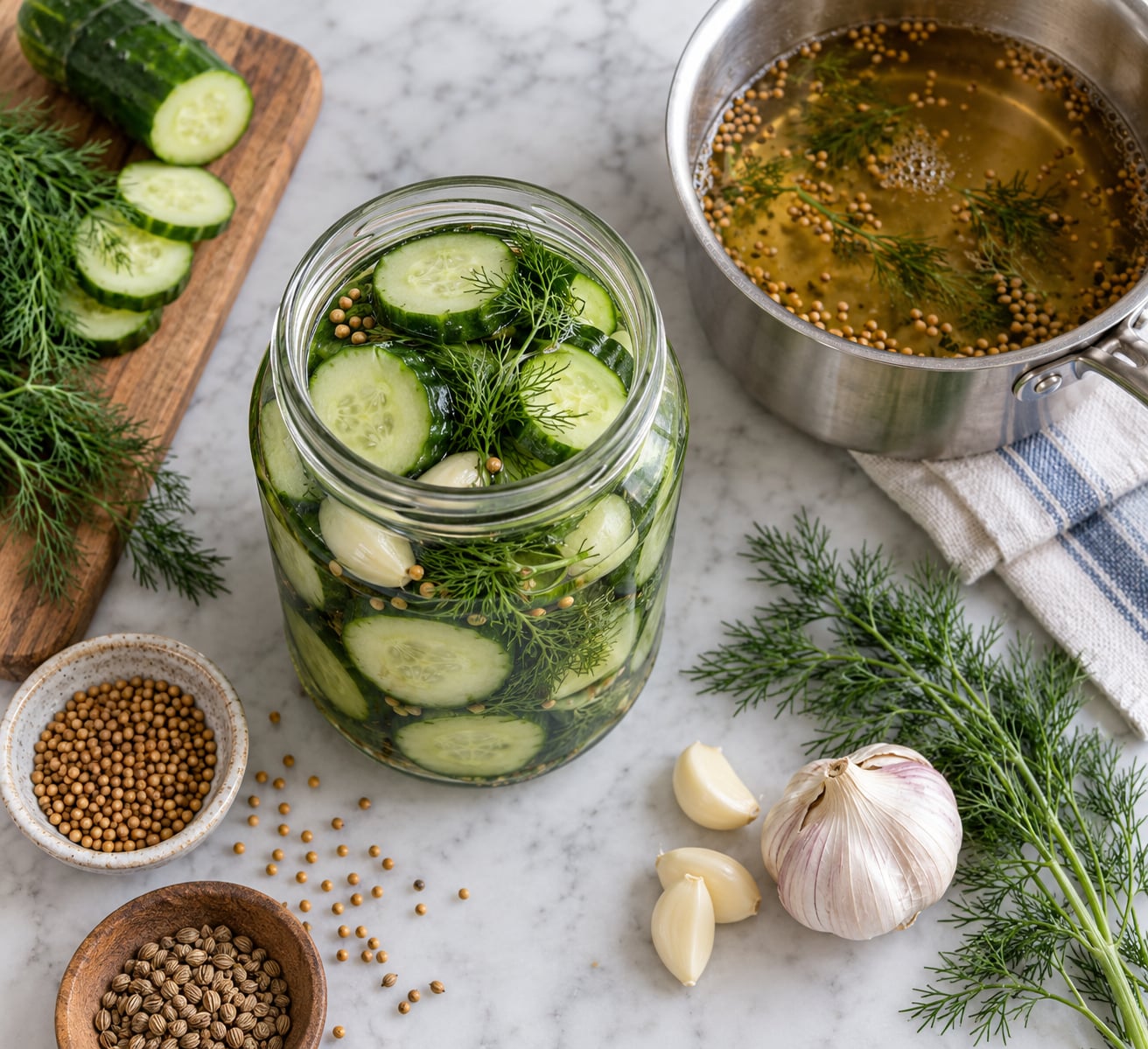
Bread and butter pickles are thin slices of pickling cucumber steeped in a sweet, tangy brine of vinegar, sugar, mustard seed, celery seed and turmeric. To make them, salt the sliced cucumbers, drain them, pour a hot brine over them in clean jars, and refrigerate. Canning them takes one extra step.
The refrigerator method takes about 30 minutes of hands-on time plus a few hours of waiting. The water-bath method adds roughly 15 minutes per batch and gives you jars that keep on a pantry shelf for a year. I make the refrigerator version every summer because it tastes fresher, but I keep the canning instructions below because a market batch has to travel.
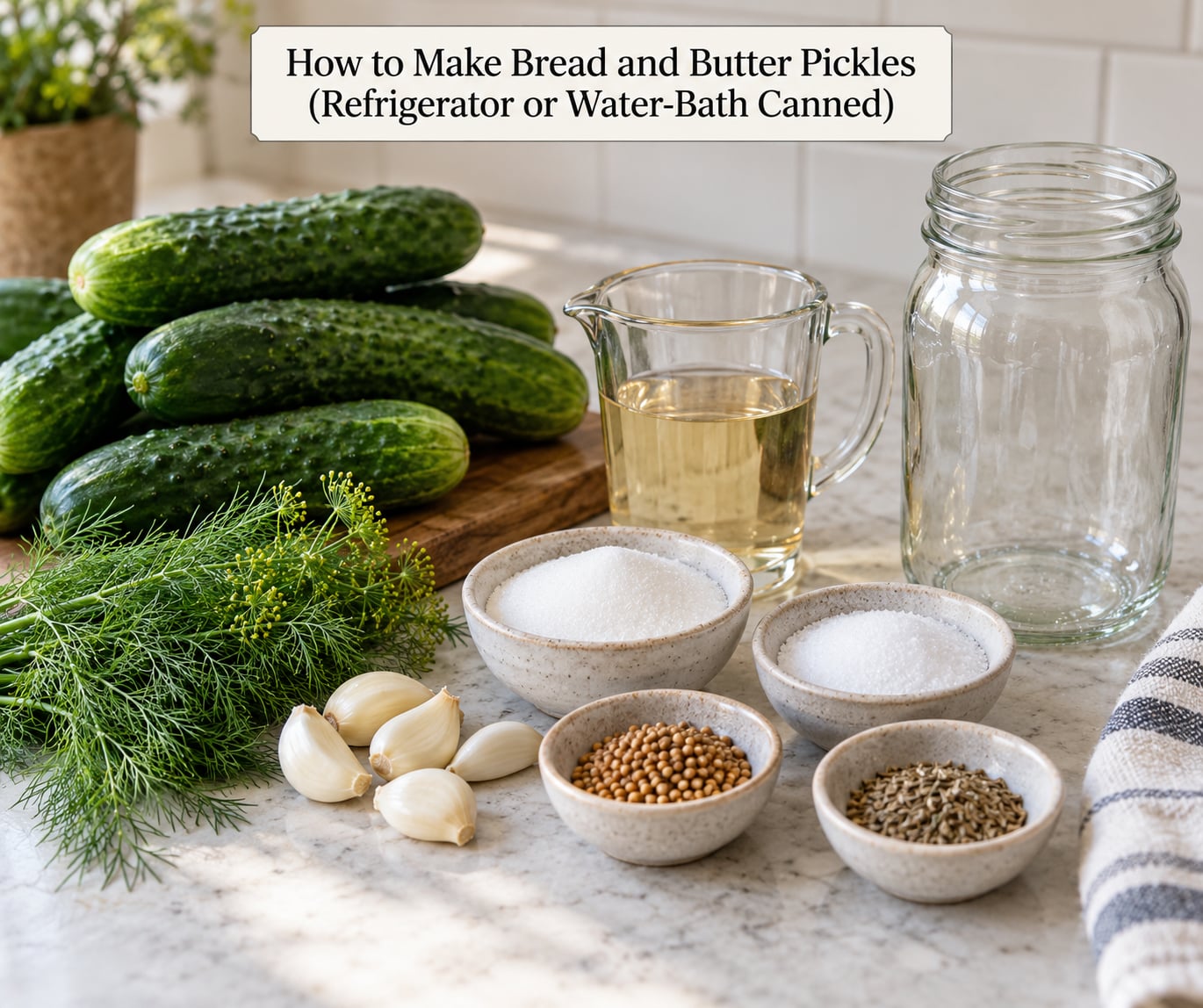
Table of Contents
- What You Need
- Which vinegar is best for bread and butter pickles?
- Step-by-Step: How to Make Bread and Butter Pickles
- How to Salt and Drain the Cucumbers
- How to Make the Brine for Bread and Butter Pickles
- How to Pack the Cucumbers
- How to Finish and Refrigerate the Pickles
- How to Know the Pickles Are Ready
- Refrigerator Pickles vs Canned Bread and Butter Pickles
- Common Mistakes
- Watery cucumbers and soft pickles
- Brine too salty or too sour
- Spices settling at the bottom of the jar
- The wrong jar or a dirty jar
- Making a bigger batch for market sales
- Frequently Asked Questions
- Are onions necessary in bread and butter pickles?
- Which vinegar is best for bread and butter pickles?
- How long do bread and butter pickles need to sit before eating?
- How long do bread and butter pickles last?
- Can I reuse the brine from a batch?
- Can bread and butter pickles be left out at room temperature?
- Conclusion
What You Need
This recipe makes about ten pint jars, which is a comfortable batch for a household that eats pickles daily or a small run for a market stall. Everything comes from a regular grocery store or a produce vendor, so nothing here needs to be special-ordered.
For the cucumbers, you need:
- 5 pounds pickling cucumbers, about 10 cups sliced
- 1 large yellow or sweet onion, thinly sliced
- 3 tablespoons pickling salt or canning salt
- 2 to 3 cloves garlic, one per jar
- Fresh dill sprigs, 2 to 3 per jar
- Optional: red or green bell pepper rings, 1 sliced thin
For the pickling brine, you need:
- 2 cups (500 ml) cider vinegar, 5% acidity
- 1 cup (250 ml) distilled white vinegar, 5% acidity
- 3 cups (600 g) white sugar
- 3 tablespoons pickling salt
- 2 tablespoons yellow mustard seed
- 1 tablespoon celery seed
- 2 teaspoons ground turmeric
- 1 tablespoon whole black peppercorns
- 4 whole cloves
- 1 teaspoon ground allspice
- 2 bay leaves
You will also need nine or ten clean pint jars with lids and rings, a large nonreactive bowl, colander or salad spinner, a heavy plate to weight the cucumbers, and a saucepan or stockpot wide enough for the jars if you plan to can them.
Which vinegar is best for bread and butter pickles?
Cider vinegar at 5% acidity gives the flavor people expect, and a 50/50 blend of cider vinegar and distilled white vinegar is the standard compromise: the cider supplies the mellow fruit note, the white keeps the brine sharp enough to pickle. Check the label for acidity before you buy. Anything gentler than 5% is fine for refrigerator pickles, but it is not safe for water-bath canning.
Ball and other jar makers publish their own tested bread and butter pickle ratios, and so does the National Center for Home Food Preservation. If you intend to can, use one of those formulas rather than adjusting the vinegar or sugar ratio to taste. Home canning relies on a measured balance of acid and sugar to keep food safe in a sealed jar, and improvising that balance voids the testing behind the recipe.
Step-by-Step: How to Make Bread and Butter Pickles
How to Salt and Drain the Cucumbers
Wash the cucumbers under cold running water and slice them crosswise into 1/4-inch coins. A crinkle cutter gives you ridges that hold seasoning and make the slices look better on a market table, but a sharp knife works fine.
Toss the sliced cucumbers and onion with the 3 tablespoons of pickling salt in a large nonreactive bowl. Weigh the vegetables down with a plate so they sit under their own released liquid, then cover the bowl.
Let them drain for 2 to 4 hours at room temperature, or overnight in the refrigerator. You are drawing water out of the cells, which firms the flesh, concentrates the flavor of each slice, and means less water dilutes your brine later. Colander the cucumbers, rinse them briefly under cold water to wash off the surface salt, and drain them again.
How to Make the Brine for Bread and Butter Pickles
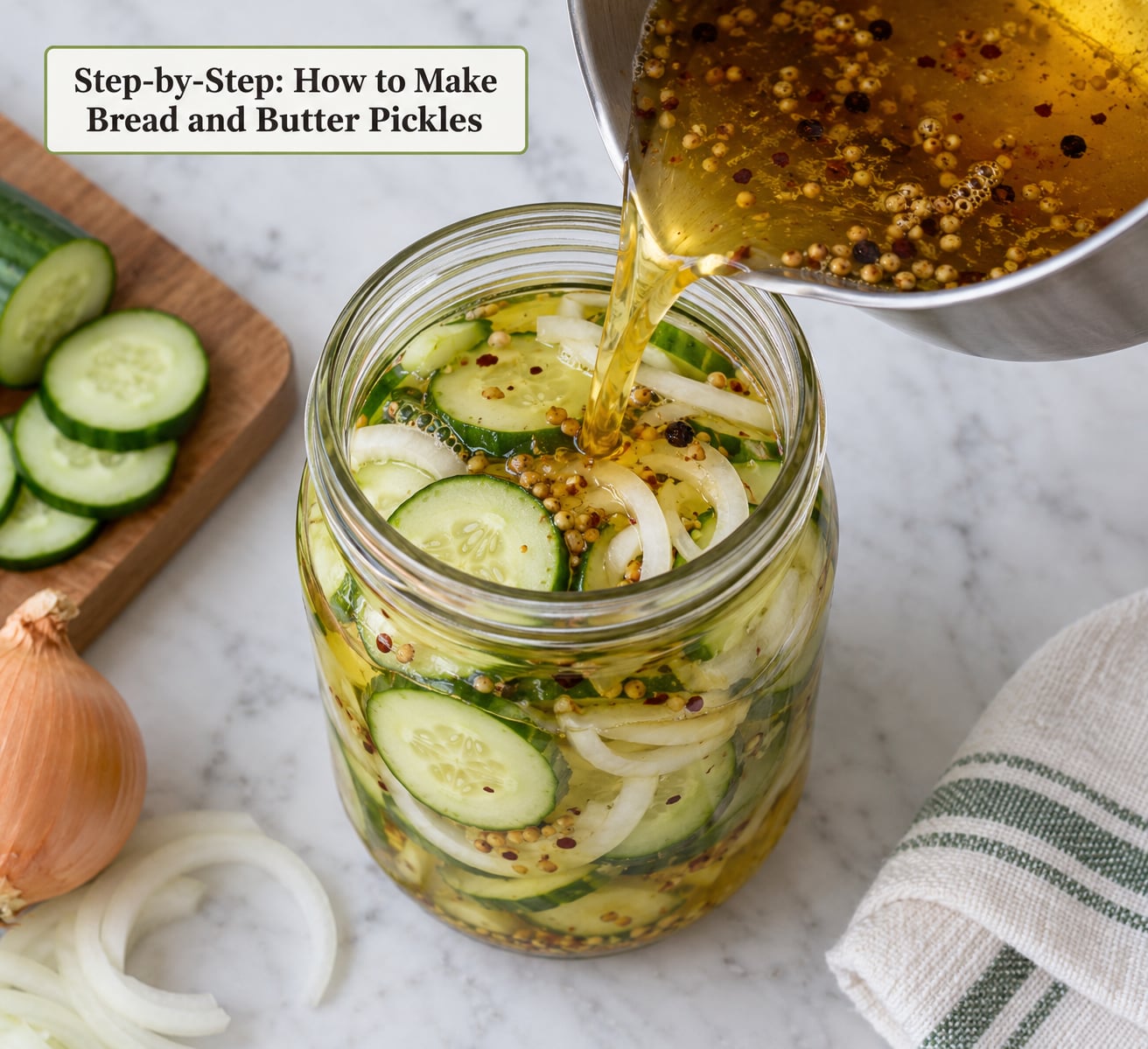
Combine the cider vinegar, white vinegar, sugar, and pickling salt in a clean saucepan. Bring the mixture to a boil, then add the mustard seed, celery seed, turmeric, peppercorns, cloves, allspice and bay leaves.
Stir until the sugar and salt have fully dissolved, about one to two minutes after boiling. Remove the pan from the heat at that point. Resist the urge to let the brine reduce to a syrup: the liquid has to cover the vegetables in the jars, and a reduced brine is both saltier and less effective at pickling.
Old recipes from the 1920s take a different route entirely. They skip the salting step and cover the cucumbers with cracked ice, which dilutes the vegetables with water rather than pulling it out. The 1920s versions also fold in green and red bell pepper rings and several whole garlic cloves per jar. The modern method gives you a crisper pickle in the same time, which is why most modern recipes use it, but the pepper rings are a good addition to either version.
How to Pack the Cucumbers
Set out your jars and put one clove of garlic and two or three dill sprigs in the bottom of each one. If you like heat, drop in a few sliced jalapeno rings or a teaspoon of red pepper flakes now, so the heat stays in the cucumber rather than turning the brine hot.
Pack the drained cucumber and onion slices into the jars, pressing down gently to eliminate air pockets. Fill each jar to about half an inch from the top for refrigerator pickles, leaving enough room for the brine to expand if the jars ever get chilled unevenly. Do not pack cucumber slices so tightly that you have to jam them in with a fist; air gaps are what let the brine reach every piece.
If you have a few pepper rings, tuck them between the layers where they press against the cucumber. Wipe the rims of the jars with a clean paper towel before you pour, because a smear of cucumber or onion on the sealing surface is the most common reason a jar refuses to seal.
How to Finish and Refrigerate the Pickles
Pour the hot brine into each jar, filling to the same half-inch head space. Use a narrow silicone or plastic tool to release air bubbles trapped between the cucumber slices, then top up the brine if the liquid drops below the rim.
Place a clean plate or a small weight on top of the cucumbers so they stay submerged, especially in the first few hours while the brine is still cooling. Screw the lids on finger-tight, not wrench-tight, then refrigerate the jars until fully chilled, usually 2 to 4 hours.
For water-bath canning instead, fill hot jars to a half inch of head space, remove air bubbles with a clean damp paper towel or bubble remover tool, and wipe the rims. Screw the bands on finger-tight and process the jars in a boiling water bath. The tested process time for this style of pickle is 10 minutes for half-pint, pint and quart jars at low altitude, which is adjusted upward where you live:
| Altitude | Half-pint and pint jars | Quart jars |
|---|---|---|
| 0 to 1,000 feet | 10 minutes | 10 minutes |
| 1,001 to 6,000 feet | 15 minutes | 15 minutes |
| Above 6,000 feet | 20 minutes | 20 minutes |
Start the timer when the water returns to a rolling boil, and keep the jars underwater the whole time. Use a jar lifter to move them to a towel-lined surface, then leave them undisturbed for 12 to 24 hours before you press down on each lid to check for a seal. A flat, firm lid that does not flex means a vacuum seal formed. Wipe any brine that leaks from the jar bottom before storing it, and refrigerate any jar that fails to seal rather than leaving it on the shelf.
Do not pressure canner bread and butter pickles. Pressure canning drives far more heat into the cucumbers than a water bath, and home canners who have tried it report uniformly soft pickles. Water bath or refrigerator, nothing in between.
How to Know the Pickles Are Ready
A finished refrigerator batch has turned a golden yellow from the turmeric, gone translucent at the center, and smells like dill and vinegar the moment you open the fridge. The slices should bend without snapping and snap without bending like a rubber tire, which is the crunch you are after.
Flavor is different from texture. The brine has fully penetrated within hours, but the dill and mustard notes need at least 24 hours to meld with the cucumber. Eat one slice as soon as you make the batch and you will find it sharp and only lightly sweet. Most people find the pickles at their best between day two and week two, and they begin losing snap after roughly four to six weeks in the refrigerator even though they stay safe and good for eating much longer.
Refrigerator Pickles vs Canned Bread and Butter Pickles
Both methods start with the same salted cucumbers and the same brine. The only real difference is what happens after you pour.
| Refrigerator pickles | Water-bath canned | |
|---|---|---|
| Hands-on time | About 30 minutes | About 45 minutes |
| Total time | 2 to 4 hours to chilled | 1 to 2 hours plus a 12-hour cooling check |
| Texture | Crisper and brighter | Slightly softer, more mellow |
| Storage | Refrigerator, 2 to 3 months | Cool dark pantry, 1 year or more |
| After opening | Use within 4 to 6 weeks | Refrigerate and use within 3 months |
| Equipment | Any clean jar | Boiling water canner, jar lifter, tested recipe |
Glass mason jars are not required for refrigerator pickles. Any clean screw-top jar with a tight-fitting lid works, and clean plastic deli containers get used widely for fridge batches, since the pickles are eaten within weeks rather than stored for a year. Do not use the lid from a jar you bought at the store for canning; a canning lid is a two-piece sealing system, while a grocery jar lid is a single piece of metal that cannot create a vacuum.
Common Mistakes
Almost every disappointing batch of bread and butter pickles comes down to texture. Here are the problems readers report most often and what to do about them.
Watery cucumbers and soft pickles
If the finished pickles are limp, watery or bland, one of five things went wrong:
- You skipped the salting step. Salt draws water out of the cucumber cells and firms them. Skipping it leaves the slices watery and dilutes your brine. Four hours is the target; overnight in the refrigerator works too and most people report no noticeable difference in flavor.
- The brine boiled too long. A hard boil softens cucumber flesh. Bring the brine up to a boil to dissolve the sugar, then take it off the heat.
- You used a pressure canner. The heat is far too aggressive for a pickle. Use a boiling water bath at 10 minutes, or refrigerate.
- Your slices were too thick. Anything past a quarter inch picks slowly through the center and stays watery at the core. Cut thin.
- You used slicer cucumbers. Enzymes concentrate at the blossom end and break down the cell walls. Small pickling cucumbers, English cucumbers or Persian cucumbers all hold their shape better.
If you want more crunch than the cucumber alone will give you, pickle crisp (a food-grade calcium chloride sold for this purpose) works. Home canners on Reddit commonly add 1/8 teaspoon per pint. Natural alternatives with a similar effect include a small grape leaf, blackberry leaf, raspberry leaf, horseradish leaf or oak leaf dropped into each jar. The tannins in those leaves interact with the pickle acids to firm the pectin. Readers report that pickles made without pickle crisp are still well short of mushy, just slightly softer than refrigerator versions.
Soft pickles are a texture problem rather than a safety problem on their own. Discard them anyway if the lid shows any sign of leakage, if the liquid has risen above the lid or foamed when opened, or if the smell is yeasty, alcoholic or otherwise wrong. Cloudy brine in a sealed refrigerator jar with no sign of gas is usually just spice and calcium settling, not spoilage.
Brine too salty or too sour
Excess salt usually means you salted the cucumbers and did not rinse them. That rinse step exists for a reason. If your brine tastes harsh, dilute the whole batch with cold water, one tablespoon at a time, and taste again.
Brine that is too sour is almost always too much vinegar relative to sugar, or too little sugar. You cannot fix this once the batch is made, so adjust the ratio on the next round and keep a written record of what you did. Marking the jar with the date and the ratio is the fastest way to reproduce a batch you liked.
One more salinity trap: do not add extra salt to the brine on top of a tested canning recipe, and do not reduce the brine for canning. If you want more pickle flavor, add another garlic clove, more dill, or a strip of horseradish to each jar instead.
Spices settling at the bottom of the jar
Mustard seed, celery seed and peppercorns all sink, and a jar with a thick sediment layer at the bottom looks like a fault even when the flavor is fine. Tie the dry spices into a square of cheesecloth and drop that bundle into the brine before you pour, or put the spices in a layer between the cucumber slices rather than in the bottom of the jar. Both keep the seasonings evenly distributed through the batch.
The wrong jar or a dirty jar
Head space matters more than most people expect. Half an inch is the standard because the contents expand as they heat, and too little room triggers a broken seal. Too much room dilutes the brine. Use the same fill level across every jar in the batch.
For refrigerator pickles, sterilization is not required. Running jars through boiling water for ten minutes adds no safety you need for a jar you will eat from within weeks. Washing the jars in hot soapy water and rinsing them is enough. For canning, follow the jar maker’s sterilization instructions for the specific jar you own, since rim thickness varies between brands.
Two small habits prevent most spoilage: use a fresh garlic clove for every jar rather than one clove you keep reusing, and refrigerate the jars within two hours of filling them. If you are at a market booth, keep finished jars out of a hot vehicle and in a cooler until they get to a fridge.
Making a bigger batch for market sales
Roughly ten cups of sliced cucumber fills about ten pint jars, or five quarts. Scaling up is mostly arithmetic: double every ingredient for twenty jars, triple for thirty. Do not increase the salt to “preserve” a larger batch, since salt is already doing two jobs here, drawing water out of the cucumbers and seasoning the brine.
If you are selling jars in a state with cottage food rules, shelf-stable pickles made through a tested recipe generally fall under the food-canned goods category rather than cottage food, but licensing requirements vary widely by state and county. Check with your state department of agriculture before your first market.
Label each jar with the product name, the ingredient list in descending order, the net weight, the pack date, and a best-by date set one year out. Some states also require the packer’s name and address, and retail buyers usually ask for a lot code you can trace back to a single session of packing.
Frequently Asked Questions
Are onions necessary in bread and butter pickles?
No. Onion is traditional rather than required, and many market versions leave it out. A thinly sliced sweet onion adds a mild bite that softens as it pickles, but a yellow onion brings more sharp flavor. Use one large onion for a five pound batch, or leave it out and increase the cucumbers slightly. Pick out any large pieces before packing, since onion rings break apart during the salting step.
Which vinegar is best for bread and butter pickles?
Cider vinegar at 5 percent acidity gives the flavor most people expect. A 50/50 blend of cider vinegar and distilled white vinegar is the standard compromise, because the white vinegar keeps the brine sharp enough to pickle while the cider stays mellow. Check the label for acidity before buying. Vinegar gentler than 5 percent is fine for refrigerator pickles but is not safe for water-bath canning.
How long do bread and butter pickles need to sit before eating?
You can eat them as soon as they chill, after 2 to 4 hours, but the flavor is not there yet. The brine penetrates quickly while the dill, mustard and celery need at least 24 hours to meld. Most people find the pickles at their best between day two and week two. Texture peaks in the first few weeks and starts to soften after roughly four to six weeks in the refrigerator.
How long do bread and butter pickles last?
Refrigerator pickles are best used within 2 to 3 months, and their crunch declines noticeably after the first month or two. Properly sealed water-bath canned jars keep one year or longer on a cool, dark pantry shelf. After opening a sealed jar, refrigerate it and use the pickles within about 3 months. Store the jars away from heat and light, since a warm kitchen shortens shelf life.
Can I reuse the brine from a batch?
You can, but only for refrigerator pickles. Simmer the remaining brine with fresh vinegar and sugar until it tastes like a new batch, then pour it over new cucumbers or quick-pickled vegetables such as green beans, zucchini, or pepper rings. If you already added garlic, dill or onion to a batch, the brine carries those flavors and works best with vegetables that welcome them.
Can bread and butter pickles be left out at room temperature?
Uncanned refrigerator pickles should not sit at room temperature for more than about two hours, and less in warm weather, because they have not been acidified to a tested safety level. If you want jars that can sit on a picnic table, process them in a boiling water bath instead, using the tested process time and the altitude adjustment for where you live. Never pressure can bread and butter pickles; the heat destroys their texture.
Conclusion
Start with the cucumbers. Slice them thin, salt them for 4 hours, rinse and drain them well, then pack them with fresh dill and garlic into clean jars. Pour the hot vinegar brine over the top, weight the cucumbers down, and refrigerate for at least 24 hours before the first taste.
That is the whole method. Everything beyond it, the pickle crisp, the pepper rings, the water-bath processing, is an adjustment to a recipe that already works. If your pickles are soft, check your salt step and your boiling time first, since that is where the problem almost always is.