To cook ribs in the oven then finish on the grill, bake them wrapped in foil at 275°F to 300°F until the internal temperature hits 190°F to 200°F, roughly 2½ to 4 hours depending on the cut. Then rest them for 15 minutes, unwrap, and grill over medium-high indirect heat for 10 to 15 minutes per side, basting with barbecue sauce in the last few minutes.
The reason this method works is that each stage does one thing well. The wrapped oven stage is a moist, forgiving braise that breaks down collagen without burning the outside, and the short, hot grill finish is what gives you bark, char, and a lacquered glaze that an oven never produces on its own.
It also splits a five-hour cook into a set-and-forget bake plus a 15-minute finish, which makes ribs possible on a weeknight. Home cooks on cooking forums have been running this same sequence for years: several describe baking at 300°F wrapped for three to four hours, then finishing over the grill. One post in r/Cooking put it plainly — five hours wrapped at 265°F plus 30 minutes on the grill with sauce was “very good ribs.”
Table of Contents
- What You Need
- Which cut to buy, and how size changes cook time
- Step-by-Step: How to Cook Ribs in the Oven Then Finish on the Grill
- How to Cook Ribs in the Oven Then Finish on the Grill: Prepare the Ribs
- Brown the Ribs in the Oven
- Slow-Cook Until the Ribs Are Tender
- Rest the Ribs Before Grilling
- Finish the Ribs on the Grill
- Common Mistakes
- Frequently Asked Questions
- What temperature should ribs be baked at before grilling?
- How long does it take to cook ribs in the oven then finish them on the grill?
- Should I wrap ribs in foil before putting them on the oven?
- When should I put barbecue sauce on ribs when finishing them on the grill?
- How do I know the ribs are tender enough to grill?
- Can I cook frozen ribs in the oven and then finish them on the grill?
- Conclusion
What You Need
You do not need much beyond the ribs themselves. A rimmed baking sheet, a sheet of heavy-duty foil, an instant-read thermometer, and a pair of tongs cover the whole method.
- A rack of pork ribs. See the cut notes below, because size changes the oven time by more than an hour.
- Heavy-duty foil. Regular foil tears when you wrap a full rack bone-side down. Cut a piece at least 6 inches longer than the ribs so you can fold a proper seam.
- A rimmed baking sheet. The rendered fat and juices collect in the bottom of the packet, and a rim keeps that liquid off the oven floor.
- An instant-read thermometer. This is the one tool that separates tender ribs from tough ones. Probe between the bones, not through them.
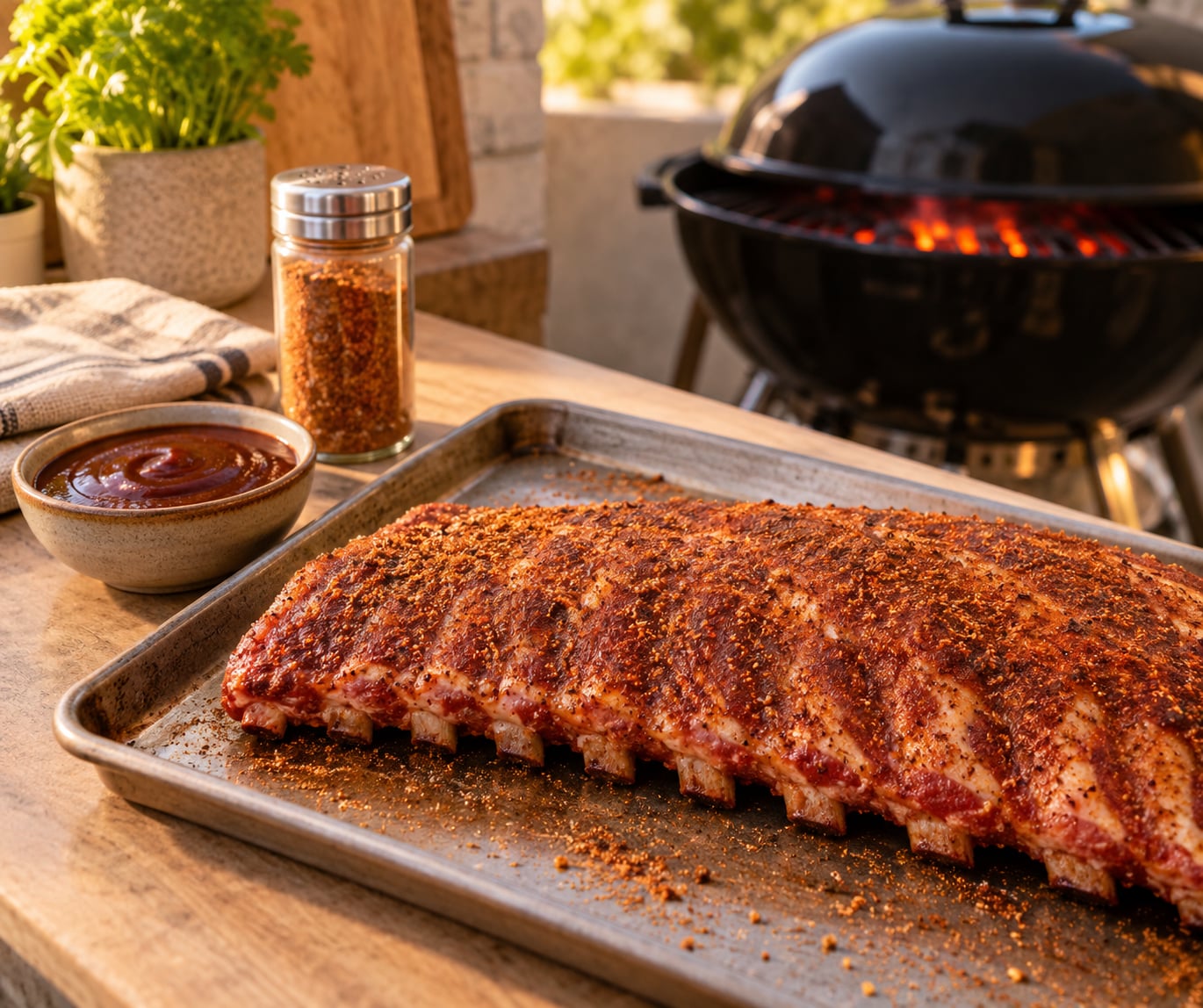
- Dry rub. Salt, pepper, garlic powder, paprika, and a little brown sugar is a solid everyday base. Rub it on both sides.
- Barbecue sauce. Hold it back until the grill finish, unless you want a candied, burnt crust.
- Tongs with a confident grip. You will be turning racks more than once.
Which cut to buy, and how size changes cook time
Baby back ribs are the smallest and most curved, roughly 1.5 to 2 pounds per rack. They cook fastest and are the easiest to flip on a grate because of the curve.
St. Louis-cut spare ribs are the long, flat, trimmed-down version of spares. They are the standard for this method because they lie flat and take sauce beautifully.
Country-style spares are the untrimmed, bone-in version. They have more meat and more fat, so add 30 to 45 minutes to the oven stage and expect more rendered fat in the packet.
Worth knowing: many experienced pitmasters argue that “fall-off-the-bone” is a sign you went too far, and that ribs should pull clean from the bone while still holding together. Cook to temperature and feel rather than chasing a collapse.
Step-by-Step: How to Cook Ribs in the Oven Then Finish on the Grill
How to Cook Ribs in the Oven Then Finish on the Grill: Prepare the Ribs
Pull the ribs from the fridge 30 to 45 minutes before you start. Ribs are a thick, uneven piece of meat and they cook far more evenly when they are not refrigerator-cold, and cooking them from cold straight into a hot pan is where a lot of tough racks come from. Sixty minutes at room temperature is the ceiling, not the goal.
Flip them bone-side up and score the membrane with the tip of a knife, then grab a paper towel and pull. The silver skin grips hard, and pulling with bare fingers is how people end up flinging ribs across the counter. A dry towel gets it in two or three passes.
Trim any flap of fat hanging past the bone ends. That loose fat renders into the bottom of the packet and can scorch during the grill finish, which is the main reason people lose the bark.
Dry the surface with paper towels, then season both sides. Oil is not needed here — the foil traps moisture, and the ribs render plenty of their own fat over three hours.
Brown the Ribs in the Oven
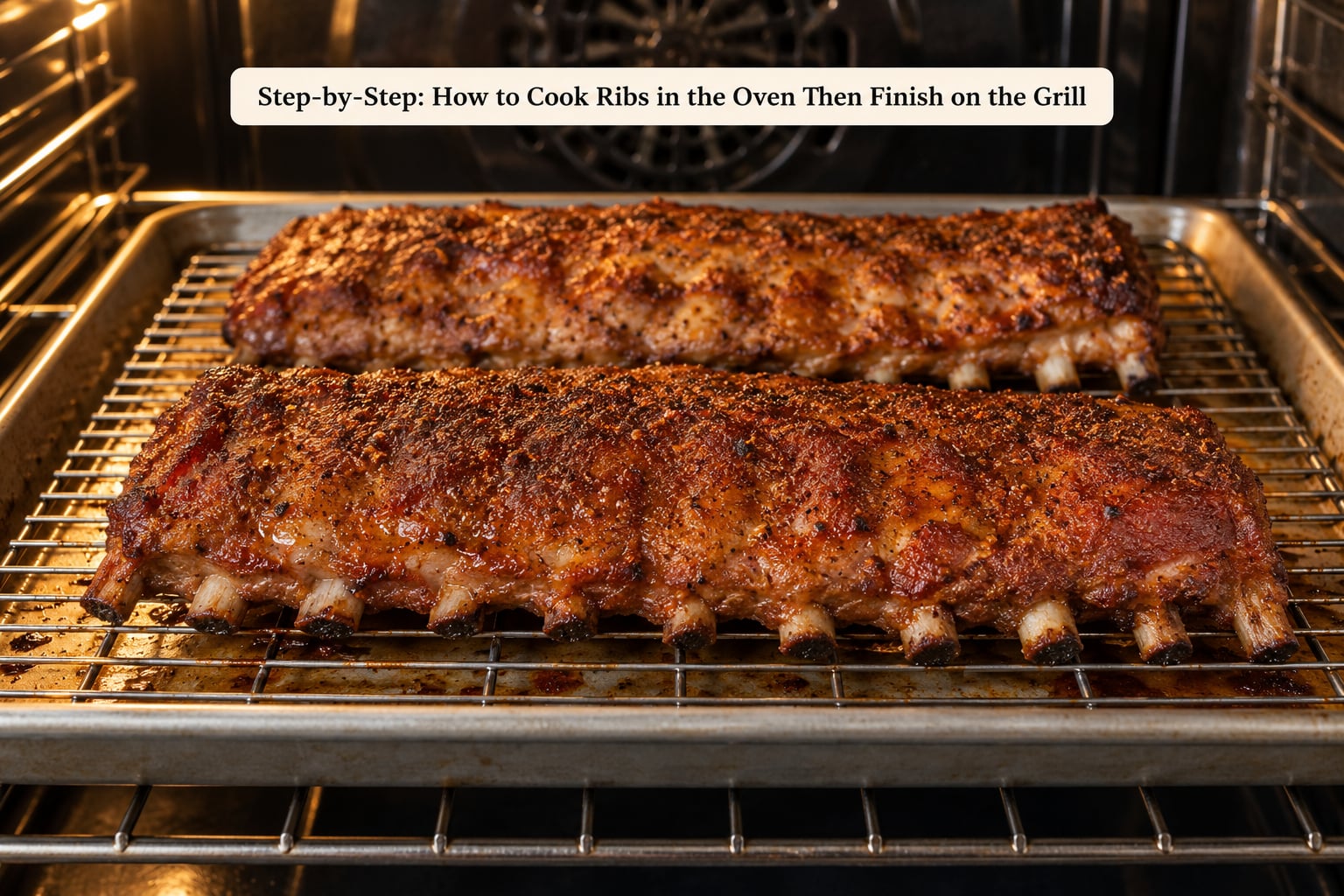
Start uncovered at 450°F for 15 to 25 minutes. This is not the main cook; it is a fast browning pass that gives you a colored exterior to work with later. The ribs are not close to done when this ends, and that is fine.
You are looking for deep color on the edges and the raised meat between the bones, not char. If you see black patches at this point, pull them a few minutes early — the covered stage will keep going, and the char will not come back.
Slow-Cook Until the Ribs Are Tender
Drop the oven to 300°F. Lay each rack meat-side up on a folded foil sheet, spoon a couple of tablespoons of water or stock into the bottom of each packet, and fold the foil over with two overlapping seams. Press the packet flat and crimp the edges hard, then repeat the fold on the other side if the ribs are thick. A tight double wrap is doing the actual work here — every leak is steam you lose.
Set the packet on a baking sheet and cook until the temperature says tender. Check at the 90-minute mark on baby backs and the 2-hour mark on anything else.
| Rib cut | Oven temperature | Wrapped bake time | Pull the foil at | Grill finish |
|---|---|---|---|---|
| Baby back | 300°F | 2 to 2½ hours | 190°F to 195°F | 8 to 10 minutes per side |
| St. Louis spare | 300°F | 3 to 3½ hours | 195°F to 200°F | 10 to 12 minutes per side |
| Country-style spare | 275°F to 300°F | 3½ to 4½ hours | 200°F to 205°F | 10 to 15 minutes per side |
| Any cut, slow route | 275°F | Add 30 to 45 minutes | 195°F to 205°F | Same as above |
Read the table as a range, not a countdown. Cut thickness varies more than any oven setting does, so the thermometer wins and the clock only tells you when to start checking.
Judge tenderness two ways. The thermometer gives you 190°F to 205°F depending on the cut. For the feel test, slide a fork between two bones and twist gently — it should move with almost no resistance, and the meat should pull from the bone without shredding into mush. Testing by cutting into a rib early is the most common reason people declare ribs underdone at the two-hour mark; that cut rib will never get tender again.
Rest the Ribs Before Grilling
Open the foil over the sink, not the counter. That packet is full of hot rendered fat and it sprays when steam hits the air, which is a genuinely good way to burn your forearm.
Let the ribs sit uncovered for 10 to 15 minutes. Resting lets the muscle fibers relax and reabsorb the juices they pushed out during the bake, and a rack that has rested is firm enough to lift onto the grate without shedding meat.
If you want to cook ahead, cool the racks quickly, refrigerate them in the packet for up to two days, and grill straight from cold — add 5 minutes to the finish. One reader on Rock Recipes’ comments baked ribs on Sunday and grilled them Tuesday with the same result as same-day, which matches what most cooks report about the method.
Keep the foil loose over the resting ribs if you are holding them more than about 30 minutes. Tight foil traps steam and softens the surface you are about to grill.
Finish the Ribs on the Grill
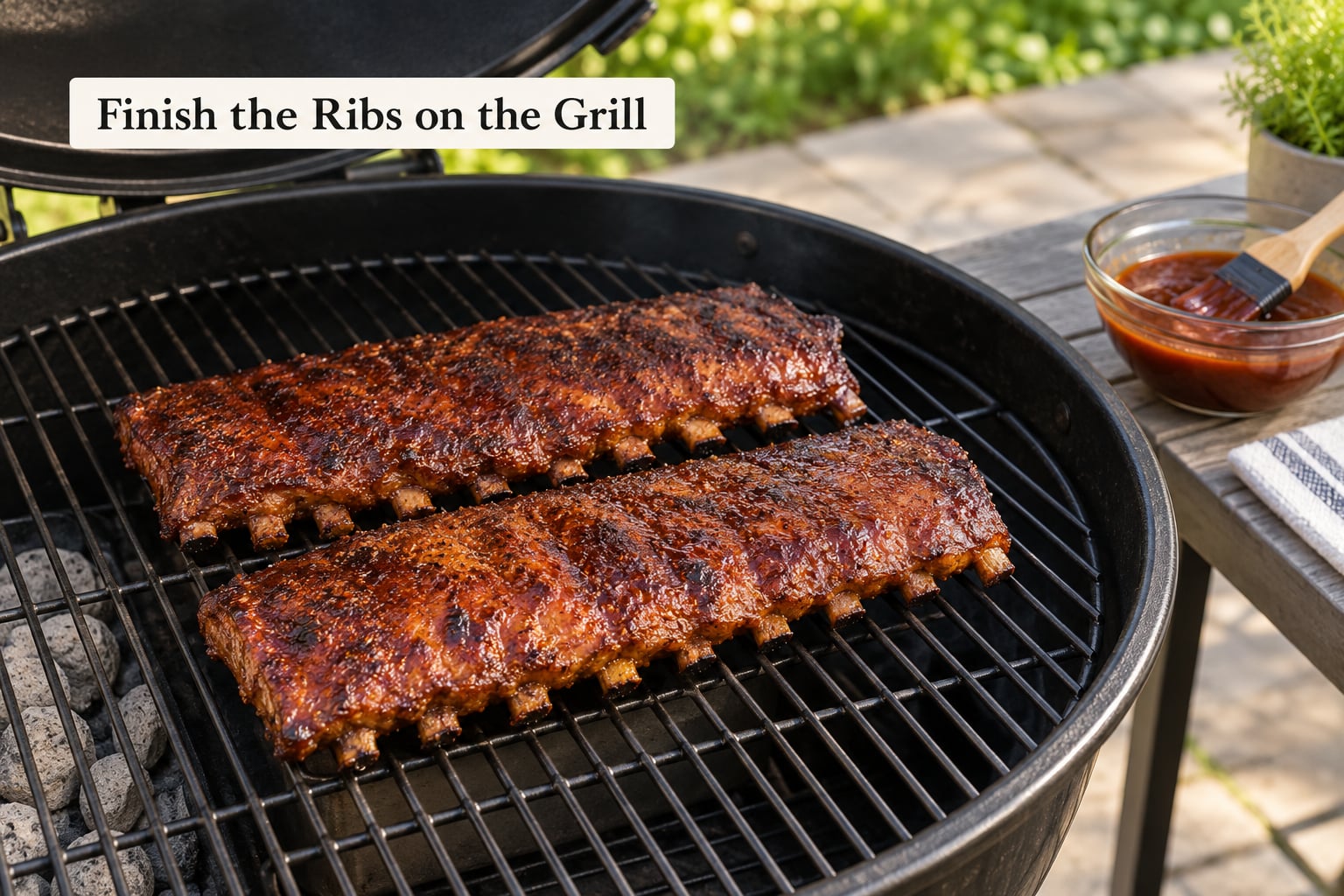
Set up a two-zone fire: one side hot for coals, the other side cool for cooking. If you do not build two zones, push everything to one side and cook there. The ribs only need enough heat to caramelize, and ribs parked over direct flame char on the outside while the middle stays lukewarm.
Hold the cool side around 350°F to 400°F. On a gas grill, that is one burner on high and one off, lid closed. On charcoal, bank the coals to one side and let them burn down to a steady glow with ash on top.
Lay the ribs on the cool side and leave them for 8 to 12 minutes before the first turn. You want to hear a faint sizzle, not a loud one. Baste with sauce for the final 3 to 4 minutes per side only, since most sauces are heavy in sugar and go from lacquered to black in about a minute over open heat.
The ribs come off at 190°F to 205°F internally, the same window you pulled them from the oven, plus carryover from the final turn. Rest them 5 minutes off the grill before you slice between the bones.
No grill? The broiler works. Set the ribs on a foil-lined sheet on the top rack under the broiler, sauce them, and give them 5 to 6 minutes, turning once. Keep the oven door cracked and stand back, because sugar and broiler heat are a fast combination.
Smoking works in place of grilling too. Give the ribs 30 to 45 minutes over indirect smoker heat at 250°F to 275°F, sauce in the last 15 minutes, and skip the two-zone discussion entirely since the whole chamber is already indirect.
Common Mistakes
Cooking the whole oven stage at one temperature. A 450°F browning pass followed by a drop to 300°F gives you color and tenderness. Baking at 350°F the entire time gives you neither reliably — the outside dries out long before the collagen finishes converting.
Wrapping too loosely. If the packet is not sealed tight on two overlapping seams, you are roasting, not braising. Open a slack packet at the halfway mark and you will find dry meat and a baking sheet of congealed fat.
Grilling over direct flame. This is the single most common way the method fails, and it shows up in forum threads over and over. Direct heat burns the sauce, and ribs under char are still raw in the middle. Use the cool side and give it real heat recovery time between batches.
Saucing too early. Sugar hits its burn point fast over direct heat. Hold the sauce until the ribs are warmed through and the glaze is going on in thin coats, not one thick one.
Cutting into the ribs to test them. Every cut rib is a piece of meat you just lost, and the exposed surface dries out. Probe with the thermometer between the bones, or use the fork twist.
Cutting the rack too short. A full rack flexes when you turn it and will shed pieces between the bars. Cut racks in half for the finish, or ask someone to help you move a whole rack in one motion.
Treating color as doneness. A beautiful bark means the sugar and heat worked, not that the meat is tender. Thermometer first, color second, always.
Frequently Asked Questions
What temperature should ribs be baked at before grilling?
Bake them at 300u0026deg;F after a short 450u0026deg;F browning pass, or hold 275u0026deg;F the whole way if you are cooking country-style spares or want extra tenderness. Below 275u0026deg;F the collagen conversion crawls and you are looking at four-plus hours. Above 325u0026deg;F the outside dries out while the meat near the bone is still tough. Finish them at 190u0026deg;F to 205u0026deg;F internally.
How long does it take to cook ribs in the oven then finish them on the grill?
Plan on 3 to 4 hours total for St. Louis ribs: about 20 minutes browning uncovered, 3 hours wrapped at 300u0026deg;F, then 10 to 12 minutes per side on the grill. Baby backs shave about an hour off the oven stage. Always go by internal temperature rather than the clock, since cut thickness shifts bake times by a full hour.
Should I wrap ribs in foil before putting them on the oven?
Yes, for the long middle stage. Foil traps steam so the collagen converts slowly and evenly without the exterior drying out or burning. Two overlapping seams and a hard crimp matter more than double-wrapping. The exception is the first 15 to 25 minutes, which you run uncovered at 450u0026deg;F to build color before the packet goes on.
When should I put barbecue sauce on ribs when finishing them on the grill?
In the last 3 to 4 minutes per side, and only in thin coats. Most barbecue sauces are high in sugar, which goes from lacquered to black in under a minute over direct grill heat. Lay the ribs over the cool side first, let them warm through, then sauce. Brush a little more on after the final turn for a glossy finish.
How do I know the ribs are tender enough to grill?
Probe between the bones with an instant-read thermometer and look for 190u0026deg;F to 205u0026deg;F, higher for the thicker cuts. Then slide a fork between two bones and twist gently. It should move with almost no resistance while the rib still holds its shape. Do not test by cutting into the meat, since every cut rib dries out and you cannot undo it.
Can I cook frozen ribs in the oven and then finish them on the grill?
Yes, cooking from frozen is safe, just add time. Thaw in the refrigerator overnight when you can, but a frozen rack will cook fine sealed in foil. Expect to add 30 to 60 minutes to the wrapped bake, and check temperature starting at the 2-hour mark rather than the 90-minute one. Thaw for the grill finish if you can, so they heat evenly.
Conclusion
Season the ribs and pull the membrane, brown them uncovered at 450°F for about 20 minutes, then drop the oven to 300°F and slow-cook them sealed in foil until they hit 190°F to 200°F. Rest them 15 minutes, unwrap over the sink, and grill them on the cool side of a two-zone fire for 10 to 15 minutes per side, saucing only in the final few minutes. Start tonight with the thermometer in your hand, and the tough-rack problem disappears.