Shopping a farmers market comes down to four moves: bring cash and your own bags, walk the whole market once before you buy anything, ask the vendors what’s freshest today, and pack your purchases cold for the ride home. Give yourself 45 to 60 minutes for a first visit and treat it as an outing, not a grocery run.
Most first-timers tell me the same two regrets. One bought three kinds of squash, a bunch of kale, and herbs with no plan for any of it. The other pulled into the nearest parking spot at closing time and found four stalls already packed up. Both are fixable with a short prep routine, and the fix costs nothing.
Table of Contents
- What You Need
- Step-by-Step: How to Shop a Farmers Market for Beginners
- 1. How to shop a farmers market for beginners starts with planning ahead
- 2. Arrive early and make one loop
- 3. Ask vendors about today’s harvest
- 4. Choose produce by look, feel, and season
- 5. Inspect meat, poultry, seafood, and eggs carefully
- 6. Compare prices without assuming every vendor is the same
- 7. Pay, organize, and head home
- Common Mistakes
- Frequently Asked Questions
- What should I bring when shopping at a farmers market for the first time?
- Are farmers market prices always lower than grocery store prices?
- How do I know if produce at a farmers market is fresh?
- Can I buy meat and seafood at a farmers market?
- Do farmers market vendors accept credit cards or only cash?
- How should I transport farmers market groceries safely?
- Start With One Easy Market Trip
What You Need
You can walk into a market with almost nothing and still buy food. You will just do it badly. Here’s the short kit that makes a first trip smooth.
- Cash, mostly in small bills. Small produce stalls and bakers rarely have a card reader or a way to make change for a twenty. Larger vendors often take cards through a phone reader, but they may add a fee.
- Two or three reusable totes. One for produce, one for bread and jars, and a third for anything cold. Canvas or mesh bags for greens let you rinse produce later without pulling leaves off.
- An insulated bag and a few frozen gel packs. If the drive home is more than about twenty minutes, this is the single most useful thing you can bring.
- A written or phone list. List-making keeps you from buying six things when you only needed two. A short list beats a detailed meal plan on day one.
- A pen, in case you want to write prices down. Most people use the notes app on their phone instead.
Leave the cooler in the car until you’ve finished shopping, then load everything perishables-first at the end. Walking a market with a heavy cooler is miserable.
Step-by-Step: How to Shop a Farmers Market for Beginners
1. How to shop a farmers market for beginners starts with planning ahead
Look up the market’s location, season, and hours before you drive over. Many curb markets run April through October and close the moment the last vendor packs up, so a half-hour late arrival can mean a very short trip.
Next, decide three to five meals you want to cook this week. A market trip with a meal in mind is a market trip that doesn’t end with a bag of greens wilting in the crisper. Then set a rough ceiling for the visit and pick two or three seasonal items to prioritize.
Seasonal first, choice second. The market rewards you for buying what the weather gave the grower this week, not for buying the twelve things you planned on.
2. Arrive early and make one loop
Walk the entire market before you spend anything. Note what each stall has, what the prices look like, and where the small items are, because those sell out first. Leafy greens, berries, herbs, and good bread go early.
On your second pass, buy. That one-loop habit prevents the classic beginner spiral, where you buy a bunch of kale at stall four and then discover a farm with twenty kinds of kale at stall nine.
Start with items that are hard to replace later, then circle back for delicate greens, berries, and herbs at the very end so they ride home on top of everything else.
3. Ask vendors about today’s harvest
Farmers genuinely enjoy this, and it’s the part of the market a grocery store can’t copy. A few questions that get useful answers:
- When was this picked?
- What’s especially fresh today?
- Which variety works best for roasting?
- Was this grown here, or made locally from local ingredients?
- Will you have more of this next week?
That last question is how relationships start. Shoppers who buy from the same farm every week get a heads-up when the tomatoes are about to peak, and the vendors remember who showed up.
4. Choose produce by look, feel, and season
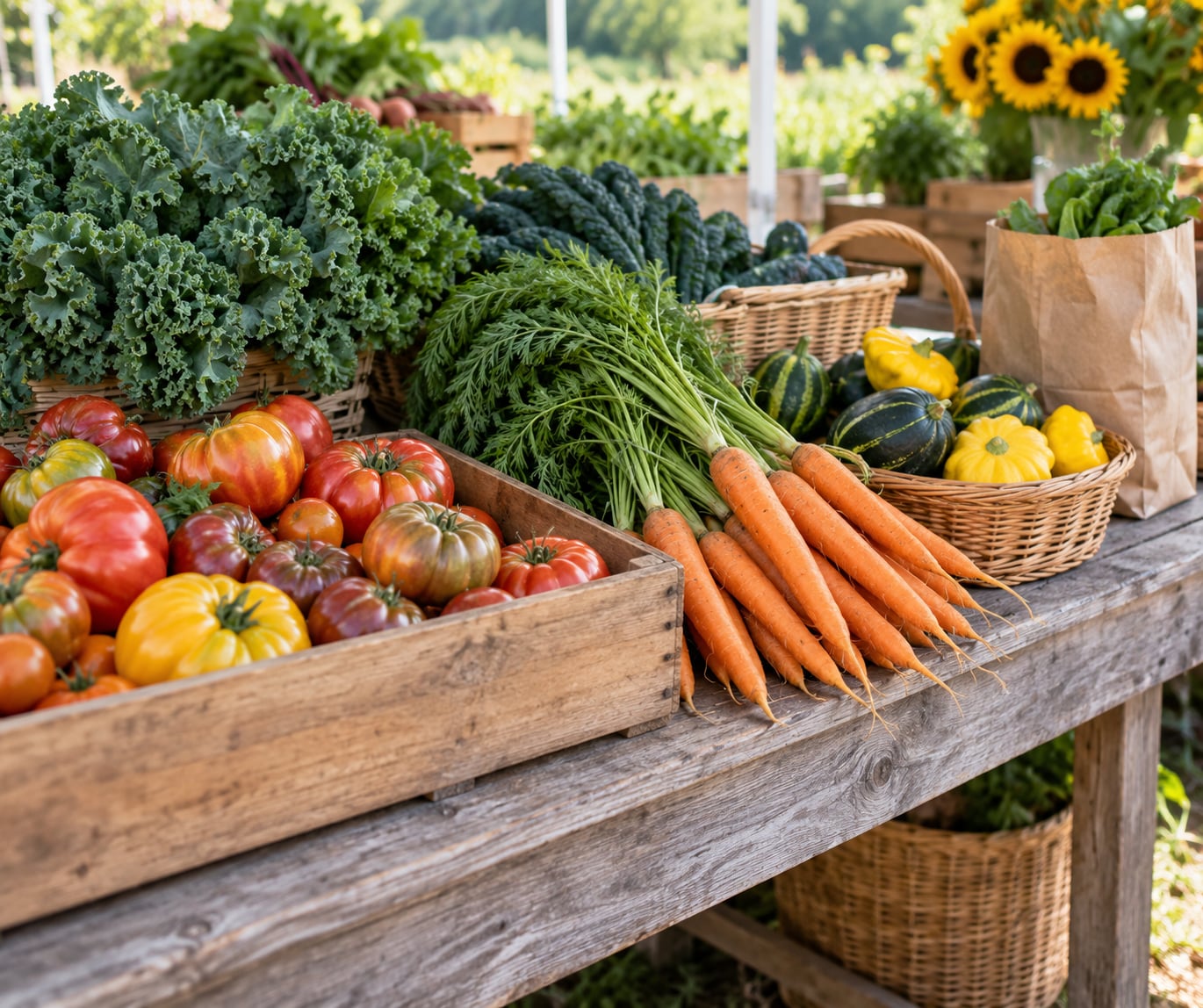
Choose firm, heavy-for-its-size vegetables with bright, even color and fresh stems. Leafy greens should be crisp and clean, not slimy at the base. Fruit should smell like itself, and a piece that smells like nothing is usually a piece that tastes like nothing.
A little cosmetic damage is not the same as spoilage. A tomato with a small blemish on one side can be fine for sauce. A soft tomato, a slimy mushroom cap, or a berry leaking juice has crossed into discard territory.
Root vegetables and winter squash should feel heavy and have dry, intact skin. Melons, peaches, and cantaloupe smell sweet and give slightly at the stem end. Expect the market version to look different from the grocery version, because heirloom and specialty varieties rarely survive commercial shipping.
5. Inspect meat, poultry, seafood, and eggs carefully
Many markets have meat, poultry, seafood, and egg vendors, and it’s fine to buy from them. Just treat that part of your trip the way you’d treat a butcher counter.
Look for a clean, refrigerated display kept at or below 40°F, with raw meat sitting in ice or on a cold plate and not dripping. Chicken, turkey, and other poultry should be pale pink with no gray or translucent patches, and ground meat should be an even pink with no discoloration. Fish fillets should smell clean and briny, not sour.
Keep raw meat and seafood separate from your produce and separate from cooked food, and put them in the insulated bag or cooler last so they stay cold and don’t drip on anything else. Refrigerate raw poultry and ground meat within two hours of purchase, and refrigerate or freeze it the same day you shop.
When you cook, follow the USDA minimum internal temperatures: 165°F for poultry, 160°F for ground meat, and 145°F for whole cuts of meat and fish, with a rest before slicing. Vendors will hand you cooking times and safe handling notes if you ask.
6. Compare prices without assuming every vendor is the same
Per-pound and per-item prices vary a lot, because size, variety, and growing method differ. A pound of small heirloom tomatoes will always cost more than a pound of bulk processing tomatoes, and the market version is generally pricier than the grocery store’s version.
Compare like with like: same item, similar size, similar ripeness. Ask about sizes, grades, and how something was grown, and weigh the answer against what you would actually use it for. That said, fresh market greens hold longer than store-bought greens, which quietly offsets the higher sticker price once you stop throwing food away.
Round out the trip at a grocery store for pantry staples and dairy if you need them. A market is a produce trip, not a one-stop shop, and most beginners feel better planning on that assumption.
7. Pay, organize, and head home
Have your cash ready before you reach the vendor. Pay, take your receipt, and keep small bills in a separate pocket so you’re not digging through a full wallet at every stall.
Some markets run a token system where you buy tokens at an information booth or central cash box and spend them at individual stalls. Many accept SNAP and EBT through those tokens, and some markets double the value through nutrition incentive programs. If you plan to use them, check the market’s website first.
On the way home, pack heavy items at the bottom of the bag, fragile greens and herbs on top, and raw meat and seafood sealed and separated in the cooler. Refrigerate leafy greens and herbs, store eggs in the coldest part of the fridge, and freeze meat and seafood you won’t cook within a day or two.
Common Mistakes
Buying more than you’ll eat in a week. Fix: buy what your meal plan calls for, and treat anything extra as a cooking project rather than a garnish. Shoppers who end up with surplus fruit often freeze, dehydrate, or turn it into sauce or jam so nothing gets wasted.
Ignoring what’s actually in season. Fix: check a harvest calendar for your region before you go, and build the trip around one or two peak items. Seasonal produce is the cheapest, best-tasting food at any market.
Assuming every market item is certified organic. Fix: certification is a specific label, and many small growers simply don’t carry it. Ask the vendor directly how they manage their land and what their practices are. That’s a fair question and a normal one to ask.
Mishandling raw food. Fix: buy from chilled displays, separate raw meat and seafood from produce, use a cooler for the ride home, and refrigerate within two hours.
Never asking anything. Fix: ask what picked it, what’s freshest, and how to cook an unfamiliar item. “What’s this and how do I use it?” is the most common question beginners ask, and nobody minds.
Arriving at the last hour. Fix: earlier in the day means better selection and less crowd anxiety for first-timers.
Frequently Asked Questions
What should I bring when shopping at a farmers market for the first time?
Bring cash in small bills, two or three reusable totes, and an insulated bag with a couple of frozen gel packs. Add a short shopping list and a pen or phone for tracking prices. Small produce stalls and bakers frequently have no card reader and cannot break a large bill, so keep your cash easy to reach. Skipping the cooler is the one beginners regret most on a longer drive home.
Are farmers market prices always lower than grocery store prices?
No. Market items are often pricier per pound or per item than grocery store versions, especially for specialty and heirloom varieties. What you gain is freshness and shelf life: market greens and fruit usually last longer, which offsets the higher price if you actually use them. Shop the market for produce and herbs, then do the rest of your shopping as normal.
How do I know if produce at a farmers market is fresh?
Pick produce that is firm, heavy for its size, brightly and evenly colored, and free of major bruises. Greens should be crisp with clean, unwilted stems. Fruit should smell sweet and fresh, and melons should give slightly at the stem end. Small blemishes are fine for cooking, but soft spots, slime, leaking juice, or off smells mean the item has turned.
Can I buy meat and seafood at a farmers market?
Yes, many markets have licensed meat, poultry, seafood, and egg vendors. Buy only from displays kept at or below 40°F with product resting on ice, keep raw meat and seafood sealed and separate from produce, and put them in a cooler for the trip home. Refrigerate within two hours, and cook poultry to 165°F, ground meat to 160°F, and whole cuts and fish to 145°F.
Do farmers market vendors accept credit cards or only cash?
Cash is still the safest bet, particularly at small stalls, because many have no card reader and cannot make change for a large bill. Larger vendors often accept cards or mobile payments, sometimes with a small fee. Some markets also use a token system where you buy tokens at a central booth and spend them at stalls, and those systems frequently take SNAP and EBT.
How should I transport farmers market groceries safely?
Pack an insulated bag with gel packs in your car, load it last, and keep raw meat and seafood sealed and separated from produce. Put heavy items at the bottom of the bag and delicate greens and herbs on top. Get refrigerated items into the fridge within two hours, and freeze meat and seafood you will not cook within a day or two.
Start With One Easy Market Trip
For your first trip, keep it small. Bring cash in small bills, two totes, and a cooler with ice packs. Walk the whole market once, pick three to five things that are in season and on your meal plan, and ask one vendor what to do with whatever looks unfamiliar.
That’s it. Do the pantry run separately, get the perishables into the fridge within two hours, and go back next week. Shoppers who build a habit at one market stall usually stop overbuying within a couple of months, because they know what’s coming into season and who to ask.