To season a cast iron skillet properly, scrub the bare iron clean, wipe on the thinnest possible film of a high-smoke-point oil, bake it upside down at 450-500°F (230-260°C) for about an hour, then let it cool fully inside the oven. Repeat the oil-and-bake cycle three or four times. The whole job takes a few hours spread over an evening, and it is the single best thing you can do for a pan that arrived grey and bare.
Seasoning is not a coating you buy. It is a thin, carbonised layer of oil that has polymerised and bonded itself to the iron, and it forms only when heat is high enough to break the oil molecules down. Build it well and the pan releases eggs and fish skin without a scrap of butter for decades. Build it badly and you get a sticky, blotchy surface that flakes off in the sink.
Table of Contents
- What You Need
- How to Season a Cast Iron Skillet Step by Step
- 1. Inspect and Clean the Skillet
- 2. Apply a Thin Layer of Oil
- 3. Bake the Skillet
- 4. Cool and Repeat
- 5. Check and Maintain the Seasoning
- Common Mistakes
- Frequently Asked Questions
- How long does it take to season a cast iron skillet properly?
- Can I use soap when cleaning a seasoned cast iron skillet?
- What is the best oil for seasoning cast iron?
- How do I know when my cast iron skillet is seasoned?
- How do I fix a sticky or blotchy cast iron seasoning?
- How often should I re-season a cast iron skillet?
- Conclusion
What You Need
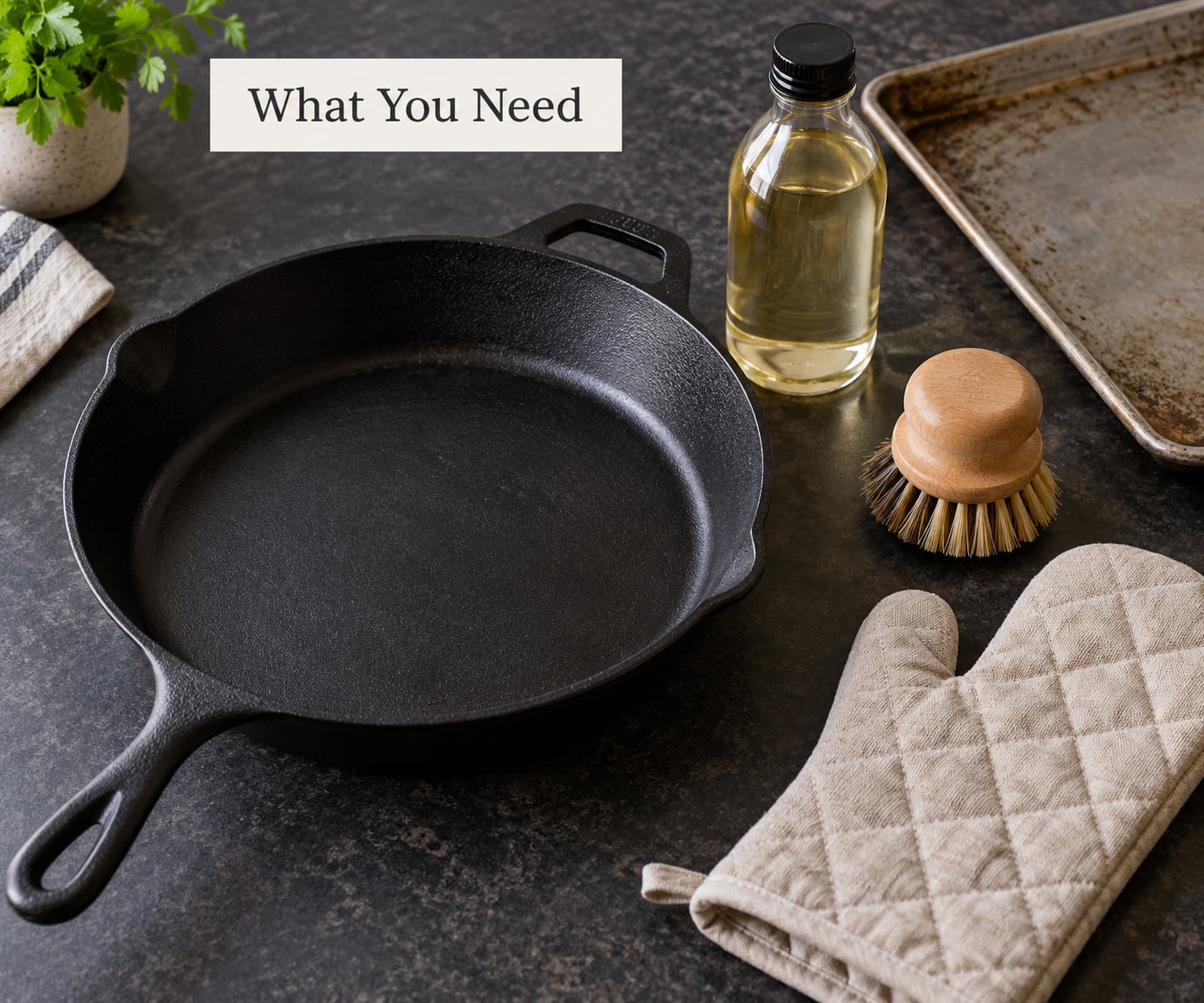
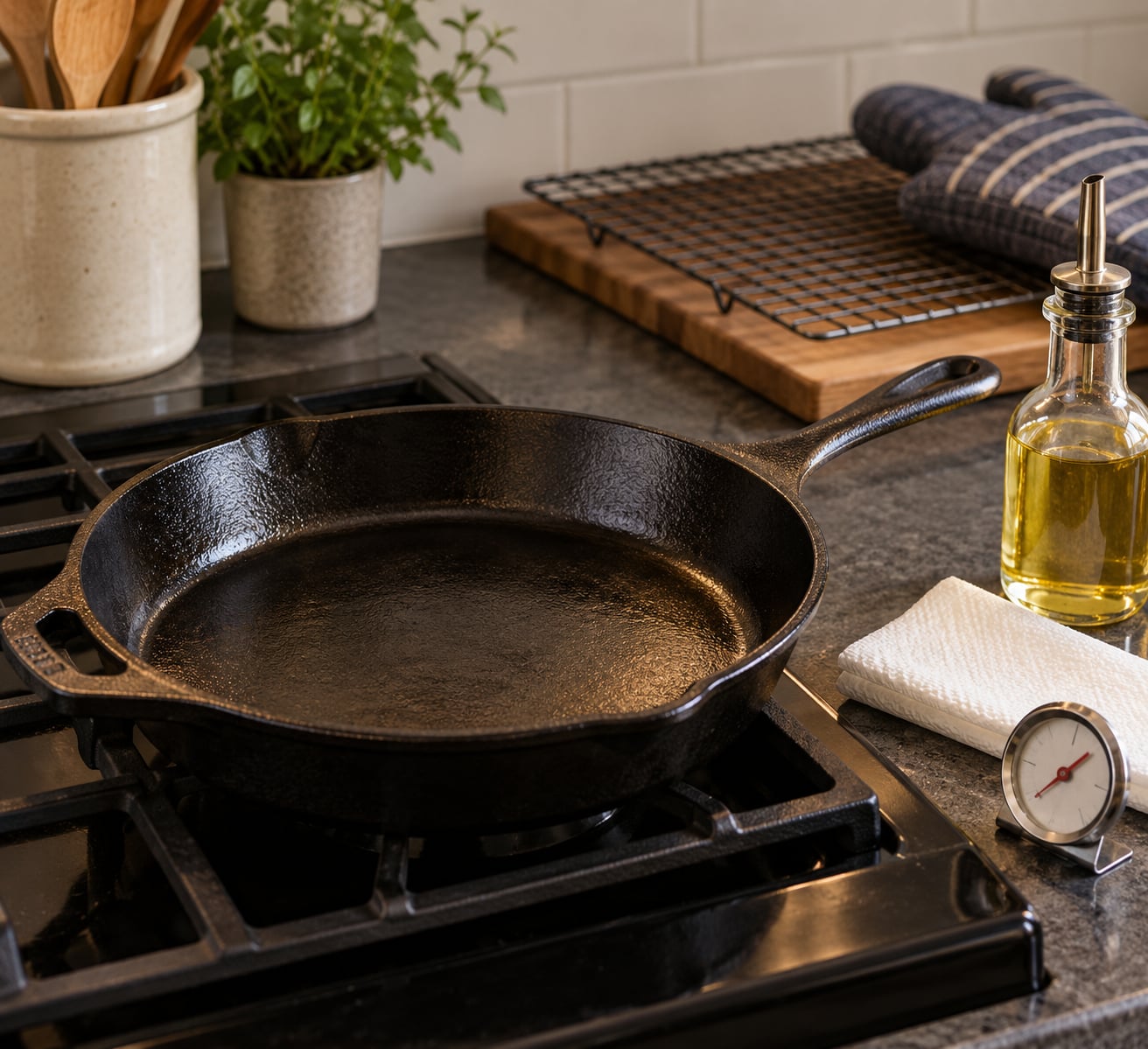
The supplies are cheap and most kitchens already have them. You need the skillet itself, a stiff nylon or chainmail scrubber, a small amount of neutral cooking oil, paper towels, a wire rack or foil-covered baking sheet, and oven mitts that can handle a pan at 500°F. An inexpensive oven thermometer is worth adding to that list, because a dial that reads 350°F while the oven runs hot is one of the most common reasons a first seasoning fails.
One clarification before you start. Everything here applies to traditional bare cast iron, not enameled cookware. Enameled Dutch ovens and pans have a glassy surface you cannot season at all, and washing them in the dishwasher is fine. If your pan is enameled, skip straight to normal washing and drying. It is also fine to season a pan that came pre-seasoned from a maker, though you will get a more even result if you scrub off the factory coating first.
How to Season a Cast Iron Skillet Step by Step
Before you season anything, put a baking sheet on a lower rack and heat the oven to 450-500°F (230-260°C). This is a longer job than most people expect, so read the five steps through once, then work them without rushing.
1. Inspect and Clean the Skillet
Scrub away every trace of rust, factory residue and loose graphite. A dry pan and a wire brush handle light orange rust; for a badly rusted vintage piece, scrub with coarse kosher salt and a little oil, then rinse and dry immediately. Household dish soap is fine here, since there is no seasoning to protect yet.
Drying is the step people rush. Rinse, dry with a towel, then set the pan on a burner over low heat for a few minutes until no steam rises and the iron is warm to the touch. Water trapped under the seasoning is what turns a bake into a rust patch.
2. Apply a Thin Layer of Oil
Put a teaspoon of oil in the middle of the warm pan and wipe it out with a paper towel, covering the base, the walls, the rim and the handle. Then take a second, dry paper towel and scrub the whole surface again until it feels dry and no oil comes off on your fingers. This counterintuitive extra wiping is the most important part of the method, and cast iron regulars on Reddit are unusually blunt about it: use barely any oil, then wipe as though you have spilled it and need to remove it.
Here is how the common oils compare. Smoke point is the number that matters, because seasoning only happens once the oil passes it.
| Oil | Approximate smoke point | Best for |
|---|---|---|
| Flaxseed oil | 430°F (220°C) | Fastest to polymerise; coats a bare pan in two or three bakes |
| Avocado oil | 480°F (250°C) | Neutral taste, high tolerance for higher oven temperatures |
| Grapeseed oil | 465°F (240°C) | Very neutral; a common pick for a new pan |
| Canola oil | 450°F (230°C) | Cheap, widely available, reliably polymerises |
| Vegetable oil (corn, soybean) | 440-460°F (225-240°C) | Works fine and stays in the cupboard permanently |
| Crisco or other solid shortening | Not a true smoke point | Traditional first coats; forms a thick, glossy layer |
Avoid olive oil, butter and sesame oil. They carry flavour that lingers on the pan, and they break down into an acrid coating when pushed past their smoke point in a 500°F oven. Flaxseed oil works well but cures more slowly than the refined oils, so it wants an extra coat and a day of patience.
3. Bake the Skillet
Place the pan upside down on the rack, with a folded oven mitt or a second pan underneath if you want an open surface above it. Bake for one hour. The oil will smoke lightly, darken and stop smoking as the polymer layer finishes forming, and a faint acrid smell in the kitchen during the last twenty minutes is normal and temporary.
Handle a 500°F cast iron pan with dry, thick oven mitts and expect a moment of stuck-to-the-rack when you move it. Loosen the edges gently with a spatula rather than yanking, and let the pan cool before you take it anywhere near water.
4. Cool and Repeat
Turn the oven off and leave the door shut for one to two hours. The slow, uninterrupted cool-down matters as much as the bake, because the polymer layer keeps setting as the temperature falls.
When the pan is cool enough to touch, wipe off any sticky or tacky patches with a dry paper towel, apply another whisper-thin coat and repeat the bake. Three to four coats is the standard for a bare or stripped pan. A second and third coat fill the small bare patches you can see on the first one, and you can stop when the surface looks uniformly dark and satin rather than grey and blotchy. Cooking fatty food in the pan between bakes is the fastest way to build the same layer.
No oven? Heat the emptied pan on the stovetop until it just begins to smoke, kill the heat, drizzle in about a teaspoon of oil, wipe it until the pan looks dry, let it cool and repeat. It takes longer and the finish is less even, but it works.
5. Check and Maintain the Seasoning
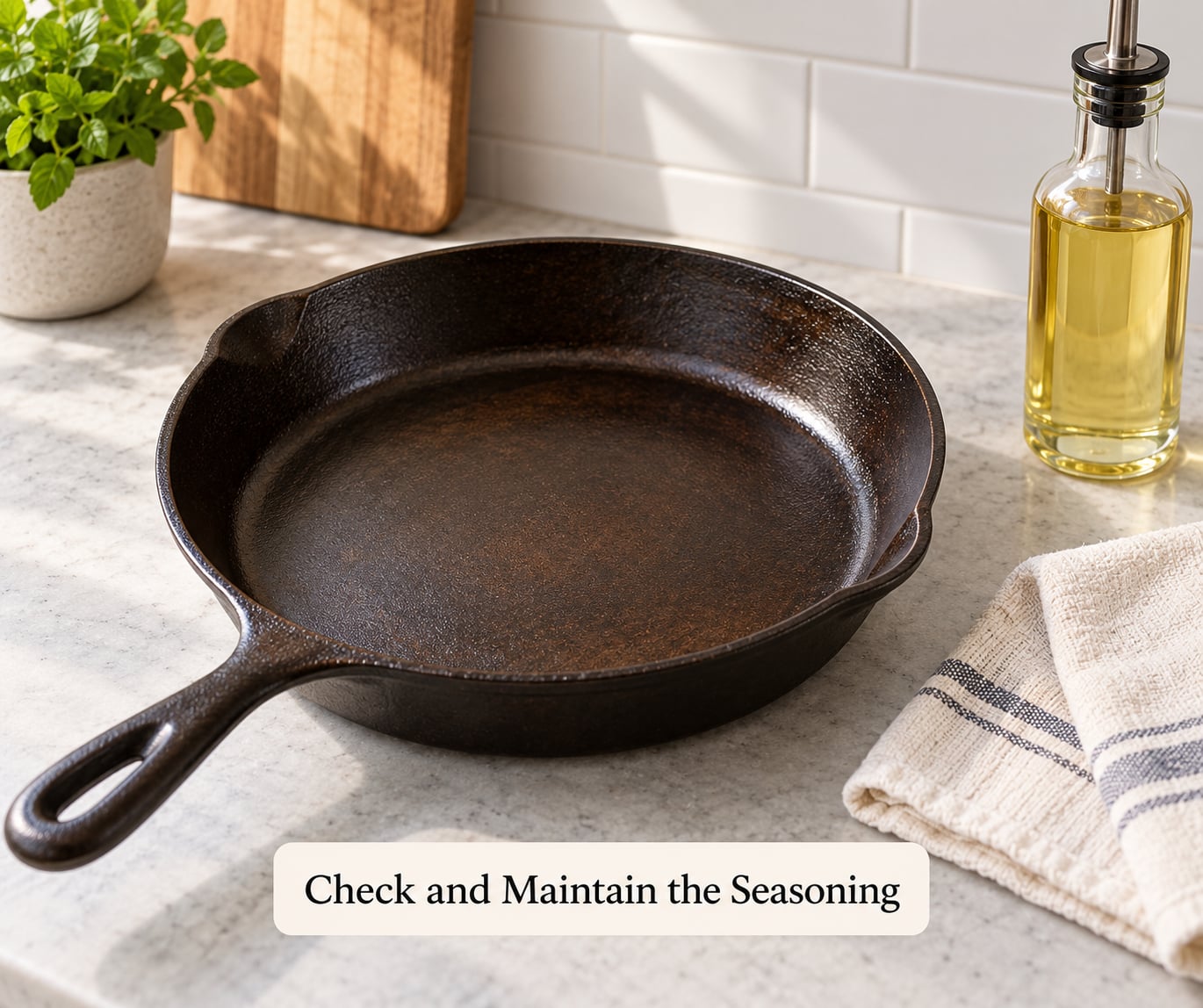
A properly seasoned skillet has a dark brown to black surface with a soft satin sheen, and it feels smooth rather than tacky under your fingertips. You will not see an obvious slick of oil sitting in the pan. If it looks grey, patchy or shimmery, it needs another coat rather than a strip.
Between cooking sessions, clean it the way you would a wooden spoon. Hot water, a little soap if you want it and a scrubber or brush, then dry on the burner. Modern dish soap is not made with lye, and a small amount will not strip a polymerised layer, which is why the old blanket rule against soap no longer holds. Skip the dishwasher, and skip leaving the pan soaking, because standing water is what causes rust.
While the pan is still a little warm, rub on a coin-sized amount of cooking oil and wipe until it looks dry. Store it uncovered or with the lid ajar so moisture can escape. Wipe a thin film of oil on the outside too if it lives near a humid sink, and you will not have to think about rust for years.
Common Mistakes
Almost every seasoning failure traces back to one of a handful of habits. Here is what goes wrong and what to do instead.
Leaving excess oil on the pan. Thick coats never fully polymerise, so they stay tacky and turn your skillet into a glue trap. The fix is the second dry wipe described in step 2, then check the surface with a clean finger before it goes in the oven.
Baking below the smoke point. Oil heated too gently or for too short a time carbonises into a brown, flaky film instead of a hard layer. Check your oven with a thermometer and bake for a full hour at 450-500°F.
Skipping the dry-down. Any moisture in the pan flashes to steam and leaves a spot that never seasons properly. Heat the cleaned pan dry before it goes in the oven, and never cool it under cold water.
Soaking the pan. Water sitting on iron for hours invites rust. Wash, dry, and move on.
Trusting the dial. Oven thermostats drift by 25°F or more without anyone noticing. A $10 thermometer is the cheapest fix in this entire process.
Judging by colour alone. A black pan can be under-seasoned and a light brown one can be perfectly good. Run a drop of water across the surface: if it beads and rolls, the surface is sealed. If it spreads into a thin film or sits in a puddle, the pan needs another coat.
Storing it damp or covered tight. Moisture trapped against iron is the leading cause of rust on an unused pan. Store it open, dry, and lightly oiled.
Adding too many coats. Six or seven thin coats can build a gummy surface that peels. Three or four thin coats beat one thick one every time, and you can always add another later.
If a pan is already sticky or blotchy, you rarely need to strip it. Scrub the tacky layer off with a chainmail scrubber and a little dish soap, dry it, and start the bake cycle again with a thinner coat. Full stripping is a last resort reserved for a pan covered in active rust or one you intend to sand down to bare metal.
Frequently Asked Questions
How long does it take to season a cast iron skillet properly?
Allow one afternoon of active work plus a few hours of cooling. Each coat takes about five minutes to apply, one hour in the oven at 450-500°F, and one to two hours of cooling in place. Three to four coats means a full evening. You can shorten this considerably by cooking fatty food in the pan between bakes, which builds seasoning while you eat.
Can I use soap when cleaning a seasoned cast iron skillet?
Yes. Modern dish detergents, including Dawn, are made from surfactants rather than lye, so a small amount will not dissolve a cured seasoning layer. Scrub with hot soapy water, rinse, and dry the pan on the burner. What you must avoid is leaving the pan soaking or putting it in the dishwasher, both of which trap water against the iron and cause rust.
What is the best oil for seasoning cast iron?
A neutral oil with a high smoke point, such as grapeseed, canola, avocado or vegetable oil, is the safest choice for most cooks. Flaxseed oil polymerises fastest but cures more slowly. Avoid olive oil, butter and sesame oil because they smoke before they bond and leave a strong taste on the pan.
How do I know when my cast iron skillet is seasoned?
Look for a dark brown to black surface with a soft satin sheen that feels smooth, not tacky, under your fingers. Run a drop of water across the cooking surface: if it beads up and rolls, the seasoning is sealed. If it spreads flat or sits in a puddle, the pan needs another thin coat and another bake.
How do I fix a sticky or blotchy cast iron seasoning?
Scrub the sticky areas with a chainmail scrubber or coarse salt and a little dish soap, rinse, dry the pan on the burner, then apply a fresh whisper-thin coat of oil and bake again. Repeat until the surface feels dry to the touch. Full stripping is rarely necessary and is only worth doing when the pan has active rust or a peeling, uneven film you cannot scrub away.
How often should I re-season a cast iron skillet?
A well-seasoned pan needs a full re-seasoning only when the seasoning is stripped, rusted away or worn down to patchy grey. Everyday cooking, especially with bacon, sausages and other fatty foods, maintains the surface on its own. A light wipe of oil after every wash and a proper bake once a year is plenty for a pan you use often.
Conclusion
Start tonight with the cleaning: scrub your bare skillet down, dry it properly on the burner, and put an oven thermometer in while you are at it. That first hour of setup decides whether the rest goes smoothly.
From there, keep the method simple. Wipe on a film of oil so thin it feels dry, bake at 450-500°F upside down for an hour, cool it in the oven, and do it three or four times. Once it is seasoned, a hot soapy wash, a quick dry on the burner and a coin-sized wipe of oil after every use will hold that surface for a lifetime. This method also works for a Dutch oven or a griddle, and it is how you bring an old rusted pan back into the kitchen.