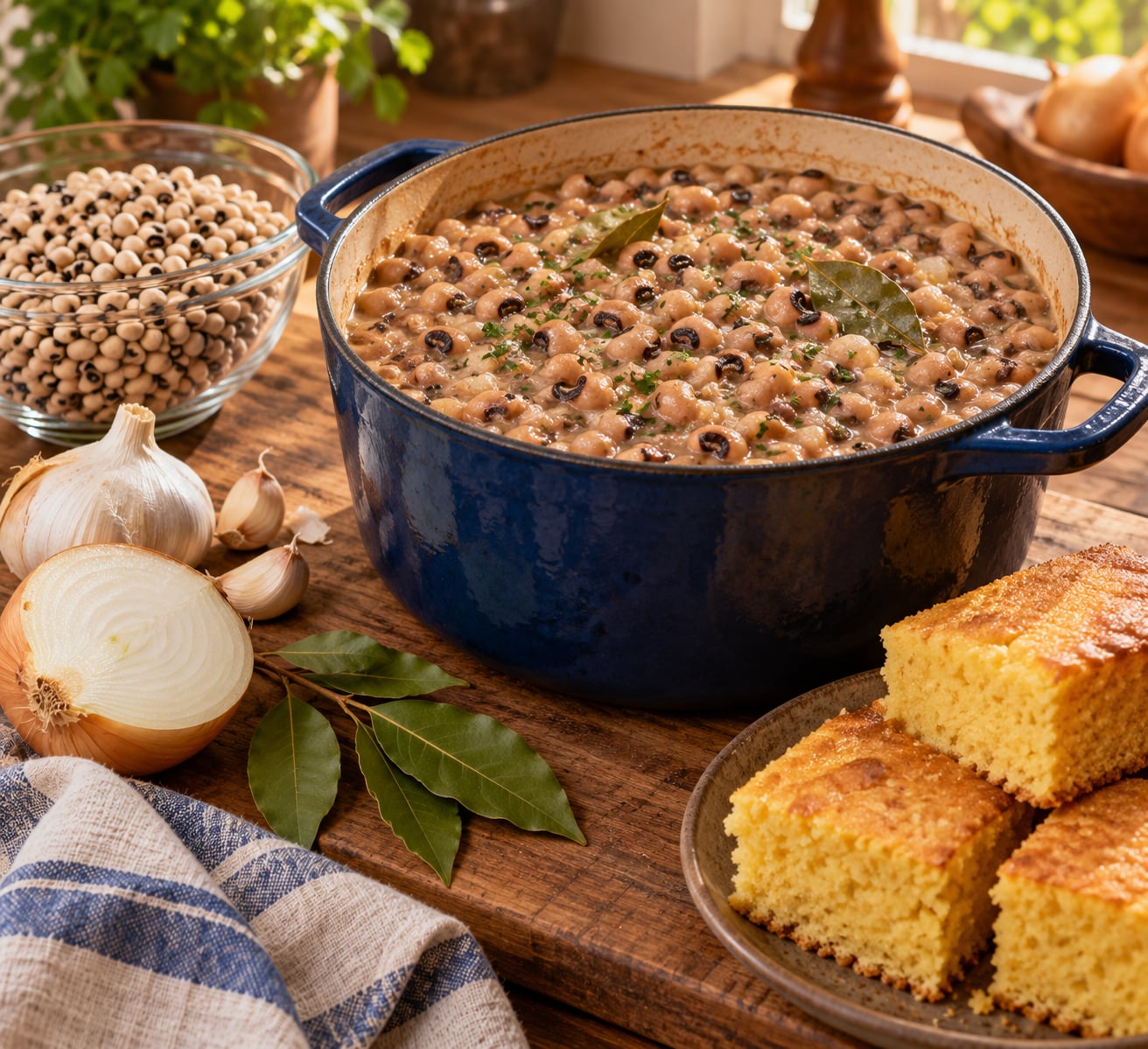
To make black eyed peas for New Year’s, simmer dried cowpeas low and slow with a sweet onion, garlic, bay leaves and a piece of smoked pork until the broth turns creamy and the beans give with a spoon. Plan on about 1.5 hours of cooking after an overnight soak, and start the night before if lunch is your New Year’s meal. The short answer on timing: eat them on January 1, not December 31. The tradition is a Southern and African American one, and the pot is about abundance as much as flavor.
Most home cooks land on the same method. The differences are about beans versus canned, whether you soak first, and how much smoke you want. What follows is the from-scratch version, plus the shortcuts that still taste like you meant it.
Table of Contents
- What You Need
- Dried, Frozen or Canned: What Changes
- How to Make Black Eyed Peas for New Year’s: Step by Step
- Step 1: Decide Whether You Need to Soak the Beans
- Step 2: Rinse and Sort the Black Eyed Peas
- Step 3: Build the Seasoning Base
- Step 4: Simmer Until Tender
- Step 5: Finish and Rest the Dish
- Step 6: Serve for Your New Year’s Table
- Common Mistakes When Making Black Eyed Peas for New Year’s
- Frequently Asked Questions
- Can I make black eyed peas for New Year’s without soaking them?
- How do I keep black eyed peas from getting too salty?
- What should I serve with black eyed peas for a holiday meal?
- Do black eyed peas thicken when they are reheated?
- How long do cooked black eyed peas last in the refrigerator?
- Conclusion
What You Need
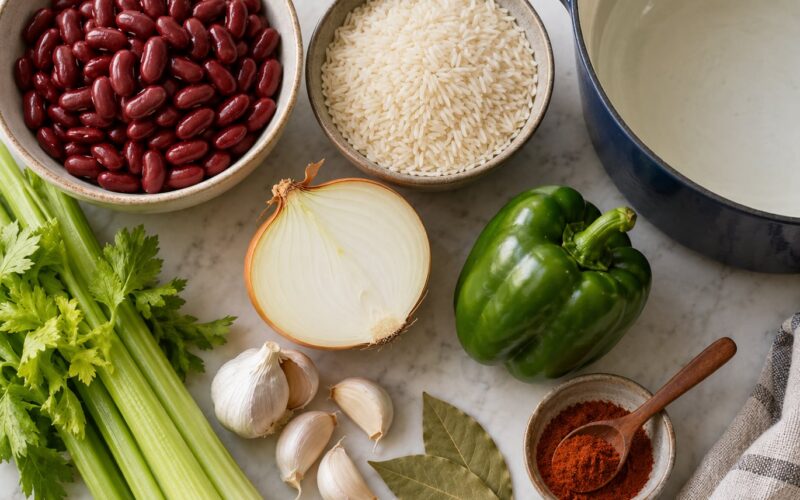
For six to eight people as a side dish, start with 1 pound of dried black eyed peas. They swell to roughly three times their dry weight, which is why a one-pound bag is a real pot rather than a side dish.
- 1 pound dried black eyed peas, or 1 pound frozen peas with snaps, or two 15-ounce cans of no-salt-added beans
- 4 to 6 ounces smoked meat such as salt pork, bacon, or two smoked ham hocks
- 1 large sweet onion, diced
- 1 small green bell pepper and 1 celery stalk, both diced
- 4 cloves garlic, minced
- 2 bay leaves, 1 teaspoon cayenne pepper, 1 teaspoon black pepper
- 8 cups water or chicken broth
- Kosher salt and apple cider vinegar, added at the end
You need a heavy pot with a lid, a colander, and a wooden spoon. Nothing here is specialty equipment.
Dried, Frozen or Canned: What Changes
Pick the format by the clock, not the label. Here is what each one costs you in time and what you give up.
- Dried, 1 pound. Soak 8 to 12 hours, then simmer 60 to 90 minutes. Best flavor and texture, and the version most New Year’s tables expect.
- Frozen with snaps, 1 pound. No soak needed, and it simmers in 30 to 40 minutes. The creamiest texture of the three, which makes it the practical pick if dinner is at noon.
- Canned, no salt added, two 15-ounce cans. No soak, 20 to 25 minutes of simmering. Rinse well, skip the canned liquid, and cook them briefly, because an hour in the pot turns them to paste.
On salt, one rule: do not salt the pot until the beans are nearly tender. Salt early seasons the water, and the skins toughen instead of softening. Save the salt, the vinegar and the final pepper for the last ten minutes.
For a crowd, scale by weight, not by cans. Half a pound per person is a generous side; a third of a pound is enough if rice and cornbread are on the table too.
How to Make Black Eyed Peas for New Year’s: Step by Step

Step 1: Decide Whether You Need to Soak the Beans
Soaking overnight is the traditional move and the one I default to. It shortens the cook time, softens the skins, and calms down some of the gas that makes people wary of a big pot of beans.
Three options, in order of preference. An overnight soak in cold water with a teaspoon of kosher salt, 8 to 12 hours. A quick soak: boil the beans for two minutes, cover, and let them sit an hour or two, then drain and cook as usual. Or no soak at all, which is perfectly fine, just budget 2.5 to 3 hours of gentle simmering. The tradeoff is real: unsoaked beans take longer and have a slightly firmer bite, but nobody at your table will know.
Households split on this. A can of peas warmed on the stove gets compared unfavorably to a pot someone started the night before. If the tradition matters to your family, soak them.
Step 2: Rinse and Sort the Black Eyed Peas
Drain the soaking water, then spread the beans on a clean towel or in a colander and pick through them. You are looking for split skins, pebbles and anything that looks like a fragment rather than a bean. It takes a minute and it saves you a surprise later.
Rinse well under cold running water until the water runs clear. That cloudy liquid carries the starch you do not want in the pot.
Step 3: Build the Seasoning Base
Warm 1 tablespoon of oil or render 2 tablespoons of bacon drippings in the pot over medium heat. Add the diced onion, bell pepper and celery, and cook 6 to 8 minutes until soft and just starting to brown. This is the step that keeps the finished pot from tasting thin.
Push the vegetables to the edge, add the smoked meat, and let it sizzle for 3 to 4 minutes. Scrape the browned bits off the bottom as you go; that fond is most of the flavor in the dish.
Add the garlic, bay leaves, cayenne and black pepper now and stir for 30 seconds, just until fragrant. Adding garlic any earlier burns it, and burnt garlic turns a pot of beans bitter.
No pork? Use smoked turkey wings, a spoonful of liquid smoke with a strip of tofu, or nothing at all. A meatless pot seasoned with onion, garlic, bay, a diced tomato and 1 teaspoon of liquid smoke still tastes like a holiday dish.
Step 4: Simmer Until Tender
Return the rinsed beans to the pot with 8 cups of water or broth, enough to cover the beans by about 2 inches. Bring to a boil, then drop the heat until you see one lazy bubble every second or two. A hard boil keeps breaking the skins and leaves you with a cloudy, starchy broth.
Cover loosely, leaving a corner open to let steam escape, and simmer 60 to 90 minutes. Skim the gray foam that rises in the first ten minutes. Stir occasionally so nothing catches on the bottom.
How do you know they are done? Squeeze one between your fingers. When it yields with a slight give and the skin starts to slip, you are there. If it still snaps, give it another 15 minutes. Also watch the liquid: it should thicken to coat the back of a spoon. Top up with hot water if it drops below the beans, because a pot that dries out scorches.
Step 5: Finish and Rest the Dish
Turn off the heat, cover the pot, and let it sit 10 to 15 minutes. The starch keeps releasing off the heat, and the broth turns noticeably creamier during the rest. This is the difference between a good pot and the one people remember.
Now season. Add kosher salt a teaspoon at a time, tasting after each, and stir in a splash of apple cider vinegar, which brightens the pot the way tomato does in a soup. Adjust the pepper. Thin with hot broth if it is thicker than you like, though a properly thickened pot is the goal.
Step 6: Serve for Your New Year’s Table

Serve the beans warm, spooned into a bowl rather than a platter, with sliced green onion and a few pieces of raw bell pepper on top for color. Cornbread is the classic partner, and so is a pot of collard greens with a little vinegar in them. Add rice and the dish becomes Hoppin’ John.
Leftovers keep 3 to 4 days in the refrigerator in a sealed container. They thicken as they sit, so loosen them with a splash of broth or water when reheating, and add a fresh pinch of salt. For longer storage, freeze in single-meal portions with a little headroom; thaw overnight in the fridge and reheat with a splash of liquid.
Common Mistakes When Making Black Eyed Peas for New Year’s
- Salting too early. The skins toughen and the beans stay hard. Salt in the last 10 minutes.
- Cooking at a rolling boil. Violent movement breaks the skins and makes the broth gluey. Barely simmering all the way through.
- Letting the pot run dry. Once the liquid drops below the beans, the starch on the bottom scorches and the whole pot tastes burnt. Add hot water, not cold.
- Under-seasoning. Beans absorb salt as they cook, so what tastes right in the pot can taste flat on the table. Taste again after the rest.
- Cooking canned beans too long. Twenty minutes is enough. An hour turns them to paste.
- Confusing a quick soak with a real one. A two-minute boil softens the skins; it does not replace an overnight soak or cut the cooking time to match.
- Skipping the aromatics. Onion, pepper and celery cooked in fat are not optional garnish here. They are the base the whole pot rests on.
A few habits that help more than any trick: keep the heat low enough that you have to lean in to hear the simmer, taste the liquid every 20 minutes after the first half hour, and let the pot rest covered before you season it. Start the beans the night before if you are serving at noon, and the whole thing gets easier.
Frequently Asked Questions
Can I make black eyed peas for New Year’s without soaking them?
Yes, and many experienced home cooks do. Skip the soak and give the beans 2.5 to 3 hours of gentle simmering, checking the liquid every half hour, until they yield to a squeeze. The texture ends up slightly firmer and the skins a touch thicker than soaked beans, but the flavor difference is small. Soaking mainly saves cooking time and reduces the gas some people notice. If lunch is at noon on January 1, an unsoaked pot started that morning still works if you start early.
How do I keep black eyed peas from getting too salty?
Hold the salt back until the beans are nearly tender, then add it a teaspoon at a time and taste between additions. Salt added at the start of a long simmer seasons only the water and toughens the skins, so people compensate by over-salting at the end. If you already used canned beans, buy no-salt-added versions, rinse them well, and skip the canned liquid. Vinegar at the finish also helps: a small splash of apple cider vinegar makes a salty pot taste balanced.
What should I serve with black eyed peas for a holiday meal?
Cornbread is the first answer, and it should be sweet and slightly crumbly. Alongside that, a pot of collard greens with a little vinegar, or braised greens of any kind, balances the starch. White rice alongside or cooked into the pot turns it into Hoppin’ John, the New Year’s dish that pairs peas and pork with rice. For a full table, add a baked ham or a smoked turkey, a simple salad with a sharp vinaigrette, and a sweet ending like pound cake.
Do black eyed peas thicken when they are reheated?
They do, more than most dishes. The starch in black eyed peas keeps releasing as the pot cools and reheats, so leftovers can go from spoon-coating to gluey within a day. Loosen them with a splash of hot broth, water or stock while reheating, and stir in a fresh pinch of salt and vinegar, which restores the brightness the thick broth dulls. Reheat gently over low heat or in short microwave bursts rather than boiling the pot, since a hard boil makes it thicker still.
How long do cooked black eyed peas last in the refrigerator?
Cooked black eyed peas keep 3 to 4 days in the refrigerator when stored in a sealed container and cooled within two hours of cooking. Keep the liquid with the beans, since that broth is part of what keeps them tender and creamy. For longer storage, freeze them in single-meal portions, leaving a little room for expansion, and use them within three months. Thaw overnight in the fridge, then warm with a splash of broth, and add salt only after reheating.
Conclusion
Sort the dried beans, soak them overnight, build the base with onion, garlic and smoked pork, then simmer low and slow and season only at the end. Start tonight and your black eyed peas for New Year’s will be ready well before the table is set.