How to make red beans and rice from dried beans comes down to patience and a low flame: soak 1 pound of dried red kidney beans overnight, simmer them gently with onion, celery, and green bell pepper for 60 to 90 minutes until creamy, then ladle them over steamed long-grain white rice. It is a one-pot dinner that costs a fraction of the takeout version and tastes better on day two.
I cook this roughly once a month, and the version I make has never once come out thin or salty. The difference is almost always the same three things: the beans get soaked, the pot barely bubbles, and I mash a few spoonfuls of beans right before serving.
Dried beans also beat canned ones for this dish in ways that matter. Canned beans sit in liquid that carries a large share of their sodium, they hold their shape instead of releasing starch, and you end up with thin broth rather than the creamy gravy-like consistency people picture when they think about red beans.
Table of Contents
- What You Need
- How to Make Red Beans and Rice from Dried Beans: Step-by-Step
- Inspect, Rinse, and Soak the Dried Beans
- Build the Seasoned Cooking Base
- Cook the Beans Until Tender
- Add the Rice and Finish the Dish
- Common Mistakes
- Frequently Asked Questions
- Do dried red beans need to be soaked before cooking?
- How long does red beans and rice take to make from scratch?
- Can I cook red beans and rice in a slow cooker?
- Why are my beans still hard after the recommended cooking time?
- Should I cook the rice separately for the best texture?
- How long can homemade red beans and rice be stored?
What You Need
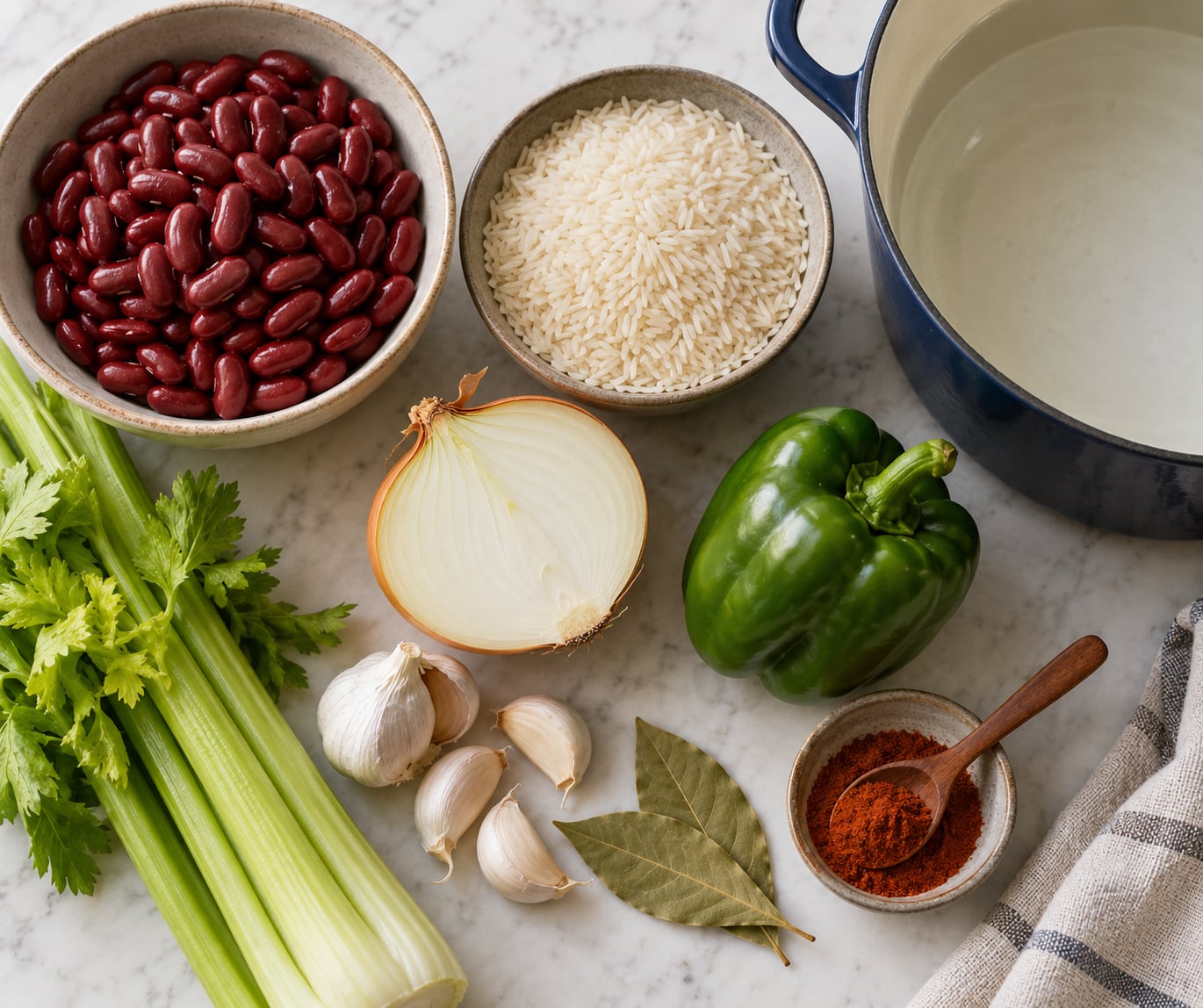
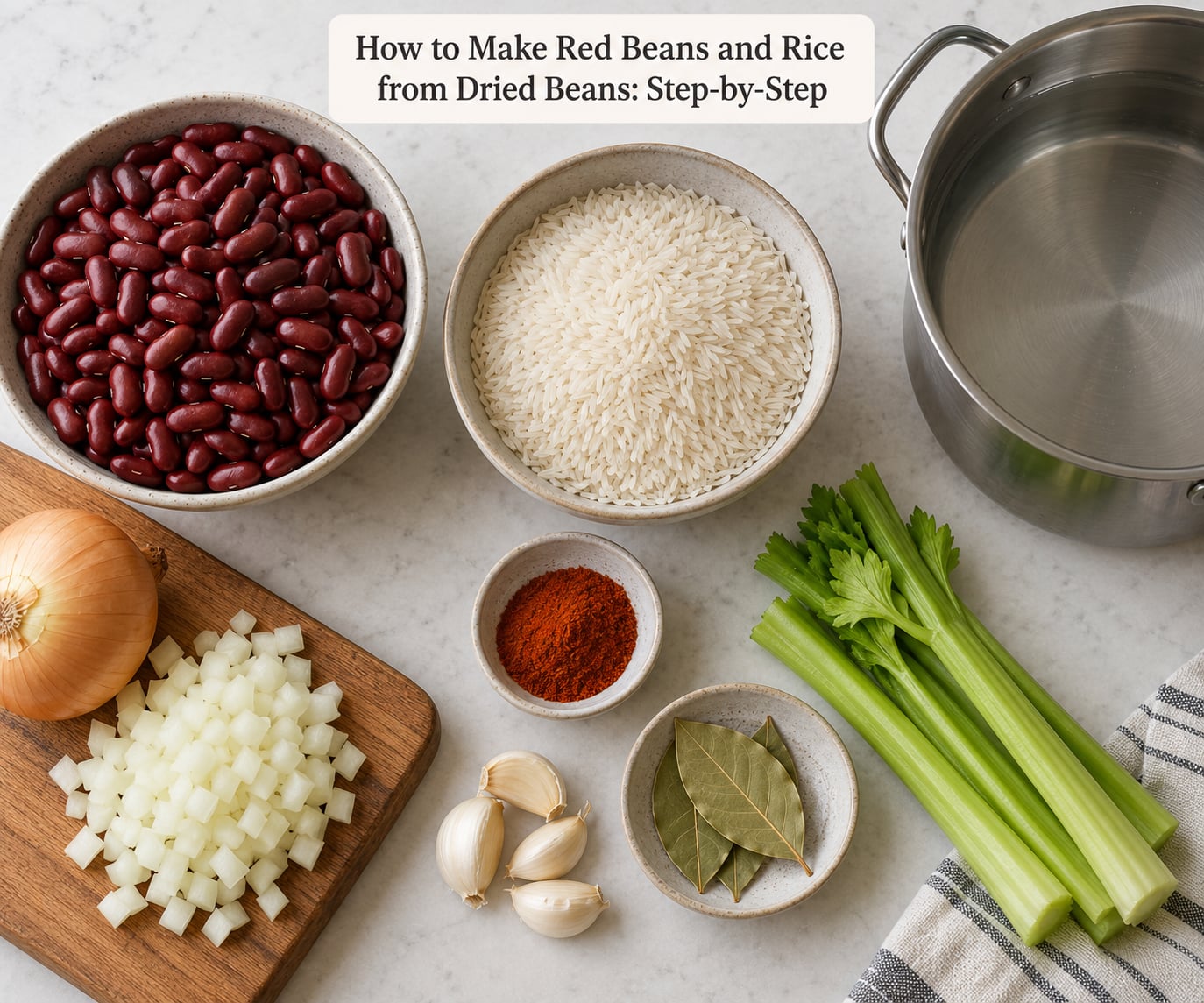
The list is short and every item has a job. This serves about six people alongside rice, scallions, and hot sauce.
- 1 pound dried red kidney beans (about 2 cups). Small red beans work too; they cook faster and turn creamier.
- 1 to 1.5 cups long-grain white rice. Long grain is the point. Medium grain turns gluey when it sits in the broth.
- 1 yellow onion, diced
- 2 stalks celery, diced
- 1 green bell pepper, diced
- 4 to 6 garlic cloves, smashed
- 2 bay leaves (count them, because they must come out before serving)
- 1 tablespoon smoked paprika plus 1 teaspoon cayenne or a pinch of red pepper flakes
- 1 teaspoon dried thyme
- 1 tablespoon Cajun or Creole seasoning blend
- 8 cups water or chicken broth, plus more as needed
- 4 to 6 ounces smoked meat: andouille, smoked sausage, bacon, ham hock, or tasso. Optional.
- 1 tablespoon apple cider vinegar
- Oil or bacon fat, 2 tablespoons
- Scallions and hot sauce for serving
Onion, celery, and green bell pepper are known in Louisiana cooking as the holy trinity, and they are the base of the pot rather than a garnish. The onion and celery soften into the broth and give it body, the pepper adds a grassy sweetness, and the starch the beans release as they simmer turns all of it into something close to a thick gravy.
For the smokiest result, use rendered bacon fat or andouille fat in place of plain oil. Cooks who cannot get andouille outside Louisiana substitute any decent smoked pork sausage, or skip the meat entirely and add a teaspoon of liquid smoke near the end of the cook.
How to Make Red Beans and Rice from Dried Beans: Step-by-Step
Inspect, Rinse, and Soak the Dried Beans
Spread the dried beans on a rimmed baking sheet and pick through them. Look for stones, split beans, and anything that looks like a seed or a dark speck. Then rinse the beans under cold running water for a minute or two until the water runs clear, then drain.
Next, soak them. There are three ways, and all three work.
Overnight soak (best texture). Put the beans in a large bowl, cover with about 8 cups of cool water by roughly 2 inches, and leave on the counter for 8 to 12 hours. A tablespoon of salt in the water seasons the beans all the way through. Cooks who soak longer, sometimes 24 hours, generally report softer, creamier results.
Quick soak (about 1 hour). Boil the rinsed beans in 8 cups of unsalted water for 2 minutes, let them sit in the hot water with the lid on for 1 hour, then drain and discard that water. Never cook the beans in it, because the starchy liquid makes them too soft and the dissolved minerals make them firmer than you want.
No soak. Skip it entirely and simmer straight from dry. It works; expect the total cook time to run 15 to 25 minutes longer and the texture to be slightly firmer.
Soaking is optional, but if your beans have been sitting in the pantry for years and never soften no matter how long you cook them, add half a teaspoon of baking soda to the soaking water and to the fresh cooking water. The alkaline pH softens the cell walls. Long-time cooks report this rescuing old beans that had previously defeated them.
You will know they are ready for the pot when the beans have roughly doubled in size and one bends without snapping when you press it with your thumb.
Build the Seasoned Cooking Base
Heat 2 tablespoons of oil or rendered bacon fat in a heavy pot over medium heat. If you are using andouille or smoked sausage, brown it first in a dry skillet, then scoop it out and set it aside. Browned meat tastes better than meat cooked grey in the pot.
Lower the heat a little and add the onion and celery. Cook them 5 to 7 minutes, stirring, until the onion turns translucent and the edges start to color. Add the green bell pepper and cook another 3 minutes.
Add the garlic, smoked paprika, thyme, cayenne, and the Cajun seasoning blend. Stir for 30 to 60 seconds, just until the spices smell toasted and coat the vegetables. This step is what separates seasoned beans from beans cooked in plain salted water, and it takes under a minute.
Drop the bay leaves in now so they infuse through the whole simmer, then add the drained beans and 8 cups of water or broth. Bring to a boil, stir once, then turn the heat down.
Cook the Beans Until Tender
Hold the pot at a gentle simmer, where you see a bubble or two every second or two. A rolling boil is the single biggest cause of tough beans; the skins get knocked around and the beans never soften evenly.
Cover partially and cook 60 to 90 minutes, stirring every 20 to 30 minutes and checking the liquid level. Beans absorb a lot as they cook, so when the liquid drops below the beans and you see the bottom of the pot, add a cup of hot water. Scorching is the usual reason a good pot of beans turns bitter.
Test for doneness rather than trusting the clock. Press a bean against the side of the pot with a spoon; it should mash easily with almost no resistance. Once beans are tender, they keep softening as long as liquid remains, so from that point on, check every 10 minutes.
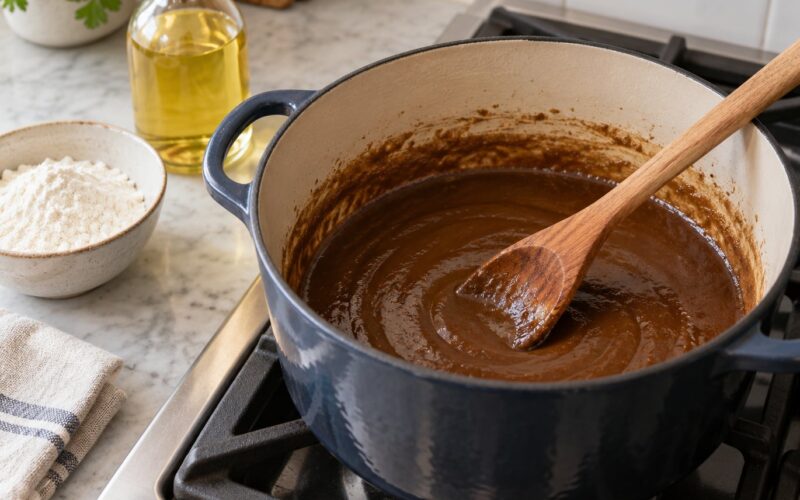
If the beans are tender and the broth is thinner than you want, stir a few spoonfuls of beans against the side of the pot. The starch released turns the liquid creamy without turning the whole pot to mush. Home cooks commonly mash roughly half the beans.
Return the browned sausage for the last 20 minutes if you set it aside earlier. Season with salt, more Cajun blend if it tastes flat, and a tablespoon of apple cider vinegar, which brightens the pot and rounds out the smoke. Stir in a teaspoon of liquid smoke if you are going meat-free.
Pressure cooker or Instant Pot: skip the soak, sauté the aromatics as described, add the beans, 6 cups of liquid, and salt. Cook on high pressure for 40 minutes, let the pressure release naturally for 15 minutes, then open and finish on the stovetop. Total time is about an hour with very little hands-on work.
Slow cooker: skip the soak, add everything without browning, 8 cups of liquid, and cook on low for 7 to 9 hours or on high for 4. Home cooks report that 1.5 pounds of beans with roughly 80 ounces of water works well in a 6-quart crockpot overnight.
Add the Rice and Finish the Dish

There are two ways to handle the rice, and the better one costs you about 20 minutes of extra work.
Cook it separately. Simmer 1 to 1.5 cups of long-grain white rice in 2 to 3 cups of salted water for about 15 minutes, then drain and let it steam dry, covered, for 10 minutes off the heat. Each grain stays separate and fluffy, and you get a pot of beans that has not had its texture ruined by rice starch.
Cook it in the pot. After mashing and seasoning, spread the rinsed rice over the top of the beans without stirring. Cover and cook on the lowest heat for 20 to 25 minutes, until the liquid is gone. Lift the lid and fluff. This works, but the rice picks up some color and the bottom can catch if your pot runs hot.
Either way, rest the pot with the lid on for 10 to 15 minutes before serving. Fish the bay leaves out first; this is the one step people skip and it is a real choking hazard.
Serve over rice with sliced scallions, hot sauce, and cornbread if you have it. For a vegetarian pot, leave out all the meat and add liquid smoke plus a tablespoon of Worcestershire sauce for depth.
Common Mistakes
Beans are still hard after the recommended time. Almost always one of three things: the beans are old, the heat was too high, or the liquid ran out and they scorched. Turn the heat down to a true simmer, add a cup of hot water, and give it another 30 minutes. If the beans came from a vintage bag, add half a teaspoon of baking soda.
Your beans and rice are too watery. Remove the lid, raise the heat to medium, and simmer for 10 to 15 minutes while stirring. Mashing a spoonful of beans at a time thickens faster than reducing, because you are adding starch instead of evaporating water.
Your beans and rice are too salty. Do not add more salt, and do not add water that dilutes the seasoning evenly. Serve the beans over a larger amount of unsalted rice, add unsalted broth or water to the leftovers, and season future batches more lightly. The broth itself is salvageable: simmer it down with a few beans mashed in.
The beans fall apart into mush. You kept them at a boil after they softened, or you cooked them far past the point of tenderness. Once beans are tender, treat them gently and give them only a few minutes more.
The seasoning tastes flat. You probably skipped the 30-second spice bloom in the fat, or you did not finish with vinegar. Add the vinegar first, then salt, then more cayenne if you want heat.
The rice turned gummy. Medium-grain rice, stirring the rice into the beans, or overcooking after the liquid disappears will all do it. Long-grain rice, cooked separately and left to steam dry, fixes the problem.
On leftovers, refrigerate within two hours of cooking and eat within three to four days. Red beans reheat better than almost anything else in this category because the flavor deepens overnight. Reheat gently on the stove with a splash of water or broth, and freeze in portions for up to three months.
Frequently Asked Questions
Do dried red beans need to be soaked before cooking?
No, soaking is optional. Beans simmered straight from dry will cook and taste fine, just add 15 to 25 minutes to the simmer. An overnight soak gives a softer, creamier bean and cuts cook time, while a quick soak, boil 2 minutes then rest 1 hour, gets you most of the way there in an hour.
How long does red beans and rice take to make from scratch?
Plan on about 15 minutes of prep, an optional 8 to 12 hour soak, and 60 to 90 minutes of simmering. Cooked separately, the rice adds about 25 minutes and can overlap with the last stretch of the simmer. A pressure cooker cuts the whole thing to about an hour with no soak at all.
Can I cook red beans and rice in a slow cooker?
Yes. Skip the soak, skip the browning step, and add everything raw to the slow cooker with about 8 cups of liquid and salt. Cook on low for 7 to 9 hours or on high for 4. Home cooks commonly run 1.5 pounds of beans with roughly 80 ounces of water in a 6-quart crockpot overnight.
Why are my beans still hard after the recommended cooking time?
Old beans, a heat that was too high, or a pot that ran dry and scorched are the three usual causes. Lower the heat to a gentle simmer, add a cup of hot water, and cook another 30 minutes. For beans from a vintage bag, half a teaspoon of baking soda in the cooking water softens the cell walls and helps them break down.
Should I cook the rice separately for the best texture?
Separate rice gives you the best result. Cook 1 to 1.5 cups of long-grain white rice on the stove, drain it, and let it steam dry covered for 10 minutes. Grains stay separate and fluffy. Cooking rice directly over the beans works, but it soaks up color and starch and can catch on the bottom of the pot.
How long can homemade red beans and rice be stored?
Refrigerate leftovers within two hours and use them within three to four days. Keep the beans and rice separate in the fridge so the rice does not turn soggy. Reheat on the stove with a splash of water or broth, and freeze in single portions for up to three months. The flavor is usually better on day two.
Start tonight rather than tomorrow. Rinse a pound of dried red kidney beans, cover them with water and a tablespoon of salt, and let them sit overnight. Everything else in this guide takes about an hour and a half of low, gentle heat the next afternoon, and the leftovers will be better than the first bowl.