Updated October 2026
Batch cooking vegetables for the week means cooking three to five vegetables in bulk in one session, usually on a Sunday, then portioning them into containers you can grab all week. Per the USDA cold food storage chart, cooked vegetables keep 3 to 4 days in a refrigerator held at or below 40°F (4°C) and 3 to 4 months in the freezer, and they need to be refrigerated within two hours of leaving the heat.
That three-to-four-day window is where most weekly plans break. People cook for seven days, then throw containers away on Thursday because the broccoli has gone watery. So batch cook for the first four days and freeze the rest — I do the same thing, and it means nothing spoils while it waits.
A useful session takes about 90 minutes of mostly hands-off time. The oven works while a pot of water boils, so the active chopping happens up front and then everything else runs on its own.
Table of Contents
- What You Need
- Step-by-Step: How to Batch Cook Vegetables for the Week
- Step 1: Plan Which Vegetables to Batch Cook for the Week
- Step 2: Wash, Prep, and Cut Evenly
- Step 3: Roast, Steam, or Boil in Batches
- Step 4: Cool and Store for the Week
- Step 5: Reheat Without Ruining the Texture
- Common Mistakes
- Frequently Asked Questions
- How long do meal prep vegetables last in the fridge?
- Can I meal prep vegetables for 7 days at once?
- Which vegetables freeze well and which should I skip?
- Why do my cooked vegetables get soggy in the fridge?
- Can I eat 5 day old meal prep?
- How many servings is one pound of vegetables?
What You Need
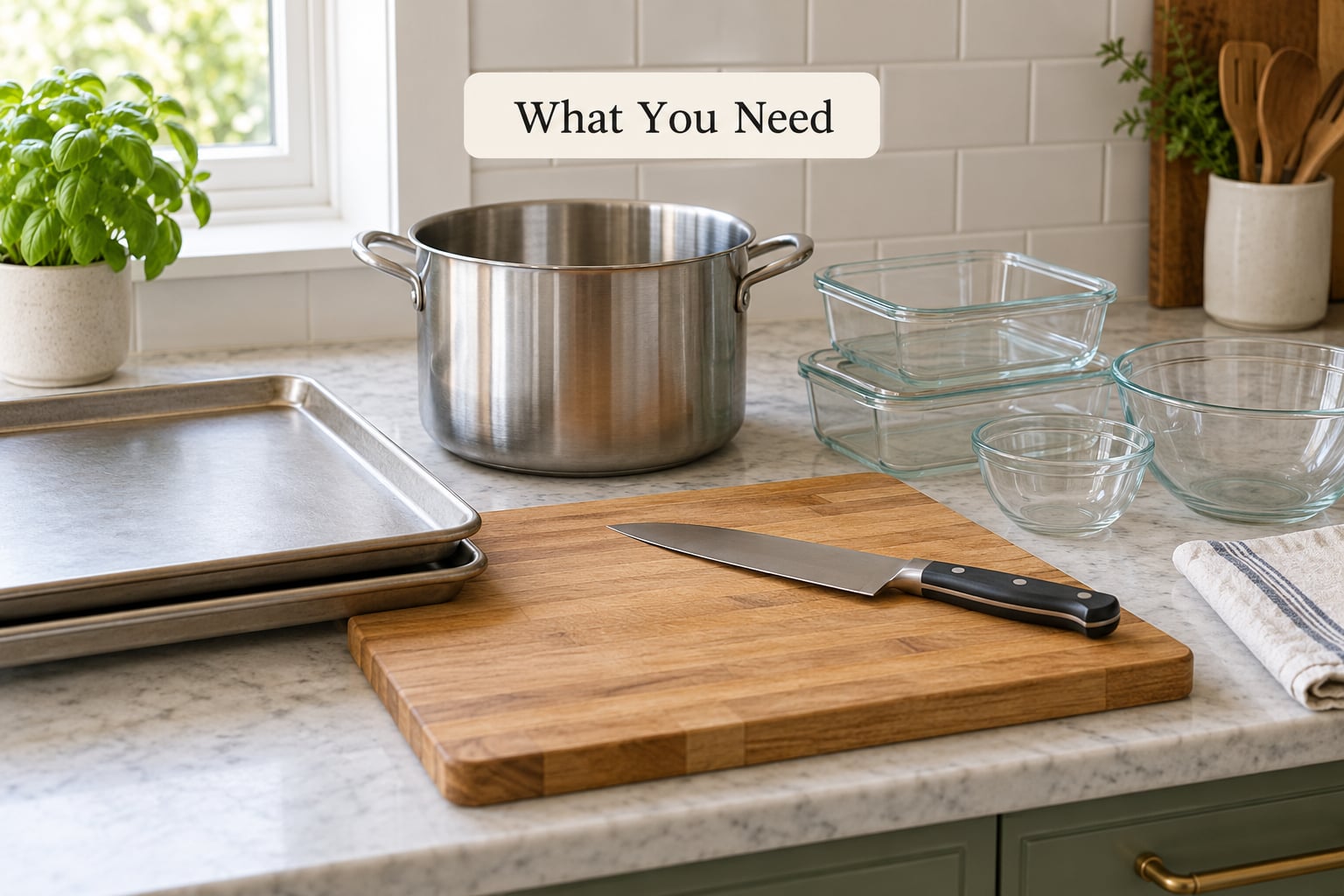
You do not need a specialty setup. One oven, one pot with a lid, and four or five containers will carry a week of vegetables for two people.
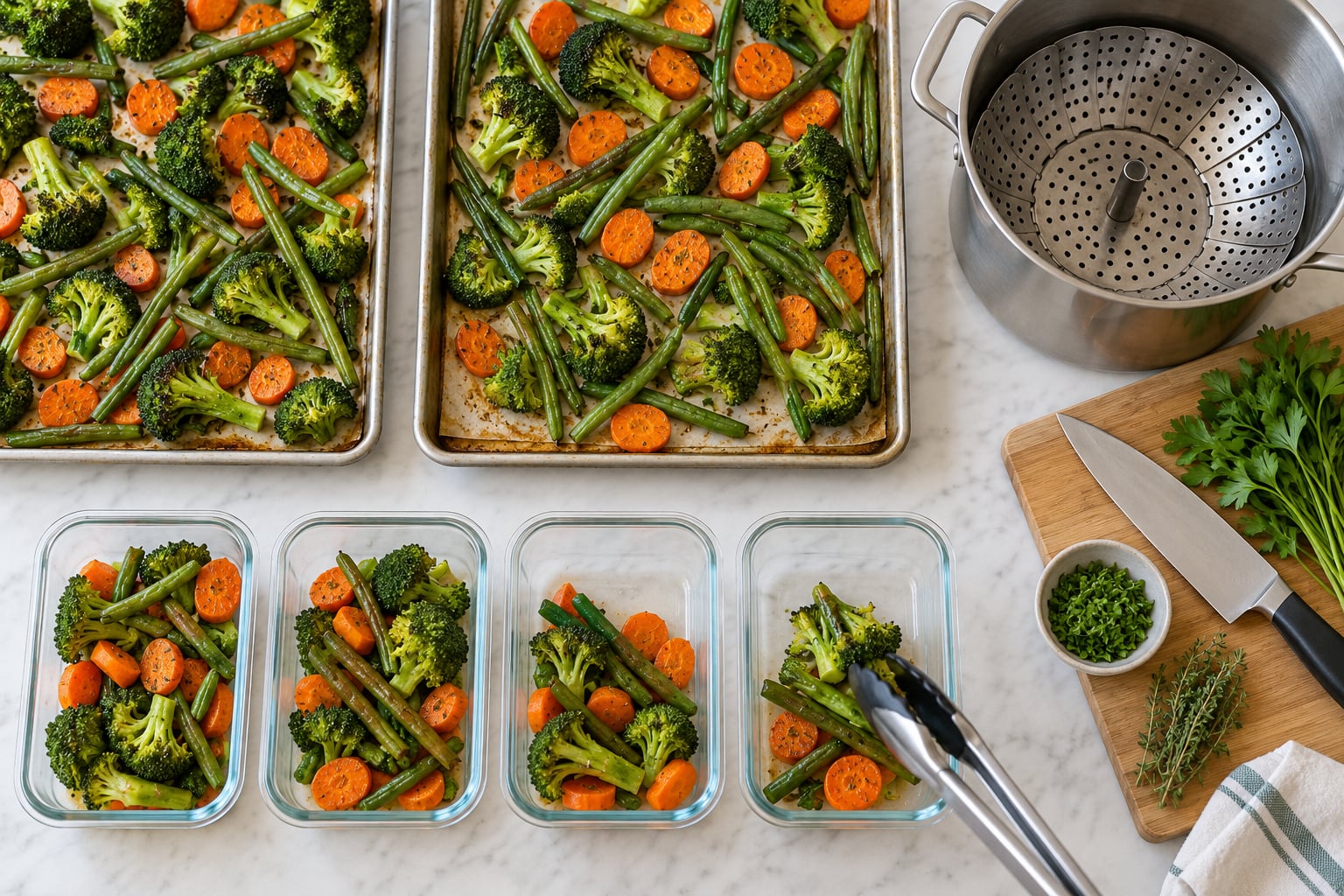
- Two rimmed sheet pans. Crowding is the number one reason vegetables steam instead of roast, and a second pan fixes it instantly.
- A large pot with a steamer basket. For blanching greens and cooking denser vegetables like carrots or potatoes.
- A sharp knife and a big cutting board. A dull knife bruises cell walls, and bruised cells release water. That is where the sogginess comes from.
- Airtight glass containers, four to six of them. Glass survives the freezer and the microwave, and you can see what is inside without opening the lid.
- Mason jar lid labels or masking tape. Write the vegetable and the date. You will not recognize roasted cauliflower from roasted rutabaga four days later.
- A cooling rack and a large bowl of ice water. The ice bath is what keeps blanched vegetables bright and crisp.
- Parchment paper. It keeps the undersides of delicate vegetables from burning on a hot pan.
For produce, pick three sturdy vegetables that survive reheating — carrots, broccoli, cauliflower, green beans, zucchini, bell peppers — and one quick-cooking green such as green beans or snap peas. Add something you will eat raw, like carrots, cucumber, or peppers, prepped but uncooked.
Rough yield math helps. One pound of trimmed vegetables fills about one sheet pan and produces roughly four side servings or six half-cup portions, which covers two people for two lunches or one dinner plus leftovers.
Step-by-Step: How to Batch Cook Vegetables for the Week
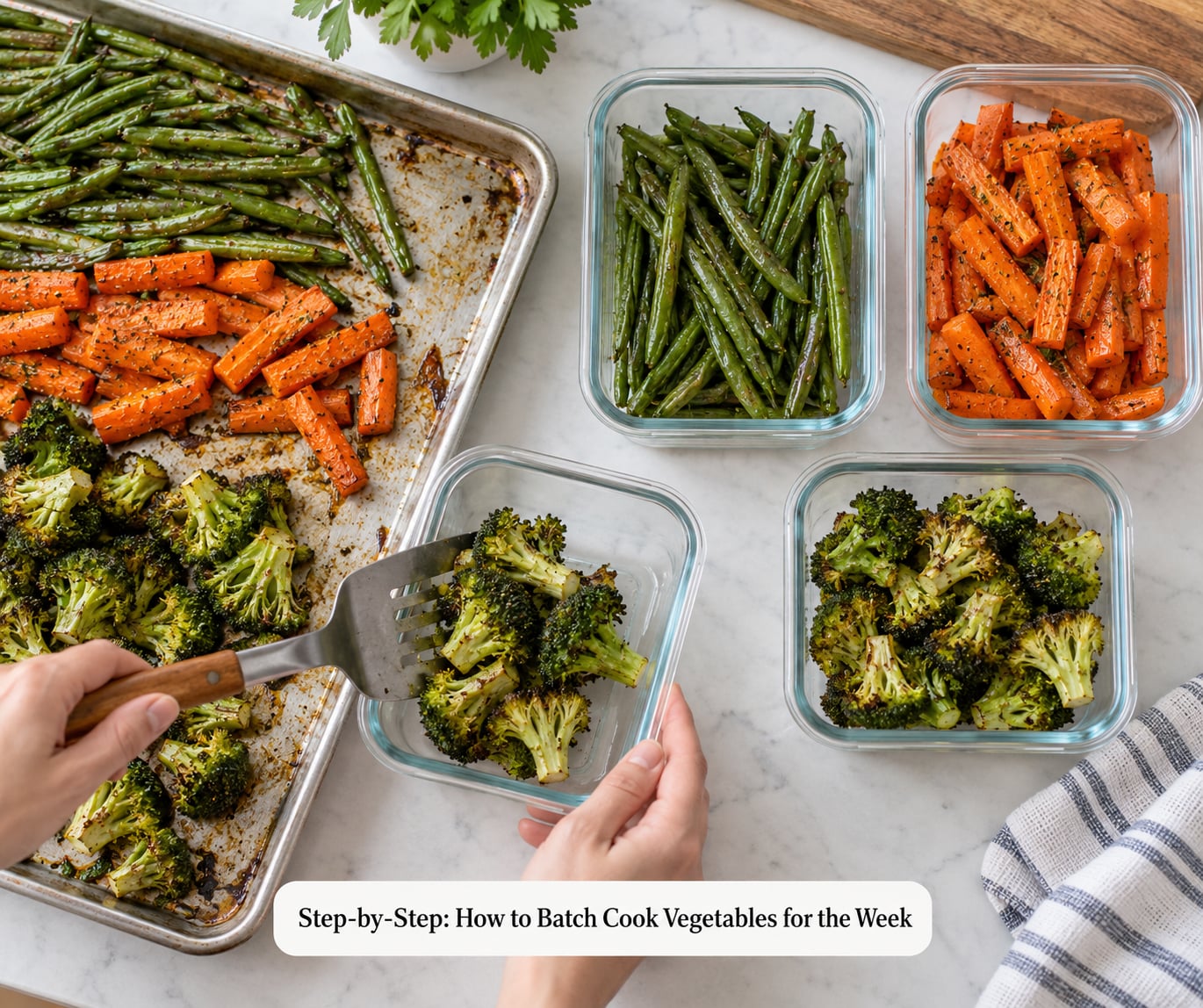
Five steps, about 90 minutes, and you have four days of vegetables in the fridge plus a freezer stash for days five through seven. Start with the oven, since it is the slowest part.
Step 1: Plan Which Vegetables to Batch Cook for the Week
Divide your list into three groups before you pull anything out of the fridge: roast, blanch, and eat raw. Mixing those three groups in one pan or one pot is how a prep session goes wrong.
Roast sturdy vegetables at high heat: sweet potatoes, carrots, broccoli, cauliflower, zucchini, peppers, onion, and green beans all handle 425°F (220°C) for 25 to 35 minutes without turning to mush. Blanch the quick greens — broccoli, asparagus, snap peas, zucchini — for 2 to 4 minutes and shock them in ice water. Prep raw anything crisp: lettuce, cucumber, radishes, raw peppers, and tomatoes.
Plan quantities around four days of lunches plus dinners, not seven. Cooking two pounds of one vegetable instead of one pound each of two is cheaper but boring by Thursday, which is the point of the flavor swaps at the end.
Step 2: Wash, Prep, and Cut Evenly
Wash under cool running water and dry thoroughly. Standing water on vegetables is a direct route to a watery container.
Cut everything to roughly the same size so it finishes at the same time. A 1-inch piece of carrot and a quartered small carrot cook at completely different rates, and the small one burns while the big one stays hard. Aim for pieces about the size of a walnut for roasting.
Keep green beans whole, broccoli in equal florets, and carrots sliced at a consistent thickness. If you are combining vegetables on one pan, cut the fast ones smaller and set them aside to add partway through cooking.
Add oil and salt at prep time for roasted vegetables, not at the very end. Oil coats the surface and drives browning; salt early seasons all the way through.
Step 3: Roast, Steam, or Boil in Batches
Heat the oven to 425°F (220°C) and let it run for 10 minutes before the pan goes in. A cold oven plus a crowded pan is the classic recipe for pale, limp vegetables.
Roast on a single layer with space between pieces, 25 to 35 minutes, flipping at the halfway mark. Done when a knife slides into a thick piece with no resistance and the edges are browned.
Blanch greens in heavily salted boiling water for 2 to 4 minutes. The pieces should still snap when you lift them. Move them straight into ice water for a full minute to stop the cooking — that shock is what preserves the color and crunch that people say they cannot get back after a night in the fridge.
Steam dense vegetables like potatoes or whole carrots for 10 to 15 minutes, until a knife tip meets no resistance. Do not boil them for a full meal-prep portion; water leaches flavor and softens the surface.
Use all three heat sources at once. Oven roasting one pan while you blanch a pot of greens and steam a basket of carrots turns 90 minutes of sequential work into about 20 minutes of active time.
Step 4: Cool and Store for the Week
Spread cooked vegetables on a rack or tray and let steam escape before they go near a lid. FoodSafety.gov advises getting cooked food into a refrigerator at or below 40°F within two hours, and sealing hot vegetables traps condensation that turns everything watery.
Once cool, pack them in single layers, not stacked and mashed. Portion to what you will actually eat in one sitting — a small container reheated twice beats a big one that sits until Friday.
Store different vegetables separately so you can change the flavor later without everything tasting identical. Drizzle herbs and lemon on green vegetables at serving time rather than before refrigerating, since acid softens texture overnight.
Label each container with the vegetable and the date, then refrigerate days one through four. Portions for day five and beyond go into the freezer, spread flat on a tray first so they freeze fast, then moved into a bag or container. Frozen vegetables thaw in about 10 minutes at room temperature or overnight in the fridge.
Step 5: Reheat Without Ruining the Texture
Skip the microwave for anything you want to stay crisp. Roasted vegetables go back in a hot oven or a dry skillet for 8 to 10 minutes at 425°F, which re-crisps the edges.
For steamed or blanched vegetables, the microwave is fine. Put them in a bowl with a damp paper towel and microwave in 60-second bursts until hot; the towel adds back the moisture that boiling took away.
Add a splash of water or broth before reheating greens and cover loosely for 60 seconds. For a stovetop reheat, put vegetables in a skillet with a teaspoon of oil over medium heat for 3 to 4 minutes.
Season at the table, not in the container. Olive oil, lemon, a spoon of pesto, or a scatter of toasted nuts turns the same batch into a different meal on Wednesday.
Common Mistakes
Crowding the sheet pan. Vegetables steam in their own moisture and never brown. Two pans with room between pieces beat one packed pan every time.
Mixing vegetables with different cook times. Carrots and cauliflower can share a pan. Broccoli and delicate squash cannot, unless the broccoli goes in ten minutes later. If you are lazy about this, cook separate batches.
Sealing hot food into containers. Trapped steam condenses and pools at the bottom. Cool everything on a rack first, which also cools it faster.
Cooking everything, including the vegetables that should stay raw. Cucumber, lettuce, radishes, tomatoes, and bell pepper for salads go soggy within hours of cooking. Prep them raw and store them dry.
Reheating the same container twice. Every microwave trip pulls more water out of the vegetables. Portion smaller and reheat once.
Cooking seven days of food and eating four. Plan four days in the fridge and freeze the remainder on the day you cook it. Freezing at peak freshness beats eating container number six on Friday.
Skipping the ice bath. Blanched greens continue cooking from residual heat as they cool. Without the shock, they arrive at the container already limp.
Frequently Asked Questions
How long do meal prep vegetables last in the fridge?
Cooked vegetables keep 3 to 4 days in a refrigerator at or below 40F (4C), according to the USDA cold food storage chart. Refrigerate them within two hours of cooking, and only seal the containers once the vegetables have cooled enough to stop steaming. Anything past day four belongs in the freezer, not the fridge. If a container smells off, or the liquid at the bottom has turned cloudy and slimy, discard it rather than tasting it.
Can I meal prep vegetables for 7 days at once?
You can cook seven days of vegetables in one session, but you cannot refrigerate seven days of them safely. Cooked vegetables hold 3 to 4 days in the fridge, so freeze the portions for days five through seven the day you cook them. Spread them flat on a tray to freeze fast, then move them into bags or containers. Thaw overnight in the fridge or for about 10 minutes at room temperature.
Which vegetables freeze well and which should I skip?
Broccoli, cauliflower, green beans, carrots, corn, peas, peppers, squash, and mushrooms freeze well when blanched or cooked first. Skip cucumber, lettuce, radishes, raw tomatoes, celery, and sprouts, all of which turn watery or limp once thawed. Cooked potatoes and rice also turn mushy from freezing. Freeze only what you have already cooked, since raw vegetables need blanching first to keep their texture.
Why do my cooked vegetables get soggy in the fridge?
Four things cause it: sealing hot vegetables so steam condenses inside the container, salting or dressing them early, overcrowding the pan so they steam instead of brown, and reheating the same portion more than once. Cooked cucumber, lettuce, and tomatoes go soft on their own, so prep those raw. Drain any liquid at the bottom of a container before reheating, and reheat in a hot oven instead of the microwave.
Can I eat 5 day old meal prep?
If it spent the whole time refrigerated, no. Five days is past the USDA guideline of 3 to 4 days for cooked vegetables at or below 40F, and that holds whether or not the food smells fine. FoodSafety.gov notes that spoilage signs and harmful bacteria are not always obvious, so judge by the clock rather than by appearance. Vegetables that were frozen and thawed are a different case and are fine once kept cold.
How many servings is one pound of vegetables?
One pound of trimmed vegetables fills about one sheet pan and gives you four side servings or six half-cup portions. Leafy greens run smaller, since a pound of raw kale or chard cooks down to a few handfuls. Roasting loses water, so a pound of squash or zucchini yields closer to three and a half cups cooked. Plan on roughly one pound per person per week for vegetable sides across every meal.
Start smaller than feels reasonable: one sheet pan, three vegetables, and four containers. Roast one batch, blanch one pot, eat the rest raw, and freeze what will not be touched before Thursday. Repeat that next week with a different trio and you will stop wasting food and stop buying takeout on Wednesday.