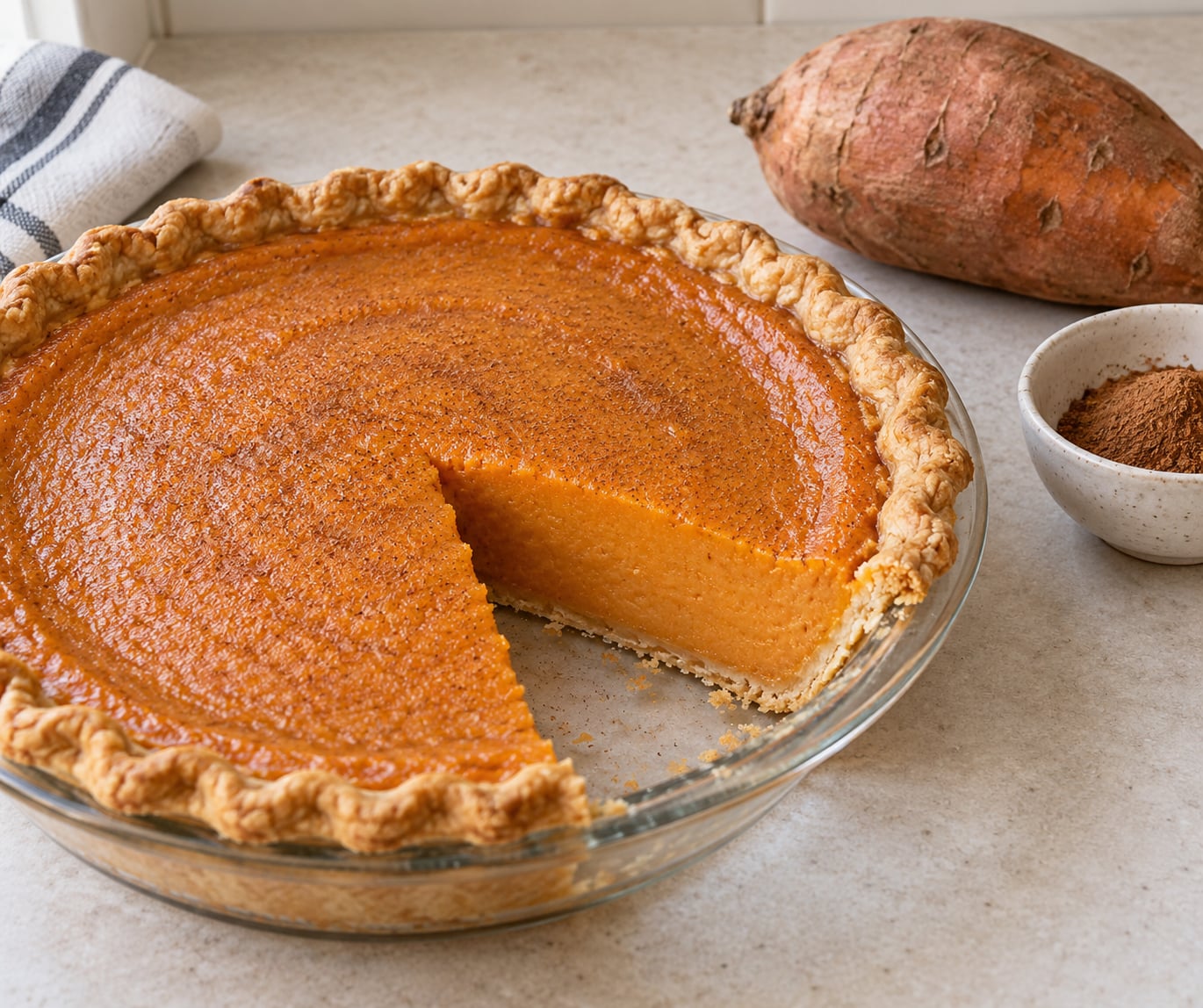
To make sweet potato pie from fresh potatoes, you bake the potatoes whole first, mash or puree them, then fold them into an egg-and-milk custard and bake the pie until the center barely wobbles. Whole fresh sweet potatoes are the whole point here, and they cannot be swapped for raw cubes, because raw sweet potato stays starchy and dense instead of melting into the filling.
The active work runs about 45 minutes. Oven time runs about an hour and a half, spread across the potatoes, the crust, and the pie itself, so budget two hours and fifteen minutes start to finish if you are doing this for the first time.
Cooking the potatoes before they ever meet the filling is what separates a good pie from a disappointing one. Oven heat drives off moisture and caramelizes the sugars already in the potato, which is why the filling tastes deeper and sets thicker than one made from boiled or canned sweet potatoes. Home bakers reach the same conclusion unprompted: fresh beats canned for both flavor and texture, and a little vanilla and cinnamon in the filling finishes the job.
Table of Contents
- What You Need
- How to make sweet potato pie from fresh potatoes: choose the right ingredients
- Step-by-Step: How to Make Sweet Potato Pie from Fresh Potatoes
- How to cook the fresh sweet potatoes
- How to make and prebake the pie crust
- How to make the silky sweet potato filling
- How to assemble and bake the pie
- How to cool, slice, and store the pie
- Common Mistakes and How to Fix Them
- Frequently Asked Questions
- Do I need to peel sweet potatoes for sweet potato pie?
- Can I use raw sweet potatoes directly in the filling?
- What does sweet potato pie filling look like when it is done?
- How long should sweet potato pie cool before slicing?
- Can sweet potato pie be made ahead and frozen?
- Can I use condensed milk instead of sugar and butter?
- Start with Fresh, Properly Cooked Sweet Potatoes
What You Need
One 9-inch deep-dish pie needs about 2 pounds (900 g) of fresh sweet potatoes, which is roughly three medium potatoes. That figure is the single most useful thing to know before you start, because it is the one number home bakers repeatedly guess at.
How to make sweet potato pie from fresh potatoes: choose the right ingredients
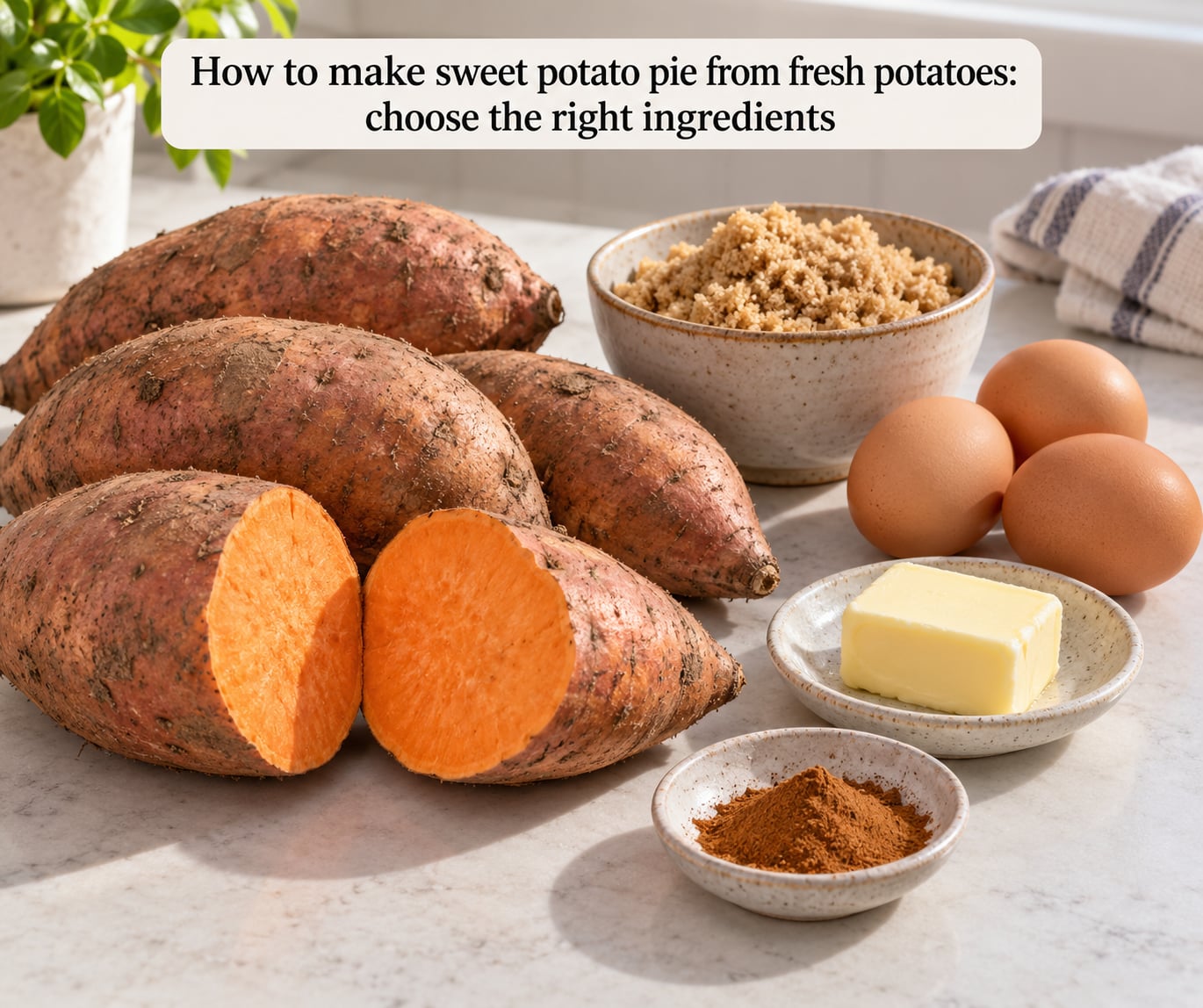
Pick potatoes that are firm to the squeeze, smooth-skinned, and free of sprouts, soft spots, or green patches. Orange-flesh varieties such as Red Garnet, Beauregard, and Jewel bake up sweetest, though any fresh sweet potato works, and a plain russet or russet-style baking potato is a different vegetable with the wrong starch and sugar profile. Do not reach for canned sweet potatoes packed in syrup; the filling comes out noticeably sweeter and looser, and cooked canned mash adds water your crust has to absorb.
Fresh sweet potatoes carry more water than canned ones, which is the reason the recipe below measures sugar and thickener rather than just saying add to taste. Buy them slightly firmer than you think you need, because they soften in storage and a soft potato never holds its shape on the baking sheet.
Here is what goes into one 9-inch pie.
- 2 pounds (900 g) fresh sweet potatoes, about 3 medium, scrubbed
- 1 unbaked 9-inch deep-dish pie crust, or pastry for one, chilled
- 3 large eggs, at room temperature
- 1 cup (200 g) granulated sugar
- 1/2 cup (100 g) light brown sugar, packed
- 1 cup (240 ml) evaporated milk or whole milk
- 1/2 cup (115 g) unsalted butter, melted and cooled slightly
- 1 teaspoon ground cinnamon
- 1/2 teaspoon ground ginger
- 1/4 teaspoon ground nutmeg
- 1 teaspoon pure vanilla extract
- 1/2 teaspoon fine salt
- 1 to 2 tablespoons cornstarch, measured level
For serving, a bowl of lightly whipped cream, a scoop of vanilla ice cream, or a few toasted pecans works. None of it is required, and most Southern cooks serve the pie at room temperature with nothing on top at all.
Step-by-Step: How to Make Sweet Potato Pie from Fresh Potatoes
Six stages, and the first two are the ones that decide whether the pie turns out well.
- Bake the sweet potatoes at 400°F (200°C) for 45 to 60 minutes, until a fork slides in with no resistance.
- Boil instead in simmering water for 20 to 25 minutes, until a knife meets no resistance.
- Par-bake the crust at 375°F (190°C) for 15 to 18 minutes, until it is dry all over and pale gold at the edge.
- Bake the pie at 400°F (200°C) for 15 minutes, then 350°F (175°C) for 40 minutes, until the center wobbles slightly and not liquidly.
- Cool before slicing at room temperature for 2 hours, so clean slices come out without running.
How to cook the fresh sweet potatoes
Heat the oven to 400°F (200°C) and put a heavy baking sheet in to heat with it. Scrub the potatoes well, stab each one six or eight times with a fork, and lay them on the hot sheet. Roasting them straight from cold needs longer and browns them unevenly.
Roast until a fork or skewer pushes all the way through without meeting any resistance, 45 to 60 minutes depending on size. Split one open to check the center. It should be soft all the way to the middle and taste sweet, with a few caramelized dark spots on the skin.
If you would rather boil them, simmer whole sweet potatoes for 20 to 25 minutes and drain them well. Boiling works, but it leaves more water in the flesh, so pat the cooked potatoes dry before mashing and expect to add the cornstarch. A microwave is the third option: 8 to 12 minutes per potato on high, on a plate rather than a rack.
Let the potatoes cool five minutes, then peel them with a paring knife. Slice and mash, or push them through a food processor for the smoothest filling. Add no water and no milk at this stage. If you want texture, mash by hand with a ricer and leave a few lumps in, because that is the difference between a rustic Southern filling and a uniform one.
How to make and prebake the pie crust
Roll the chilled pastry into a 12-inch round, ease it into the 9-inch pie dish without stretching it, and crimp or flute the edge however you like. Home bakers post their pies with free-form crusts, so a tidy edge is not the make-or-break step.
Dock the base with a fork all over, then line it with parchment paper and fill with pie weights or dry beans. Par-bake at 375°F (190°C) for 15 to 18 minutes, until the dough looks dry and set but is not deeply colored. Remove the weights and paper and give it another 5 minutes if the base still looks pale.
Let the par-baked crust sit for 10 minutes before you add the filling. It should be warm, not hot, because pouring a screaming-hot custard into a crust that has just been in the oven scrambles the eggs on contact.
How to make the silky sweet potato filling
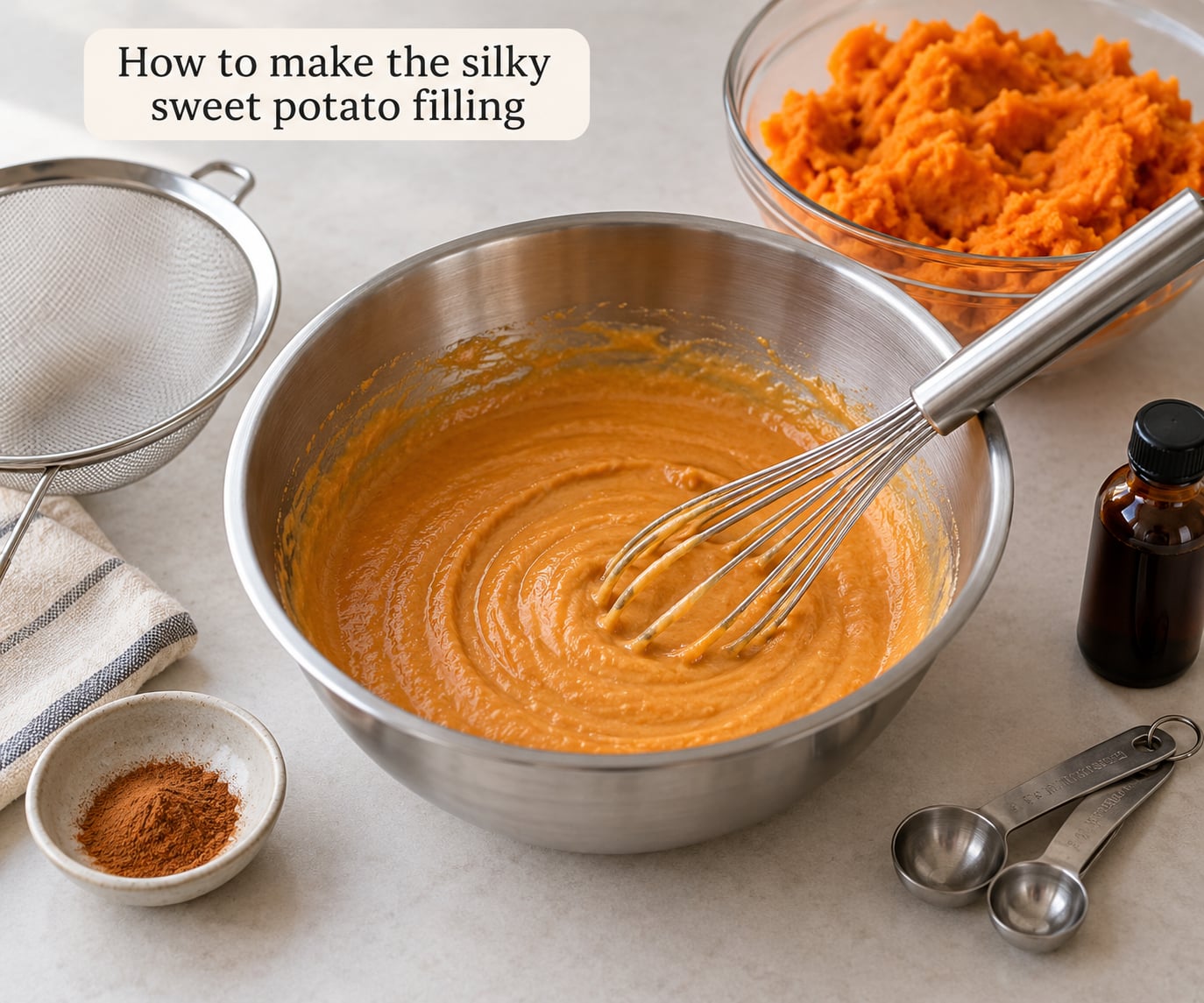
Whisk the eggs, both sugars, and the salt together in a large bowl until the sugars dissolve and the mixture turns pale. Whisk in the melted butter, the evaporated milk, and the vanilla. Add the mashed sweet potatoes and beat until no white streaks remain.
Sift in the cornstarch and mix one final time. Start with 1 tablespoon, and go to 2 only if your mashed potatoes were particularly wet. Beyond that the filling turns gummy, and gummy is harder to fix than runny.
The trick to a lump-free filling is to add the dry ingredients into the wet, not the other way around, and to mash before you mix. If you are using chunky mashed potato, strain the finished batter through a fine sieve. A cooked potato that refuses to break up has an insoluble strand in it, and no amount of whisking will make that go away.
How to assemble and bake the pie
Pour the filling into the par-baked crust. A 9-inch deep-dish shell holds roughly 3 cups of batter, so pour slowly and stop if the crust edge comes within an inch of the top. Anything more than that will bubble out and stain your oven floor. Leftover batter in the bowl is normal; it makes a fine extra cup or two of custard you can bake alongside.
Bake at 400°F (200°C) for 15 minutes to set the top layer and the crust edges, then drop the oven to 350°F (175°C) for another 40 minutes. If you would rather manage one temperature, bake the whole pie at 350°F for 50 to 60 minutes; it works, but the top browns later and usually needs a foil shield.
Crimped edges darken long before the center sets, so cut a strip of foil and tent it over the rim around the 40-minute mark. The filling is done when it no longer jiggles as a single liquid mass. Nudge the dish gently, and the surface should tremble as one piece with no sloshing at the edges, and the center should read 160°F (71°C) on an instant-read thermometer.
How to cool, slice, and store the pie
Cool the pie on a wire rack for at least two hours before you cut it. The interior is close to the boiling point when it leaves the oven, and the starches finish setting as it cools, so slicing early gives you a soft, gummy first cut no matter how well it baked.
For clean slices, dip a sharp knife in hot water and wipe it dry between every cut. Wipe, slice, wipe, slice. Warm metal and a dry blade make a difference you can see on the plate.
Cover the pie loosely and refrigerate it for up to three to four days. Let slices come back to room temperature for 30 minutes before serving, or warm them gently in a 300°F (150°C) oven for 10 minutes. Skip the microwave if you can, since it makes the custard grainy and the crust rubbery.
A baked pie freezes well for up to two months. Cool it completely, wrap it in plastic wrap and then foil, and thaw it in the refrigerator overnight. The crust softens slightly but the filling survives intact. If you would rather freeze unbaked, freeze the filling separately in a sealed container and bake it in a chilled crust straight from the freezer, adding 5 to 10 minutes to the bake.
Common Mistakes and How to Fix Them
A watery filling usually traces back to the potatoes, not the eggs. If the center slumps when you cut a slice, the pie did not reach 160°F (71°C) or you gave it too little time. Next time, press the baked surface gently; if it dimples like wet clay, give it another 8 to 10 minutes. Baking it too long makes it rubbery and cracked, so trust the wobble, not the clock.
A dense, gummy filling means too much thickener or too little liquid. Two tablespoons of cornstarch for a full 9-inch pie is the ceiling, and the custard needs its full cup of milk or evaporated milk to stay loose. If the mixture looks stiff in the bowl before it goes into the oven, add milk a tablespoon at a time until it pours like thick cream.
A soggy crust bottom is the most common complaint among home bakers, and there are three fixes. Bake the crust blind as described above, set the pie dish on the lowest third of the oven so the filling heat is far from the base, and never skip par-baking. Boiled potato mash, drained dry and patted dry, also helps because less water has to evaporate during the bake.
Lumpy mashed potatoes mean the filling was built on coarse mash. Rice the warm potatoes through a ricer or run them through a food processor, and sift any dry ingredients rather than stirring them in. Whichever route you take, the change in texture is obvious side by side: hand-mashed keeps a rustic grain, pureed goes completely smooth.
A crust that cracked or shrank away from the dish was stretched, not relaxed. Ease the dough in and let it sit for ten minutes if it fights you. A crust that browned on top while the center was still liquid is a heat problem: the two-stage bake solves it, and a foil rim shield finishes it.
A few habits carry most of the weight. Weigh the potatoes instead of counting them, so every pie sets the same. Bring eggs and milk to room temperature so they blend evenly. Measure sugar level, never heaped. And resist the urge to bail out the filling the moment it stops moving, because a small wobble in the middle is exactly what you want.
Frequently Asked Questions
Do I need to peel sweet potatoes for sweet potato pie?
No, not before cooking. Roast or boil the potatoes whole with the skins on, then peel them while they are still warm with a paring knife. The skin softens enough in the oven that it slips right off, and it shields the flesh from drying out too fast in a dry oven.
Can I use raw sweet potatoes directly in the filling?
No. Raw sweet potato will not break down in the oven the way cooked potato does, so the filling stays starchy, dense, and sometimes gritty. Cooking it first also evaporates water and caramelizes the natural sugars, which is where most of the pie’s flavor comes from.
What does sweet potato pie filling look like when it is done?
A finished filling has set enough to hold a clean slice, but the surface still trembles as a single piece when you nudge the dish, with no liquid sloshing at the edges. The center should read 160°F (71°C). The edges will look slightly set well before the middle is.
How long should sweet potato pie cool before slicing?
At least two hours at room temperature on a wire rack. The filling is close to boiling when it leaves the oven and finishes setting as it cools, so an early cut gives a soft, gummy slice. If you need it faster, refrigerate it for 30 minutes and expect a firmer, less creamy texture.
Can sweet potato pie be made ahead and frozen?
Yes. It can be baked up to a day ahead and kept refrigerated, loosely covered. For longer storage, let the baked pie cool completely, wrap it in plastic wrap and foil, and freeze it for up to two months, thawing in the refrigerator overnight before serving.
Can I use condensed milk instead of sugar and butter?
Yes. Sweetened condensed milk supplies the sugar, so drop both sugars and swap the cup of evaporated milk for a 14-ounce can of condensed milk plus a quarter cup of water or milk. The filling will be silkier and leaner and a little less rich without the melted butter, so keep it.
Start with Fresh, Properly Cooked Sweet Potatoes
Start where every reliable pie starts, by cooking about 2 pounds of fresh sweet potatoes whole until a fork passes through without resistance, and by draining and drying them before a single ingredient goes into the bowl. Everything after that is a matter of watch rather than guesswork.
Par-bake the crust so it stays crisp, keep the filling loose enough to pour and firm enough to hold a slice, and pull the pie at 160°F (71°C) while the center still trembles as one piece. Let it cool two full hours before the first cut. That is the whole method.