Yes, most wilted vegetables come back. Wilting is water loss, not spoilage, so an ice-water bath of 10 to 30 minutes can make limp lettuce, carrots, celery and herbs crisp again. Rinse the produce first, dunk it in very cold water so the cells drink the moisture back in, then dry it completely. It stops working the moment produce turns slimy or smells sour, and that line matters.
Most kitchen vegetables hold around 90 percent water, and the crunch you like is water pressing outward inside firm cell walls. When that water evaporates after harvest or sitting in a bag, the pressure drops and the vegetable goes limp. Put it back in cold water and the same thing runs in reverse, which is why a limp head of romaine can snap again the way it did on the shelf.
Getting the hang of how to revive wilted vegetables is mostly a matter of matching the water temperature to the vegetable in front of you. Greens want very cold water, sturdy roots want a trim and time, and squash or peppers only need a fast warm shock before an ice bath.
Table of Contents
- What You Need
- Step-by-Step: How to Revive Wilted Vegetables
- Use an Ice-Water Bath for Crispy Greens
- Soak Vegetables in Cool Water When the Wilt Is Mild
- Trim and Rehydrate Broccoli, Carrots, and Other Sturdy Vegetables
- Use a Quick Steam or Warm-Water Refresh for Lightly Wilted Produce
- Dry and Store Revived Vegetables Properly
- Common Mistakes
- How Do You Know When Wilted Vegetables Are Too Old to Revive?
- Frequently Asked Questions
- Can you revive wilted lettuce?
- How long should vegetables be soaked in water?
- Does soaking vegetables make them safe to eat?
- How do you revive wilted carrots, celery, or broccoli?
- Should you eat vegetables that are slimy or smell sour?
- Can revived vegetables be frozen for later use?
- Conclusion
What You Need
Gather everything before you start, because the whole job takes under half an hour and it goes faster when the pieces are already next to the sink.
- A wide bowl, stockpot or sink basin large enough to submerge the vegetables completely.
- Cold water and a bag of ice for the roughly 3 parts water to 1 part ice bath that does most of the work.
- A colander and a salad spinner, plus a couple of clean, lint-free kitchen towels or a roll of paper towel.
- A sharp knife or kitchen shears for cutting back limp ends and making the 45-degree slant cut on stems.
- A tall glass or jar for the flower-vase treatment on scallions, herbs, celery and carrots.
- A breathable storage bag or lidded container lined with a paper towel, and space in the crisper drawer.
- Optional additives: a small splash of vinegar or lemon juice, and a tablespoon of salt.
Rinse everything under cold running water before it goes into the bath. Produce from a market or a garden bed carries soil that traps heat and holds bacteria against the leaves, and nobody wants a 30-minute soak in warm dirty water.
The vinegar or lemon juice is there for taste, not for rescue: a teaspoon in the bath lightly seasons the water the vegetables drink back in. Salt does something different, pulling a little extra moisture out of the surface so leaves turn crunchier, though a tablespoon in a full bowl of greens is plenty.
Step-by-Step: How to Revive Wilted Vegetables
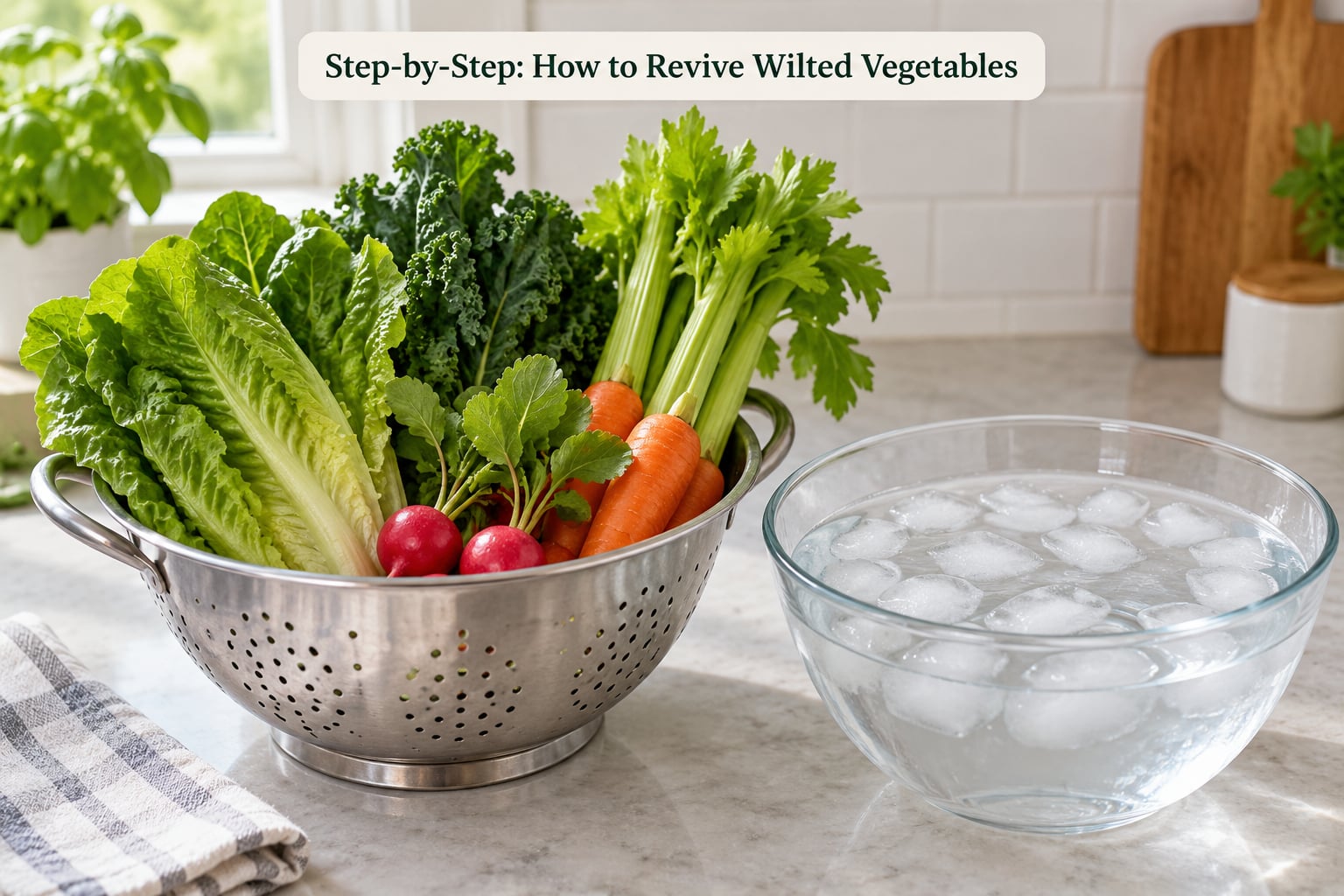
There is no single trick that covers every vegetable, so the chart below maps each one to the method that works best, how long it needs, and how likely you are to be happy with the result. Success odds are honest ones. A limp carrot will almost certainly come back; a soft cucumber probably will not, and no bath changes that.
| Vegetable | Best method | Time | Success odds | Best use after reviving |
|---|---|---|---|---|
| Romaine, butterhead, iceberg | Dunk whole head in ice water | 15-20 min | High | Salads, wraps, crudités |
| Spinach, arugula | Ice bath, leaves separated | 10-15 min | High | Salads, eggs, pizza |
| Kale, Swiss chard, collards | Slant-cut stems in a glass of water | 45-60 min | High | Salads, chips, sautés |
| Cabbage | Cool soak, wedge or shredded | 10-15 min | Medium-high | Slaw, stir-fries |
| Carrots, beets, parsnips | Trim 1 inch off the top, stand upright in water | 45-60 min | High | Raw sticks, mirepoix, roasting |
| Celery | Cut the base, stand stalks in a shallow glass | 30-60 min | Medium-high | Snacks, soups, stuffing |
| Broccoli, cauliflower | Soak florets in cool water, trim woody stem | 10-15 min | Medium | Steaming, roasting, stir-fries |
| Green beans, snap peas | Cool soak, salt optional | 15-20 min | Medium | Sautéing, steaming, pickling |
| Asparagus | Trim ends, stand in shallow water | 30-60 min | Medium | Roasting, grilling |
| Zucchini, summer squash | Quick steam, then ice cool-down | 1-2 min | Medium | Grilling, sautéing |
| Bell peppers | Brief hot dip, then ice bath | 1 min | Low-medium | Roasting, sauces, antipasto |
| Cucumber, radishes | Slice first, then short cool soak | 10 min | Low-medium | Pickling, salads |
| Scallions, leeks | 45-degree cut, stand in a glass | 45-60 min | High | Garnish, soups, stir-fries |
| Parsley, cilantro, dill | Trim stems, stand in water, cover loosely | 30-45 min | High | Garnish, tabbouleh, sauces |
| Basil | Cool (never ice) water, 10 minutes max | 10 min | Medium | Pesto, Caprese, sauces |
| Potatoes, sweet potatoes | Cut side submerged in cool water | 30-45 min | Medium | Roasting, mashing, baking |
Across every entry above, one number keeps showing up: the water has to be cold, and the clock matters more than most people expect. Fifteen minutes fixes most mild wilting, and 30 minutes is the ceiling before the vegetables start absorbing so much they go waterlogged and lose their flavor.
Use an Ice-Water Bath for Crispy Greens
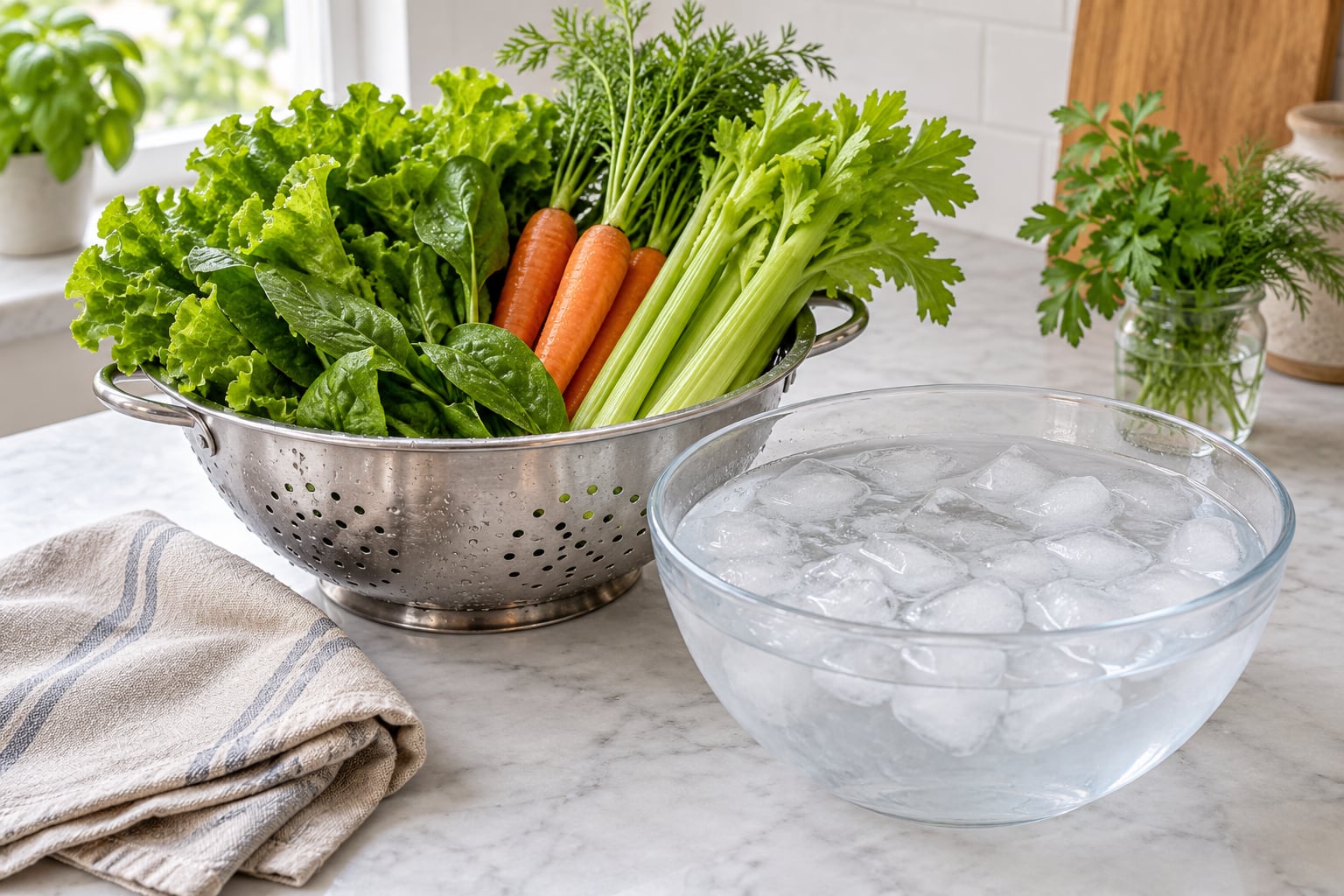
The ice bath is the fastest and most reliable method for anything leafy. Fill a large bowl with cold water, then add roughly three parts water to one part ice. Cool tap water will work in a pinch, but genuinely cold water gives noticeably better results, which is why so many people keep the bowl in the fridge while it soaks.
Rinse the greens, then dunk the whole head of lettuce in and press it down under the surface. Swish it gently, lift and dunk it a few times so water reaches between the layers, and let it sit for 15 to 20 minutes. If the core is already brown or the head is separating, pull the leaves apart first so each one soaks on its own; that only takes an extra minute.
Do not use this method on basil. Ice-cold water shocks the delicate leaves and turns them black within hours. Spinach, arugula, romaine, butterhead, cabbage and kale all handle it well.
You will know it worked when the leaves snap when you fold them rather than bending into a ribbon, and the ribs feel firm under your thumb. Lift the head out and let it drain for a full minute before drying, because water trapped in the folds is what makes a revived salad go slimy by tomorrow.
Soak Vegetables in Cool Water When the Wilt Is Mild
When produce has only just started to soften, cool tap water is gentler than an ice bath and often just as effective. Use about 10 to 15 minutes in room-temperature or cool water for herbs like parsley, cilantro and dill, or for a cabbage wedge you are prepping for slaw.
The gentler soak matters for reasons beyond bruising. Very cold water makes some herbs and thin leaves go translucent and limp all over again as they come back to room temperature, and delicate stems can snap in the ice bath. Cool water rehydrates without that swing.
A second slow option works well when you are not in a hurry: rinse the produce, drain it, and leave it in the crisper on a paper towel for a few hours. It firms up more gradually and nobody has to stand at the sink waiting for a timer.
Trim and Rehydrate Broccoli, Carrots, and Other Sturdy Vegetables
Sturdy vegetables lose water from the ends and edges first, so trimming is what actually reopens the path for water to travel back up. Cut about 1 inch off the top of a carrot and, if the bottom is rubbery, 1 inch off that end too. Make the cut on a slant, at roughly 45 degrees, so the exposed surface is larger.
Stand carrots, celery stalks and scallions upright in a glass of cool water like a bouquet of flowers, then refrigerate for 45 to 60 minutes. The stalks drink through the cut base and stand back up. Scallions are the quickest success in the kitchen: trim the roots, slant-cut the white ends, and they usually look usable again within the hour.
For carrots, the bend test is more reliable than looking. If the carrot bends into any shape but a straight line, it needs water; if it snaps, it is past reviving.
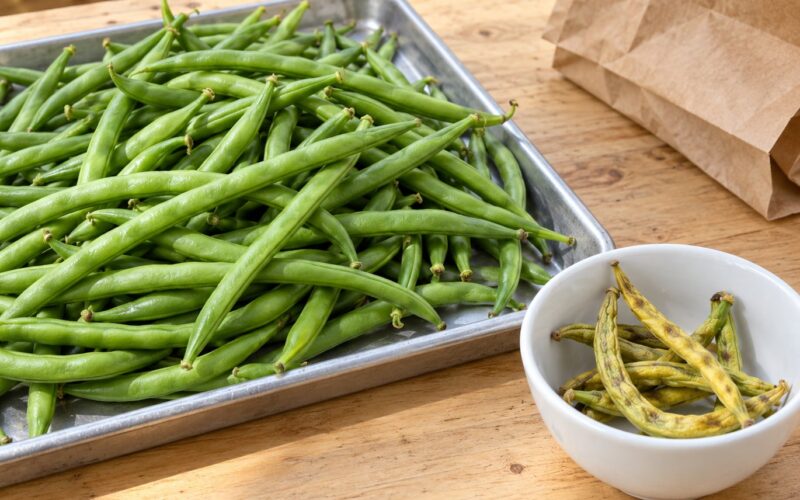
Broccoli and cauliflower are different, because the water needs to get into the florets. Cut off the woody stem at the base, break the crown into pieces, and soak them in cool water for 10 to 15 minutes. Green beans and snap peas take 15 to 20 minutes in cool water on their own. Radishes and cucumber do better sliced first, with a short 10-minute soak, since the cut faces drink faster than the skin.
Use a Quick Steam or Warm-Water Refresh for Lightly Wilted Produce
A short burst of steam or heat wakes up vegetables that are limp but not spoiled, especially zucchini, summer squash, green beans, snap peas and peppers. Put them in a steamer basket over barely simmering water for 1 to 2 minutes, then immediately transfer them to a bowl of ice water.
That ice cool-down is what stops the treatment from becoming cooking. It halts the heat before the cells soften, and the contrast between warm and cold is what firms them up. Peels that were dull and puckered often smooth out visibly during the cool-down.
For a pepper that is too far gone to crisp, dip it into just-boiling water for about 60 seconds and cool it under running water. For squash and beans, keep the treatment short: three minutes of steam can absolutely turn a revived vegetable into a cooked one.
Dry and Store Revived Vegetables Properly
Drying is the step people skip, and it is the reason revived produce sometimes rots the next day instead of lasting the week. Spin the leaves in a salad spinner, then pat them dry with a clean towel. For sturdy vegetables, a quick rub with a towel is enough; for herbs, blot the leaves gently rather than wringing them.
Store what you have revived in a breathable bag or a lidded container lined with paper towel, and keep it in the crisper drawer rather than a sealed bag. Airflow is what stops condensation, and condensation is what breeds slime.
Plan to use revived vegetables within 24 hours. A revived carrot or celery stalk will hold a few days longer, but treat the leafy greens as a same-day or next-day ingredient, and keep unrefrigerated stems in their glass with the water changed once.
Whatever is left goes into the fridge the same day. Keeping a jar of carrots on the counter is how you end up with a jar of soft carrots and cloudy water by morning.
Common Mistakes
Soaking produce that is already spoiling. Water does not fix mold, and it gives bacteria exactly what they need. Smell and inspect the vegetables first, and skip the bath entirely if anything is slimy or sour.
Using hot water on leafy greens. Warm water on lettuce or spinach cooks the leaves and leaves them with a dull, warmed-through flavor. Reserve heat for squash, beans and peppers, and always follow it with an ice bath.
Leaving vegetables sitting wet. A bowl of soaking water is a treatment, not storage. Drain and dry completely, then move the produce into a paper-towel-lined bag in the fridge.
Crowding the bowl. A packed bowl traps air and keeps leaves folded on each other, so the inner ones never get wet. Use a container with room to move the produce around, or separate the leaves.
Forcing damaged leaves back into shape. Brown, torn or bruised tissue does not rehydrate. Trim the damaged parts off while you are preparing the vegetable instead of hoping the water repairs them.
Soaking far past 30 minutes. Past that point the vegetables take on more water than they can hold and go waterlogged, which costs you flavor and texture. Set a timer.
Storing produce in a sealed bag with fruit. Apples, bananas and tomatoes give off ethylene gas that speeds up wilting in everything nearby. Keep them apart, and store ethylene-sensitive produce such as leafy greens and broccoli in the crisper.
How Do You Know When Wilted Vegetables Are Too Old to Revive?
Wilting is reversible, spoiling is not, and the difference shows up in your nose and on the surface before it shows up in a texture. Use your senses in that order, because texture is the least reliable signal on its own.
| What you notice | What it means | Revive or discard |
|---|---|---|
| Sour or fermented smell | Bacteria are fermenting the sugars | Discard |
| Slippery or slimy surface | Tissue is breaking down in trapped moisture | Discard |
| Fuzzy white, grey or green patches | Mold, which can spread through the whole head | Discard the entire vegetable |
| Liquid leaking from the bag | Cells have ruptured and pooled | Discard |
| Soft dark or black patches | Tissue death, usually with decay underneath | Trim only if the patch is small and on an outer leaf, otherwise discard |
| Papery, rubbery or collapsed texture | Too much water lost to rehydrate | Do not soak; cook it instead |
If you cannot tell, cut into the vegetable. A healthy interior is bright, smells clean and feels dense. Brown, dull or translucent tissue under the surface means decay has already moved inward, and no amount of water will bring it back.
Fresh produce from a market needs a little more care than most people give it, because market greens often arrive with soil still on the roots and leaves. Chill what you will not cook within a day, keep it out of direct sun on the trip home, and separate anything that is already bruised so it does not take the rest of the bag with it. Wilt from heat and wilt from neglect both reverse; rot does not.
And if a vegetable is past reviving, it is still worth eating. Wilted greens go into soups, stir-fries and sauces, where cooking down concentrates their flavor instead of depending on their texture.
Frequently Asked Questions
Can you revive wilted lettuce?
Yes, as long as it is limp rather than rotting. Fill a large bowl with cold water and ice, roughly three parts water to one part ice, and dunk the whole head for 15 to 20 minutes. Separate the leaves first if the core has begun to brown. Drain, then dry thoroughly with a towel or salad spinner. The leaves should snap when folded instead of collapsing. If the head is slimy or smells sour, skip it.
How long should vegetables be soaked in water?
Fifteen to 20 minutes in ice water handles most mild wilting in leafy greens, and 30 minutes is the practical ceiling before vegetables turn waterlogged and lose flavor. Sturdy vegetables work differently: carrots, celery, scallions and kale stems do better standing in a glass of water for 45 to 60 minutes rather than submerged. Herbs and very thin leaves need less, around 10 minutes in cool water, because cold shock makes them bruise.
Does soaking vegetables make them safe to eat?
No. Soaking rehydrates limp tissue, but it does not kill bacteria or remove the ones already on the surface, and warm soak water can encourage more growth. Rinse produce under running water before soaking it, never in a standing bath of water, and dry it fully afterward. Cooking is what makes food safe: cook poultry to 165 degrees F, ground meat to 160 degrees F, and whole cuts and fish to 145 degrees F with a thermometer.
How do you revive wilted carrots, celery, or broccoli?
For carrots and celery, cut about 1 inch off the ends on a 45-degree slant and stand them upright in a glass of cool water in the fridge for 45 to 60 minutes. A carrot that bends but will not snap is the one worth reviving. For broccoli, cut off the woody stem, break the crown into florets, and soak them in cool water for 10 to 15 minutes. If the broccoli has turned yellow or gone soft and fibrous, reviving it is too late.
Should you eat vegetables that are slimy or smell sour?
No. Slime and a sour or fermented smell mean bacteria are breaking the vegetable down, and those byproducts are not something an ice bath or a quick rinse will remove. Mold is the same line: discard the whole vegetable rather than cutting around the patch, because the growth usually extends past what you can see. Wilting is reversible water loss, so treat softness and dull color as reviveable and smell, slime and mold as a clear signal to compost.
Can revived vegetables be frozen for later use?
Yes, and freezing is a good answer when revival only partly worked. Blanch the vegetables in boiling water for 2 to 3 minutes, then cool them quickly in ice water before draining and freezing. Blanching stops the enzymes that keep destroying texture in the freezer. Store them in airtight bags or containers with the air squeezed out, and use within 8 to 12 months. Reviving is a short fix for the next 24 hours; freezing is what actually buys you time.
Conclusion
Start by inspecting the vegetables, not soaking them. If anything is slimy, sour or fuzzy with mold, compost it. If the produce is simply limp and dull, trim back the dead ends and pick the method that matches: an ice-water bath for leafy greens at 3 parts water to 1 part ice for 15 to 20 minutes, a cool soak for mild wilting and delicate herbs, a slant cut and a glass of water for carrots, celery and scallions, and a one-minute steam plus ice cool-down for squash, beans and peppers.
Then dry everything completely, store it in a breathable bag in the crisper, and use it within a day. Revived vegetables are worth eating when they look, smell and feel fresh, and anything that does not come back that far belongs in tonight’s soup instead of the bin.