When the fruit bowl turns brown, most people reach for the loaf pan. Here is what to do with overripe bananas besides bread: blend them into a creamy smoothie, stir them into oatmeal, whip up a breakfast sauce, mash them into pancake batter, or freeze them for the next round of blending.
Brown skin is not a defect. It is a cosmetic sign of ripening, and it comes with a payoff: soft, spotty bananas are sweeter and more fragrant than the firm yellow ones, which is exactly why they blend smooth and mash easy.
The tricky part is only that many of us have already baked the loaf. So this list skips bread and covers twelve other uses, from five-minute no-cook options to a savory soup trick, plus how long things keep and when a banana has crossed from overripe into spoiled.
Table of Contents
- What to Do with Overripe Bananas Besides Bread: At a Glance
- 1. Make a Creamy Banana Smoothie
- How to blend the ripest bananas for a creamier smoothie
- 2. Stir Them into Oatmeal
- 3. Make a Freezer-Pop Smoothie
- 4. Blend Them into a Breakfast Sauce
- 5. Fold Them into Pancake or Waffle Batter
- 6. Use Them in Banana Muffins or Quick Breads
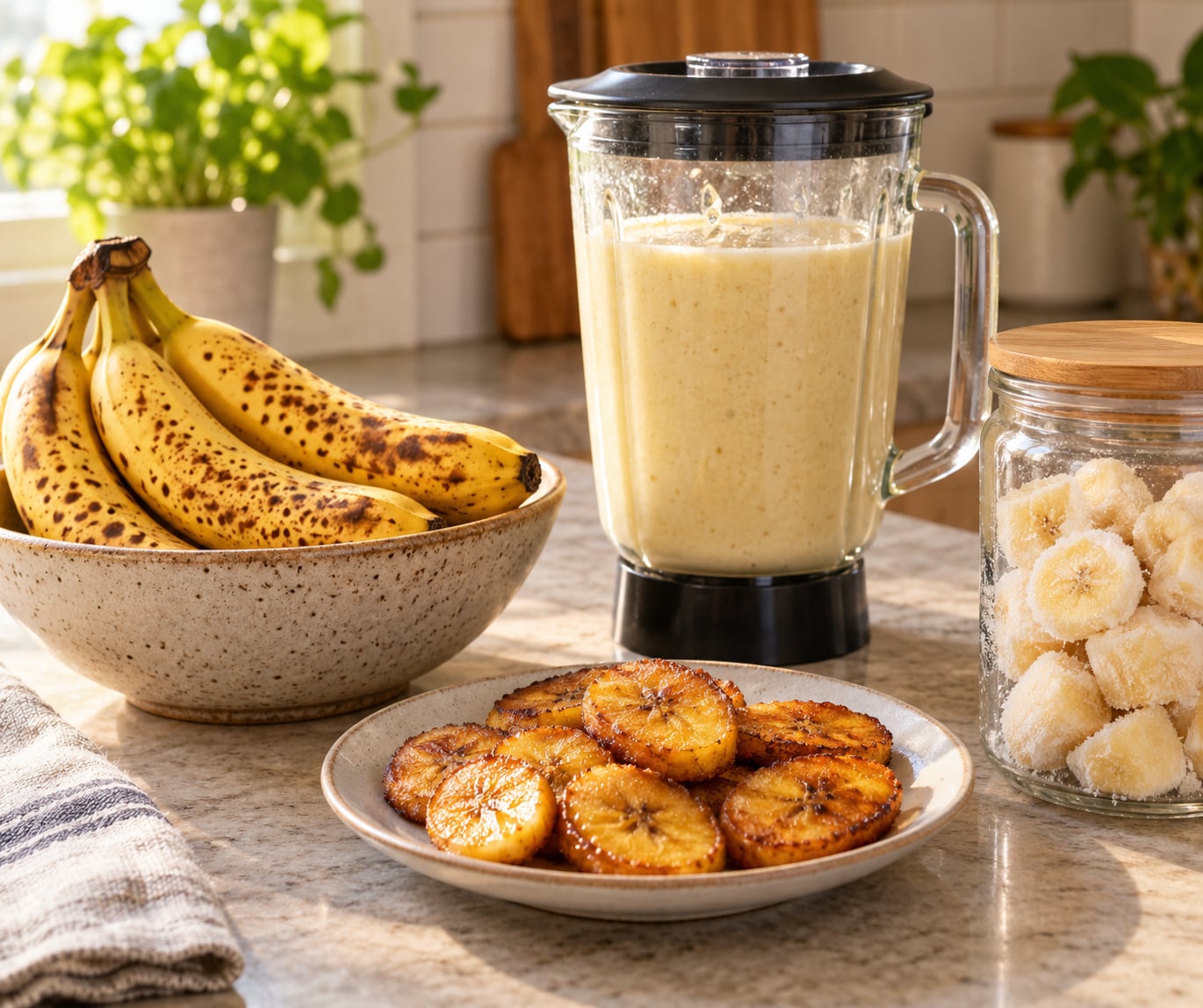
- 7. Make Crispy Fried Bananas
- 8. Add Them to Tomato or Black Bean Soup
- 9. Make a Sweet-and-Savory Rice Side Dish
- 10. Bake or Simmer Banana Chips
- 11. Blend Them into Salad Dressing or Marinade
- 12. Freeze Them for Future Smoothies
- Frequently Asked Questions
- Can you use overripe bananas in smoothies?
- How ripe should bananas be for baking?
- Can overripe bananas be frozen without peeling?
- How do you know when bananas are too spoiled to eat?
- What can I add to bananas so they are not bland?
- Start with the Ripest Ones
What to Do with Overripe Bananas Besides Bread: At a Glance
| Idea | Best ripeness | Effort | Cooking needed | Result |
|---|---|---|---|---|
| Banana smoothie | Very ripe, spotted | 5 minutes | No | Creamy, naturally sweet |
| Oatmeal | Ripe to very ripe | 5 minutes | Optional | Sweetened oats, no sugar added |
| Freezer pops | Very ripe | 10 minutes plus freezing | No | Fruity frozen bars |
| Breakfast sauce | Very ripe | 5 minutes | Optional | Pourable topping for waffles |
| Pancake or waffle batter | Very ripe | 10 minutes | Yes | Tender, moist pancakes |
| Muffins or quick breads | Very ripe, almost black | 35 minutes | Yes | Soft crumb, intense banana flavor |
| Fried bananas | Firm to moderately ripe | 10 minutes | Yes | Caramelized, crisp-edged slices |
| Tomato or black bean soup | Ripe to very ripe | 30 minutes | Yes | Rounder, less acidic soup |
| Sweet-and-savory rice | Very ripe | 10 minutes | Yes | Slightly sweet side dish |
| Banana chips | Firm to moderately ripe | 30 minutes | Yes | Crisp or chewy snack |
| Salad dressing or marinade | Ripe | 5 minutes | No | Sweet, creamy tang |
| Freezer stash | Any ripe stage | 10 minutes | No | Ready for later blending or baking |
One rule holds across the whole table: the softer and darker the banana, the more the recipe leans on blending, mashing or freezing. The crisper uses, like frying and chips, want fruit that is only just past yellow.
1. Make a Creamy Banana Smoothie
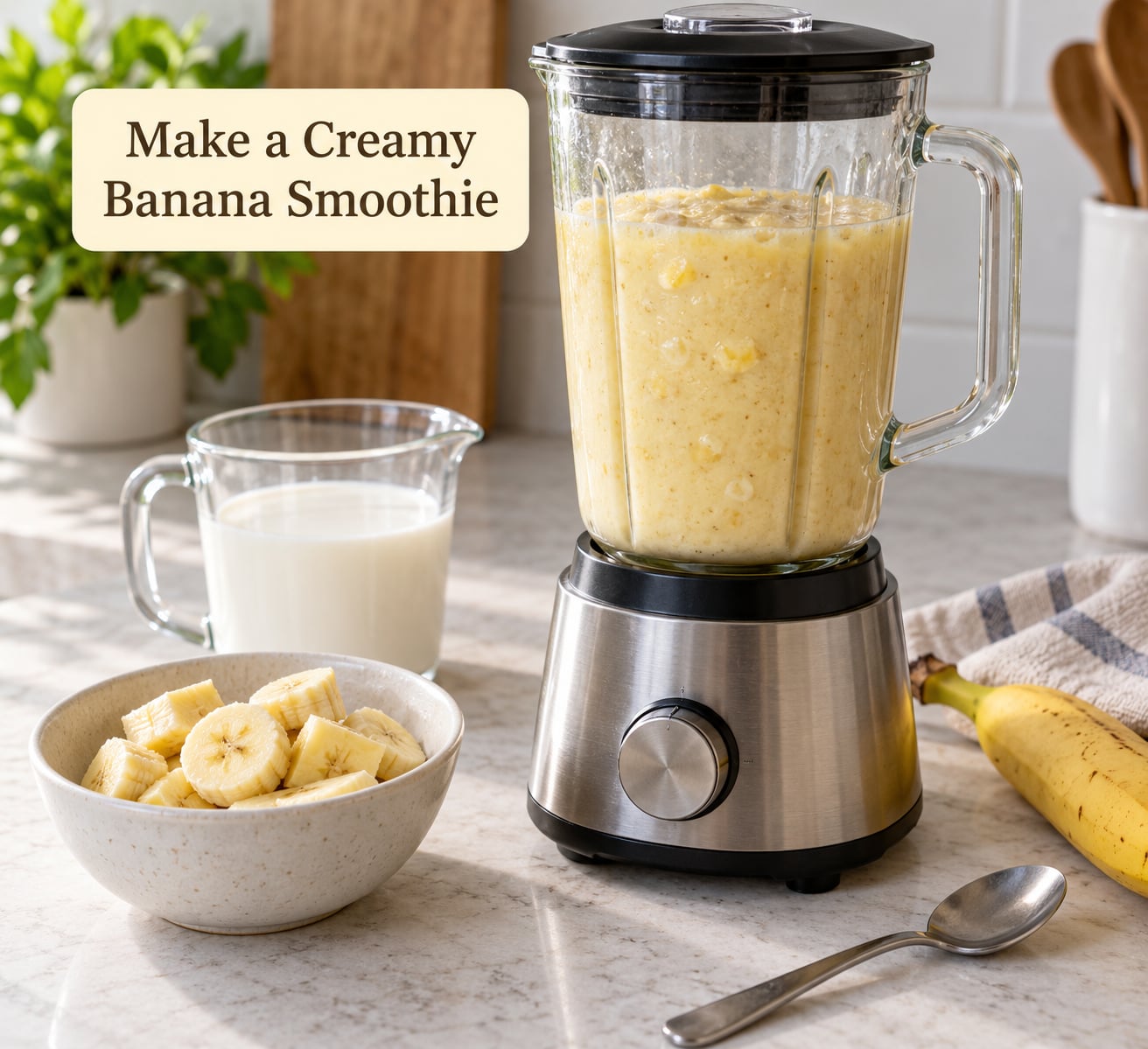
This is the fastest way to use up the worst banana in the bowl, and it is the one people mention most often on cooking forums. A single blackened banana blended with a splash of milk gives you a sweetness you did not have to buy.
The dairy-free version works the same way. Use oat, soy or almond milk, or thin it with water and a spoonful of nut butter for creaminess. Very ripe bananas are sweet enough that you rarely need honey or sugar at all.
If you are building a bowl rather than a drink, blend with almost no liquid and let the fruit do the work. It thickens into something closer to soft-serve in about a minute.
How to blend the ripest bananas for a creamier smoothie
Mash the banana with a fork first if you want a faster, smoother blend, or cut it into chunks if you are using a blender that struggles with soft fruit. Cut chunks blend more evenly when the banana is very cold or frozen solid.
Add liquid in stages rather than all at once. Pour in a third of the milk, blend, then add more until the mixture moves in a continuous circle around the blades. Stop when it pours like thick cream, not like milk.
Blend for 30 to 45 seconds on high. If it still has flecks of peel or fibrous strings, blend another 15 seconds or pass it through a fine strainer.
2. Stir Them into Oatmeal
Mash one very ripe banana into a bowl of cooked oatmeal and stir. The heat softens it into the oats and you get a naturally sweet breakfast with no sugar on the ingredient list.
The portion that works is about half a banana per cup of dry oats. Go higher and the oatmeal turns gluey. For overnight oats, layer sliced banana with the oats and liquid and let it sit in the fridge overnight.
Cinnamon and a spoonful of peanut butter are the usual finish, and they cover the flatness that very sweet fruit can have on its own.
3. Make a Freezer-Pop Smoothie
Blend two very ripe bananas with about half a cup of milk or yogurt, pour into silicone pop molds, and freeze for four to six hours. The molds are reusable and the pops keep for a couple of months in a sealed bag.
Skip the dairy-free swap for the frozen version. Plant-based milk and banana can turn grainy when they freeze because the starches and sugars separate, so use a dairy milk or a full-fat yogurt for the creamiest result.
If you do not own molds, a small paper cup on a stick works, as does any freezable container you will actually eat from on a Tuesday.
4. Blend Them into a Breakfast Sauce
One banana, one tablespoon of milk or water, blended, makes a warm pourable sauce that belongs on pancakes, waffles, French toast, oatmeal or ice cream. It is thinner than a puree and looser than a syrup.
Warm it in a small saucepan for a few minutes if you want it thicker and glossier, then add a squeeze of lemon to lift it. A pinch of cinnamon or a spoonful of peanut butter turns it into a dipping sauce.
This one sneaks past people because it does not read as a banana recipe. It reads as a warm fruit sauce that happens to be sweet on its own.
5. Fold Them into Pancake or Waffle Batter
Mash one banana until smooth and stir it into your standard pancake or waffle batter. You can replace about a quarter of the flour with it or add it alongside the flour for extra moisture.
Because mashed banana brings water with it, cut the liquid in the recipe by roughly a quarter cup per banana. If the batter looks loose, add a spoonful of flour. The pancakes cook faster and brown more quickly, so pull them a little early.
Very ripe fruit mashes more completely, which matters here. Any visible lumps show up as banana pockets in the finished pancake.
6. Use Them in Banana Muffins or Quick Breads
Muffins and quick breads are still baking, just not the loaf. The spotty fruit gives moisture and a deeper banana flavor than firm fruit does, and black-peel bananas are at their most intense here.
Mash until no lumps remain and fold it in with a spatula rather than beating it hard, which is what makes muffins tough. A quick test at the end: a toothpick inserted in the center should come out with a few moist crumbs, never wet batter.
Chocolate chips, walnuts, oats or a spoon of cocoa powder are the easy upgrades. A banana-topped muffin is also an honest answer when you only want to bake one pan.
7. Make Crispy Fried Bananas
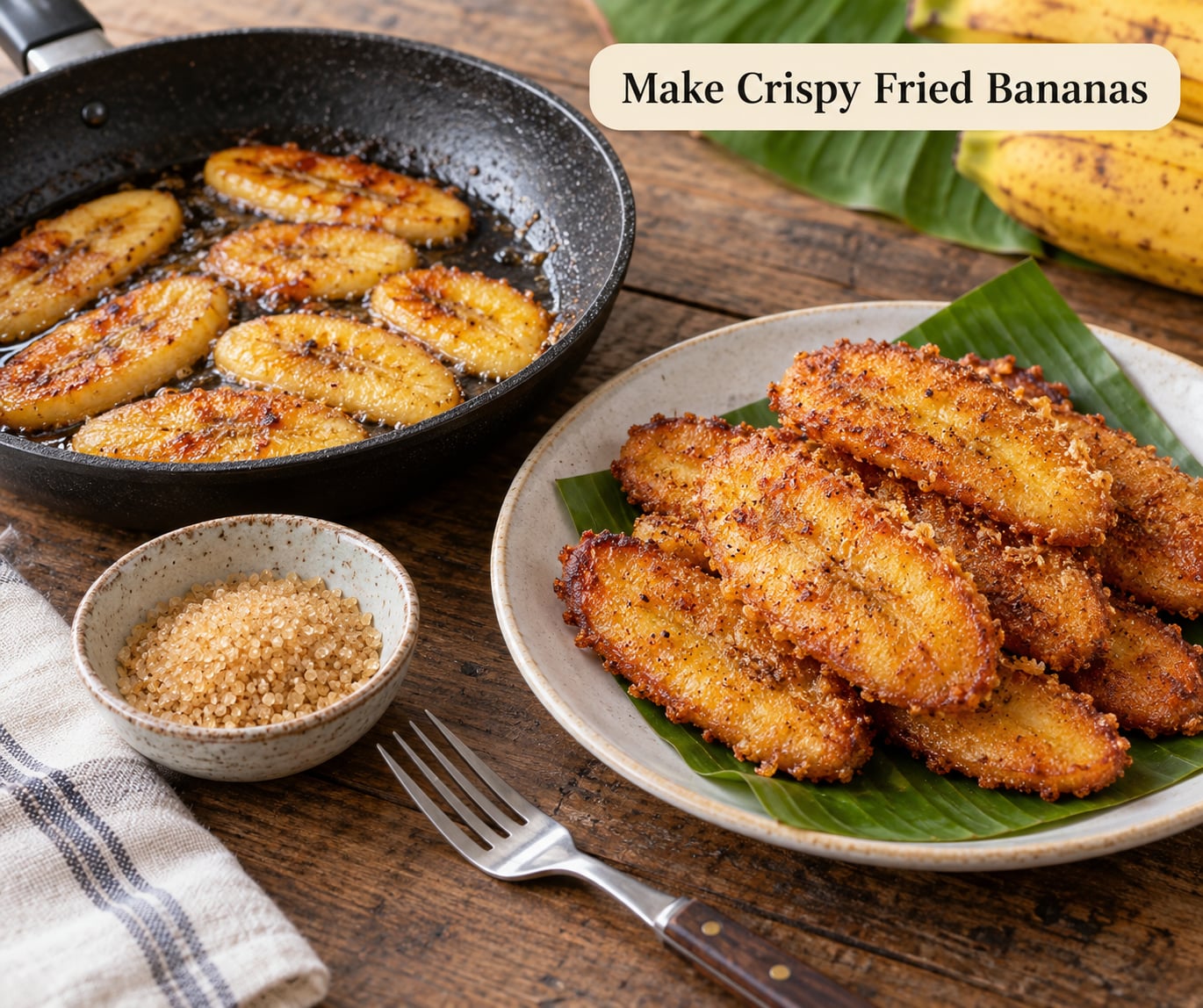
For this one, pick bananas that are yellow with a few spots, not black ones. Mushy fruit falls apart in the pan before it can crisp. Slice them a quarter-inch thick across the grain.
Dip the slices in beaten egg, then in breadcrumbs or a coarse crumb mix, and fry in a shallow layer of oil over medium heat for two to three minutes per side until golden.
Keep the heat moderate. Too hot and the outside burns before the center cooks. Drain on paper towel, then dust with coarse sugar or a pinch of cinnamon while hot.
This is not caramelized banana, which is soft and syrupy. The point here is a thin shell and a crisp edge, so serve it right away.
8. Add Them to Tomato or Black Bean Soup
Savory cooks have used banana to round out acidity for a long time, and it works because the fruit brings body and a low sweetness that reads as mellow rather than sugary.
Add half a banana to the pot in the last 20 minutes of simmering, roughly one banana per eight servings. For black bean soup, mash it and stir it in at the end so it dissolves into the broth.
For tomato soup, add it with the roasted tomatoes or with the onions, which lets the fruit break down completely. Go beyond a banana per pot and the soup starts tasting like dessert.
9. Make a Sweet-and-Savory Rice Side Dish
Mash one banana and fold it into cooked rice with a savory seasoning, then serve it alongside a curry or a roasted chicken rather than as the main event.
The seasoning does the work here. Soy sauce, ginger, garlic and a little lime move it toward a pilaf, while cinnamon and cumin push it toward a sweet rice pudding. A handful of scallions and peanuts finishes it.
Keep it to about a quarter banana per cup of cooked rice. That small amount seasons the dish and adds body. Any more and the balance tips.
10. Bake or Simmer Banana Chips
Slice moderately ripe bananas into thin coins, about a quarter-inch thick, and toss them with a little oil so they do not stick. Arrange them on a lined sheet without overlapping.
Bake at 350°F for 15 minutes, flip each slice, then bake another 10 to 15 minutes until dry and crisp at the edges. Thin slices brown fast, so watch the last few minutes rather than trusting the clock alone.
For a chewy version, simmer the slices in a light syrup for about 10 minutes and drain them on a rack. Store both kinds airtight, and expect the baked ones to soften after a day or two.
11. Blend Them into Salad Dressing or Marinade
A ripe banana emulsifies into a creamy dressing that vinegar and oil alone will not give you. The basic formula is one banana, one tablespoon of mustard or vinegar, a splash of oil and salt, blended until smooth.
For a fruit-protein marinade, combine one banana with yogurt, soy sauce, ginger and garlic, then let chicken or tofu sit in it for a few hours before cooking. The enzymes tenderize the surface while the sweetness browns in the pan.
Stir fresh herbs and a little olive oil in at the end so they stay bright. If the dressing seizes, add cold water or oil a teaspoon at a time.
12. Freeze Them for Future Smoothies
Freezing is the universal answer when a pile is bigger than your appetite. Peel the bananas, cut them into chunks, and lay them in a single layer on a tray so they freeze separately instead of clumping.
Once solid, move them to a bag or container, squeeze out the air, label it with the date and count, and stack them in the freezer. Skipping the tray step is fine, you just end up with one solid block.
Use them within three months for smoothies so the texture stays creamy, and up to six months for baking where staleness matters less. Blend from frozen with no thawing, and thaw in a bowl in the fridge for anything that needs mashing.
Frequently Asked Questions
Can you use overripe bananas in smoothies?
Yes, and they are better for it than firm ones. The softer texture blends smooth and the extra sweetness means you can skip added sugar entirely. Use about one banana per cup of milk, add the liquid in stages, and blend 30 to 45 seconds. Frozen chunks work best, so freeze any that are not going into the blender today.
How ripe should bananas be for baking?
For baking, go as ripe as you can stand. Bananas with brown speckles and blackened peel carry more sugar and more moisture, which gives muffins, quick breads and pancakes a stronger flavor and a tender crumb. The exception is anything where structure matters, like chips and fried slices, which need fruit that is still firm enough to hold its shape.
Can overripe bananas be frozen without peeling?
You can, but peeling first is easier. The skins darken in the freezer and you have to thaw the whole banana to peel it, which softens the fruit. Peeled chunks freeze in a single layer on a tray, then bag them once solid. Use within three months for smoothies and up to six months for baking.
How do you know when bananas are too spoiled to eat?
Discard a banana if the peel splits and liquid is leaking, if you see fuzzy white or green mold inside, or if it smells fermented or alcoholic. Brown speckles, black skin and a soft pulp are all fine. Cut the banana open and look and smell it before you throw it out, because appearance alone sends plenty of good fruit into the compost.
What can I add to bananas so they are not bland?
Sweet fruit needs seasoning rather than more sugar. Cinnamon, nutmeg and vanilla work in oatmeal and baked goods. Peanut butter, tahini or almond butter add fat and salt in a smoothie. A pinch of salt and a squeeze of lime sharpen a breakfast sauce, and cocoa powder or coffee powder turn banana into something that reads as chocolate.
Start with the Ripest Ones
The answer to what to do with overripe bananas besides bread comes down to ripeness. Use your darkest, softest fruit for smoothies, breakfast sauce, oatmeal, pancake batter, muffins and dressing, because those methods rely on mashing and blending. Hold back the firmer yellow ones for frying and chips, where a slice has to hold together in the pan.
Next time a bunch starts turning, stop the browning instead of racing it. Wrap the stems in plastic wrap, keep bananas away from other ripe fruit, and move them to the fridge once they reach the color you like. The peel will darken, but the pulp underneath holds its texture for days.
And when a banana fails the smell test, leaks liquid or shows fuzzy mold, that is the one compost gets. Everything else on this list is a better answer.