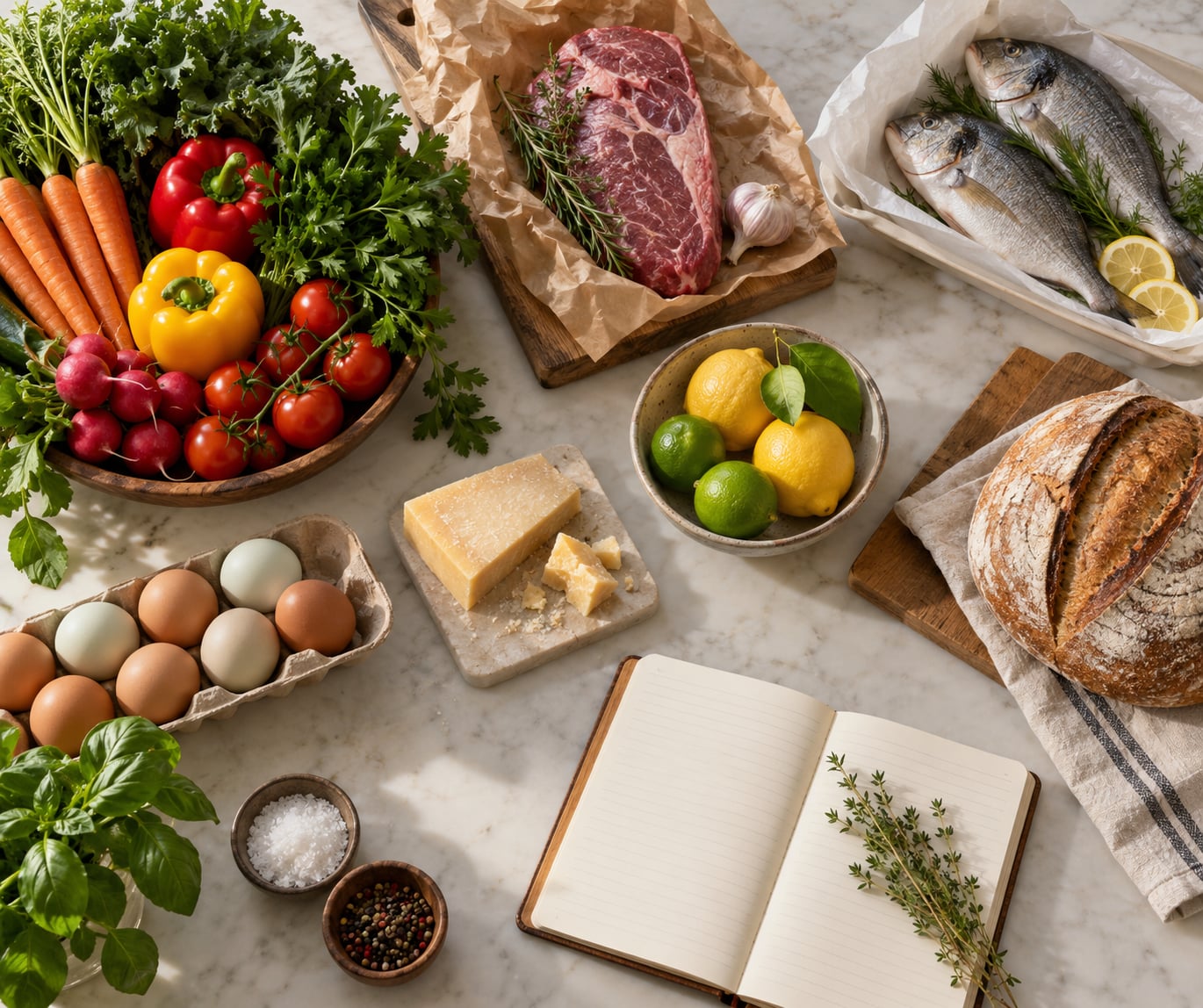
To build a weekly meal plan from a market haul, you unpack first and plan second: sort everything by how fast it spoils, pick two or three anchor meals that eat up the most delicate items, and fill the rest of the week with quick meals built from what you already have. It takes about 30 to 45 minutes, works with any market size, and costs nothing.
A market haul is simply everything you brought home in one trip — produce, bread, eggs, dairy, meat, seafood, whatever the vendors had that day. The point of planning around it is that you stop buying a recipe and then hunting for ingredients, and you stop watching good food slide toward the compost.
Curbside and roadside markets make this more urgent than a grocery run. You buy what is in the truck that morning, you cannot return a swap on Tuesday, and a warm Saturday afternoon will turn a beautiful bunch of kale into a slimy one by Monday. Planning around the haul solves both problems at once.
Table of Contents
- What You Need
- Step-by-Step: How to Build a Weekly Meal Plan From a Market Haul
- How to build a weekly meal plan from a market haul: inventory first
- Prioritize the most perishable ingredients
- Create a mix of quick meals and flexible dinners
- Schedule the week around busy nights
- Prep only what you will use
- Finish the plan with a flexible shopping list
- Common Mistakes
- Use a simple backup-meal system
- Frequently Asked Questions
- How long can a market haul last in the refrigerator?
- What should I freeze from a farmers market haul?
- How do I make a meal plan when I bought too much produce?
- How can I use market ingredients when I do not want to cook every night?
- What is the easiest way to plan meals around fresh meat or seafood?
- Should I eat market-bought bread immediately or freeze it?
- Take the first step tonight
What You Need
You need less than you would think: the receipt or your notes from the market, something to write on, and containers that stack properly in the fridge. That is the whole setup.
- Your receipt or market notes. Vendor stickers, a paper bag, or the photos you took at the truck. Quantities matter more than prices here.
- A notebook or a paper calendar. Paper is faster than an app for this, because the whole job takes half an hour.
- Airtight containers and one sheet pan. Deli containers for cut produce, a freezer bag and a tray for a flash freeze, a rimmed pan so roasted vegetables do not steam.
- An instant-read thermometer. Cheap, and it settles arguments about when poultry and ground meat are actually done.
- A marker or masking tape. Label what you froze and when, because unlabeled freezer bags become compost in three months.
Thirty to 45 minutes covers the first plan. After that the same routine takes about 15 minutes, because the notebook page from last week is already half filled in.
Step-by-Step: How to Build a Weekly Meal Plan From a Market Haul
Six stages, in order: inventory what you have, put a date on the fragile things, choose a mix of meals, place them against your real week, prep only what you will eat, and finish with a short staples list. Work through them once and you get a plan you can repeat every week.
How to build a weekly meal plan from a market haul: inventory first
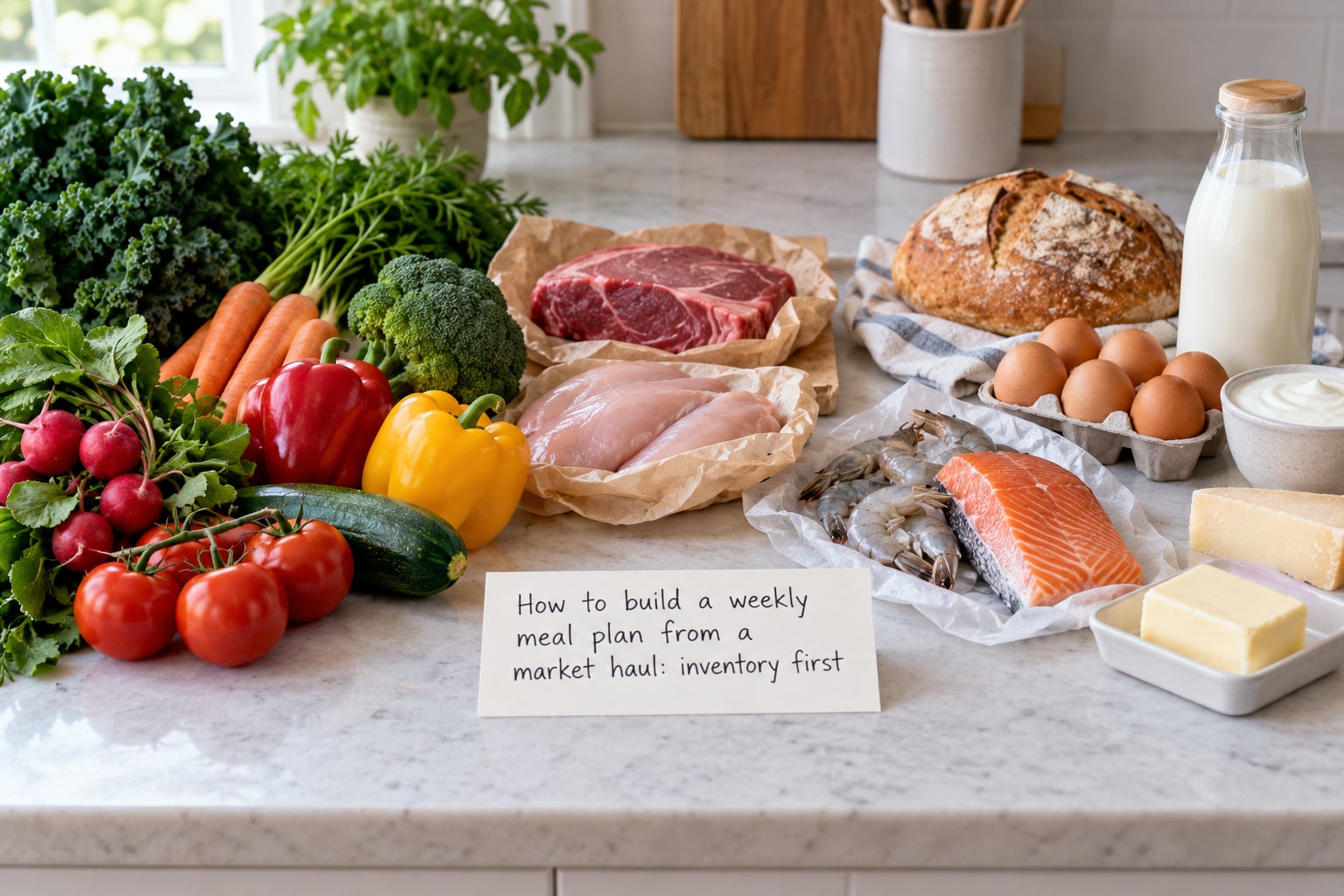
Unpack everything before you plan anything, then sort it into piles on the counter: produce, meat and seafood, dairy and eggs, bread and bakery, and pantry items you will not use this week. Write down how much of each you actually have — two heads of cabbage, not “some cabbage.”
Numbers change the plan. A single bunch of kale is one big dinner and a leftover lunch, not a week of salads, and if you bought four bunches you have a different job ahead of you than if you bought one.
While the piles are out, deal with the food that cannot wait. Raw poultry and ground meat go straight to the coldest part of the fridge or into the freezer. Delicate greens get washed, spun dry, and wrapped in a clean towel inside a container.
Use these as rough refrigerator windows, and follow the dates the vendor gave you: raw poultry and ground meat 1 to 2 days, raw fish and shellfish 1 to 2 days, cooked leftovers 3 to 4 days, raw whole cuts of beef, pork and lamb 3 to 5 days, most cut fruit and vegetables about a week, and leafy greens only a few days. A paper bag traps moisture, so greens stored that way go soft faster than greens in a container.
How you will know it worked: every item is in a pile, every pile has a quantity written next to it, and nothing delicate is sitting on the counter while you decide dinner.
Prioritize the most perishable ingredients
Give every market purchase a use-by date or an eating window, then schedule those items first. Delicate greens, raw poultry, ground meat, seafood, soft cheese, cut fruit and fresh bakery goods go into the first three days of the week; sturdy roots, onions, squash, eggs and pantry items can wait.
Write the window in your own words. “Salad greens: eat by Wednesday” beats a date, because Wednesday is a shopping day anyway. For a market tray of microgreens, plan a week of use, not a single dinner.
Handle proteins with real care rather than good intentions. Keep raw poultry, ground meat and seafood wrapped or in sealed containers on the bottom shelf so nothing drips onto produce. Refrigerate or freeze them the same day.
Cook them to the USDA safe minimum internal temperature: 165°F for poultry, 160°F for ground meat, and 145°F for whole cuts of beef, pork, lamb and fish. That applies to the market truck and the supermarket shelf equally — a vendor selling directly to you is not a different food safety standard.
Create a mix of quick meals and flexible dinners
A week that works needs four kinds of dinner, not seven elaborate ones: one make-ahead dish, one sheet-pan or skillet meal, one big salad or grain bowl you assemble rather than cook, and one flexible staple dinner assembled from the cupboard in under 20 minutes.
The flexible dinner is what saves the plan when Tuesday goes sideways. Rice, beans, canned tomatoes, pasta, eggs, olive oil, vinegar and a couple of spices turn a handful of market vegetables into dinner at any hour, and they cost you a trip you were not going to want to make.
No single recipe has to use everything in the haul. Two or three recipes using the same base ingredient — cabbage in a slaw and a stir-fry, say — quietly covers more groceries than one ambitious dinner that eats one thing.
Ask a different question for a curbside haul than for a grocery run. If the vendor had an unusual vegetable in small quantities, it becomes a supporting ingredient in a familiar dish, not the headline. Rare items need familiar meals around them, not the other way around.
Schedule the week around busy nights
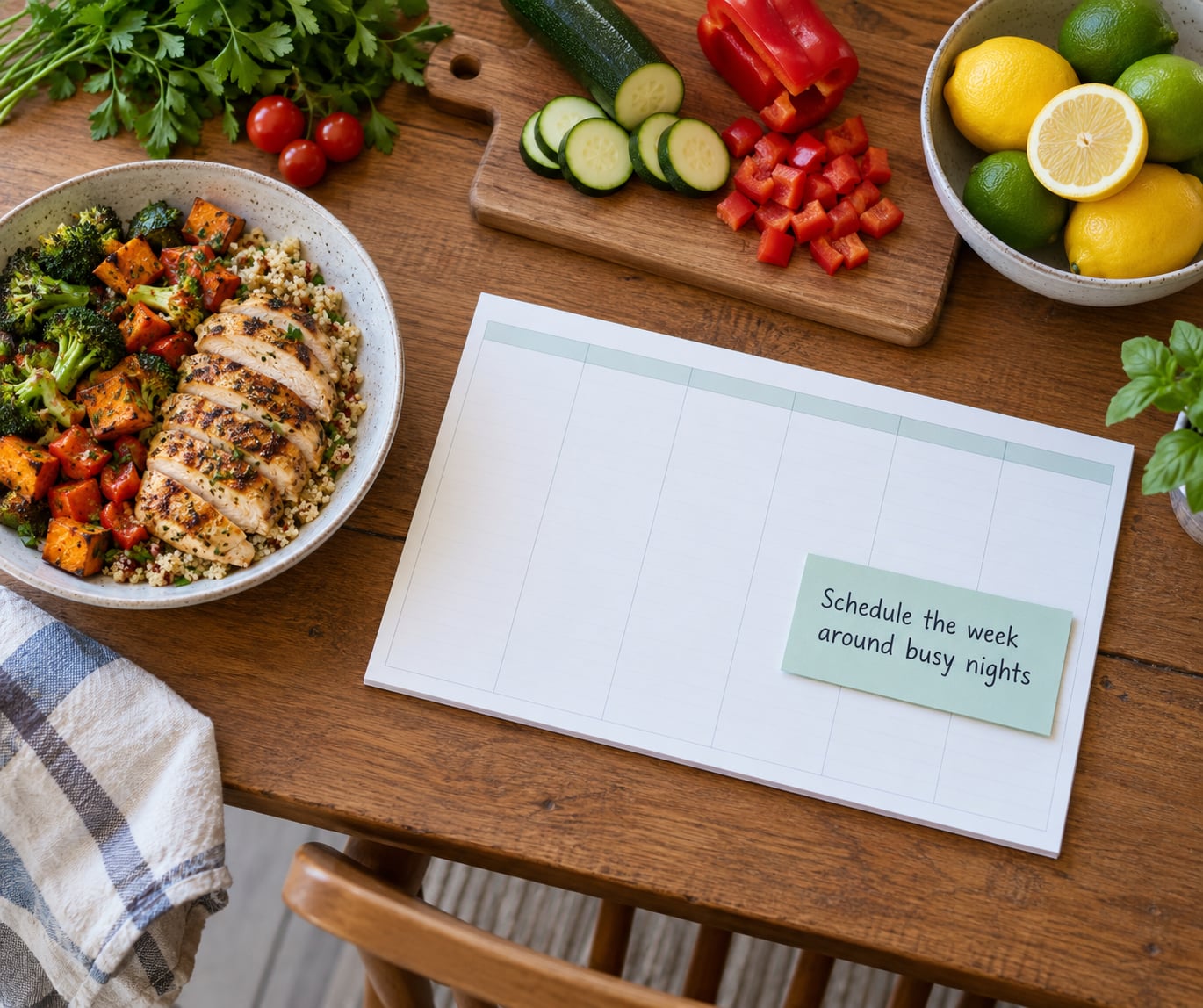
Put the most involved dish on the night with the most time, and do not pretend every night is free. Leftovers, no-cook assembly and ten-minute transformations belong on the crowded evenings, not the ones when you already have time.
Here is what a mapped week looks like when the haul includes a bunch of kale, two heads of cabbage, a pound of sausage meat, a dozen eggs, sourdough, apples and a bunch of radishes:
| Item from the haul | Where it goes | Day | How to store it |
|---|---|---|---|
| Radishes and spring greens | Salad with leftover chicken and a lemon dressing | Monday | Towel-lined container, fridge |
| Sausage meat | Sheet-pan sausage with kale and sliced apples | Tuesday | Bottom shelf, raw |
| Kale, second bunch | Quick-pickled slaw with cabbage and carrots | Thursday | Covered brine, fridge |
| Sourdough | Eggs on toast for two fast breakfasts | Wednesday, Friday | Cut side down on a board |
| Apples | Oat crumble dessert and a lunch snack | Friday | Counter, away from the oven |
| Cabbage, half | Freeze: shred the other half flat in a freezer bag | Saturday prep | Freezer, labeled |
A different household will reorder that completely, and that is the point. The map follows the food, not the other way around.
If two nights are genuinely jammed, put your flexible meal there. Dinner still happens, and nothing goes to waste waiting for a free evening that may never arrive.
Prep only what you will use
Do a short prep session of 15 to 20 minutes, and only for things with a short life. Wash the greens, chop sturdy vegetables, roast a tray of produce for the week, portion proteins, and slice bread for freezing.
Freeze bread in slices rather than a whole loaf so you can take out what you need. Freeze vegetables in a single layer on a tray first, then bag them once solid, so you avoid one brick of ice. Leave 2 hours of headspace in the bag for expansion.
Thaw in the refrigerator, never on the counter, and cook from thawed. Plan for the cooking time in the thaw, or cook from frozen when the dish allows it.
Skip the blanket batch-cook session. Cooking eight portions of everything on Sunday means eating the same meal until it stops being appealing, and it costs you the freshest week the market gave you.
Two rules matter more than any of this. Refrigerate perishable food within two hours of it leaving a warm environment, or one hour above 90°F, and never leave cooked or raw food sitting out for a long stretch of an afternoon.
You will know the prep worked if the fridge contains washed greens, a labeled freezer bag and a sheet pan of chopped vegetables, and nothing else new.
Finish the plan with a flexible shopping list
Read the finished week and list only what it is missing: olive oil, garlic, tinned tomatoes, rice, tortillas, whatever the actual gap is. Check the pantry first, because duplicates are the most common waste in market meal planning.
Most weeks need a condiments-and-staples run, not another full shop of perishables. If the plan genuinely runs out of something midweek, add one item on the same trip that would have happened anyway.
Write down the market items you passed on and still thought about. That list is next weekend’s starting point, and it turns an aimless browse into a short errand.
Name the leftovers while they are fresh in your mind. Two portions from Tuesday become Wednesday’s lunch and Thursday’s soup base, which is the difference between buying lunch out and not.
Common Mistakes
The usual failures are planning before shopping, crowding every perishable food onto one day, choosing only complicated recipes, ignoring freezer capacity, and treating the week as fixed. Each one has a simple correction.
Planning meals before checking the haul. Fix: write the recipe list, then mark which items you already have and cut the rest. If the list assumes fresh basil and you bought no basil, change the dish rather than the plan.
Putting too many perishables on one night. Fix: spread them across the first three days, starting with the softest. Two bunches of kale on the same Tuesday is a problem; one on Tuesday and one on Thursday is a plan.
Choosing only complicated recipes. Fix: cap it at two recipes with more than six ingredients. A week of one-pan dinners gets abandoned by Thursday; a mix of one complicated dinner and six simple ones survives the week.
Forgetting to make room in the freezer. Fix: pull out one flat space before you shop, and treat a labeled bag of shredded cabbage as a future ingredient rather than clutter. Bread and cabbage are easier to freeze than to replace at a weekly market.
Treating the plan as rigid. Fix: keep one flexible meal slot empty on purpose. The meal that moves to it is almost always the one that turns a bunch of soft greens into dinner instead of compost.
Use a simple backup-meal system
Have four low-effort fallbacks ready so a blown-up evening does not end the plan. Each one absorbs produce or bread that needs using, and none of them requires a new trip to the store.
- Toast plus eggs. Soft bread, a fried egg, sliced tomato and any greens going soft.
- Market salad with grains. Chopped cabbage, radish and herbs with cooked farro or rice and a sharp dressing.
- Baked potatoes with cheese and vegetables. Topped with roasted peppers, onions or a quick pickle.
- Pantry soup. Onions, a tin of beans, any leafy stems, and broth. Simmer 30 minutes while you do something else.
Keep the shelf-stable parts of these on hand, because a fallback that needs eight ingredients is not a fallback.
Frequently Asked Questions
How long can a market haul last in the refrigerator?
Most market produce keeps three to seven days in the fridge, but the soft items go first. Use raw poultry, ground meat and raw seafood within one to two days. Cooked leftovers last three to four days, raw whole cuts of meat three to five days, and cut fruit and vegetables about a week. Leafy greens are good for only a few days once washed. Always follow the date your vendor gave you.
What should I freeze from a farmers market haul?
Freeze what you will not eat within two days. Bread sliced and frozen keeps for months. Shredded cabbage, grated carrots, peppers and sturdy greens freeze well after a quick blanch, then dry. Cheese, eggs in shells and quality olive oil do not freeze well. Freeze meat and seafood in portions you can cook in one go, and label every bag with the item and the date.
How do I make a meal plan when I bought too much produce?
Sort everything into perishability tiers, then spread the fragile items across the first three days instead of one. Cook a big batch of soup, curry or roasted vegetables and freeze half of it. Quick-pickle cabbage, radishes or excess carrots in a hot vinegar brine so they last weeks. If you still have surplus, chop it and freeze flat, and buy smaller amounts at the next market.
How can I use market ingredients when I do not want to cook every night?
Cook once or twice a week and assemble the rest. One sheet-pan dinner or a tray of roasted vegetables gives you components for salads, grain bowls and wraps. Leave one flexible dinner slot unfilled so it can absorb whatever is most urgent. Cooked vegetables keep three to four days refrigerated, so buy them early in the week and use them before they turn.
What is the easiest way to plan meals around fresh meat or seafood?
Put it on the first or second night, not the last, and cook it early in the week so leftovers have three to four days of fridge life. Choose a method that stretches: sheet-pan chicken, a chili, a stir-fry or a soup. Cook poultry to 165F, ground meat to 160F, and fish and whole cuts to 145F, measured with a thermometer. Freeze any portion you will not cook in time.
Should I eat market-bought bread immediately or freeze it?
Eat it the same day if you can, because market bread has almost no preservatives and stales quickly. For later in the week, slice it and freeze it, then toast straight from frozen. A whole frozen loaf keeps its texture much better than one repeatedly thawed and refrozen. Storing the cut side down on a board keeps a part-loaf fresh for a day or two.
Take the first step tonight
Start with the softest things in the bag, not the planned recipes. Wash the greens, put the raw meat and seafood where they belong, and choose the two dinners that will use them this week. Then write the rest of the food onto the days it can realistically be eaten.
Once the calendar has something on it, the plan is done, even if it is messy on paper. Next week’s version gets faster because the page is already there.
Check the labels, dates and storage guidance on everything you brought home, keep perishables cold, and cook poultry, ground meat and fish to the recommended internal temperatures. If the plan is going to work at all, it has to start with food that is safe to eat.