Using SNAP at a farmers market usually takes about five minutes at a central booth. You swipe your EBT card there, the staff hands you paper market tokens worth what you asked for, and you spend those tokens at the vendor stalls that take them. Many markets also add match dollars or produce vouchers, so the food you carry home is often worth more than the benefits you spent.
The catch is that farmers markets are not stores. A market may accept SNAP while individual vendors do not, and a token system behaves nothing like a card reader in a checkout lane. Understanding the flow before you arrive is the difference between a smooth trip and standing at a stall with a card nobody can read.
Here is how it works, step by step, along with the mistakes that trip up first-time shoppers.
Table of Contents
- What You Need Before You Use SNAP Benefits at a Farmers Market
- Step-by-Step: How to Use SNAP Benefits at a Farmers Market
- 1. Confirm That the Farmers Market Accepts SNAP
- 2. Check Which Vendors Accept SNAP
- 3. Plan Eligible Purchases
- 4. Pay at the Vendor’s Table With SNAP
- 5. Review the Receipt and Balance
- 6. Shop Again and Ask About Market Resources
- Common Mistakes
- How to Handle a SNAP Payment Problem
- Ways to Make the Most of Your Market Budget
- Frequently Asked Questions
- Can I use SNAP at any farmers market?
- What foods can I buy with SNAP at a farmers market?
- Do all farmers market vendors accept SNAP?
- Do farmers markets offer matching or double-up benefits?
- What should I do if my SNAP payment is declined at a farmers market?
- Start With Your Market’s SNAP Information
What You Need Before You Use SNAP Benefits at a Farmers Market
Bring your EBT card and know your four-digit PIN. That is the one thing you cannot arrive without. Most markets run a central booth with a point-of-sale terminal, and they cannot process a transaction without the physical card in hand.
Some states make exceptions for people who cannot physically present a card, allowing a manual or paper voucher purchase instead. That rule is not nationwide, so if you rely on it, check with your state agency before you go rather than at the booth.
Next, find out whether the market takes SNAP at all, and on which days. Many markets run the SNAP booth only during the main market window, and some operate seasonally. A market that accepts SNAP in summer may pause the program in early spring or late fall, which catches people out year after year.
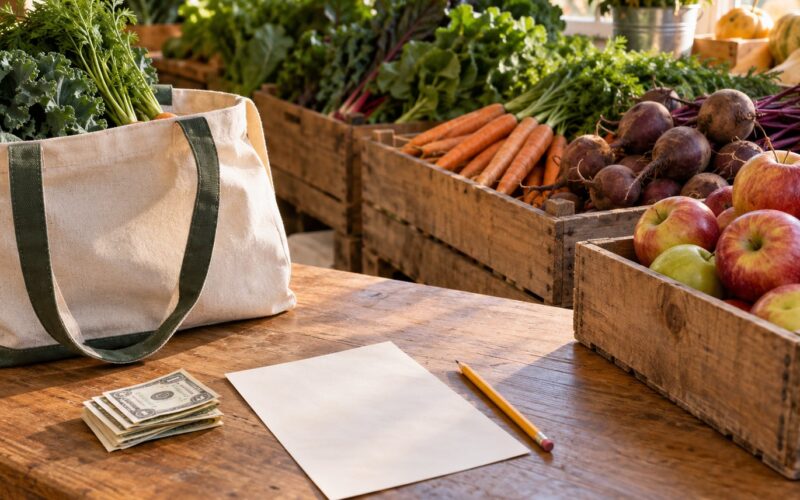
Bring a reusable bag. Produce-heavy trips go heavy fast, and a sturdy bag with handles saves a second trip to the car. Most shoppers also bring a list, because the money runs out faster than you think when produce is one dollar a pound instead of three.
Finally, decide how you want to handle change. SNAP tokens usually come in one-dollar denominations, and many markets will not hand back change in cash or credit. Buy close to the exact amount in tokens, or spend what you have and keep the difference in mind for next week.
Rules for this all come from USDA Food and Nutrition Service at the federal level, then get adapted by your state agency and each market. What works at one market on a Wednesday may not work at another one three towns over, so treat the market’s own info booth as the authority on the day.
Step-by-Step: How to Use SNAP Benefits at a Farmers Market
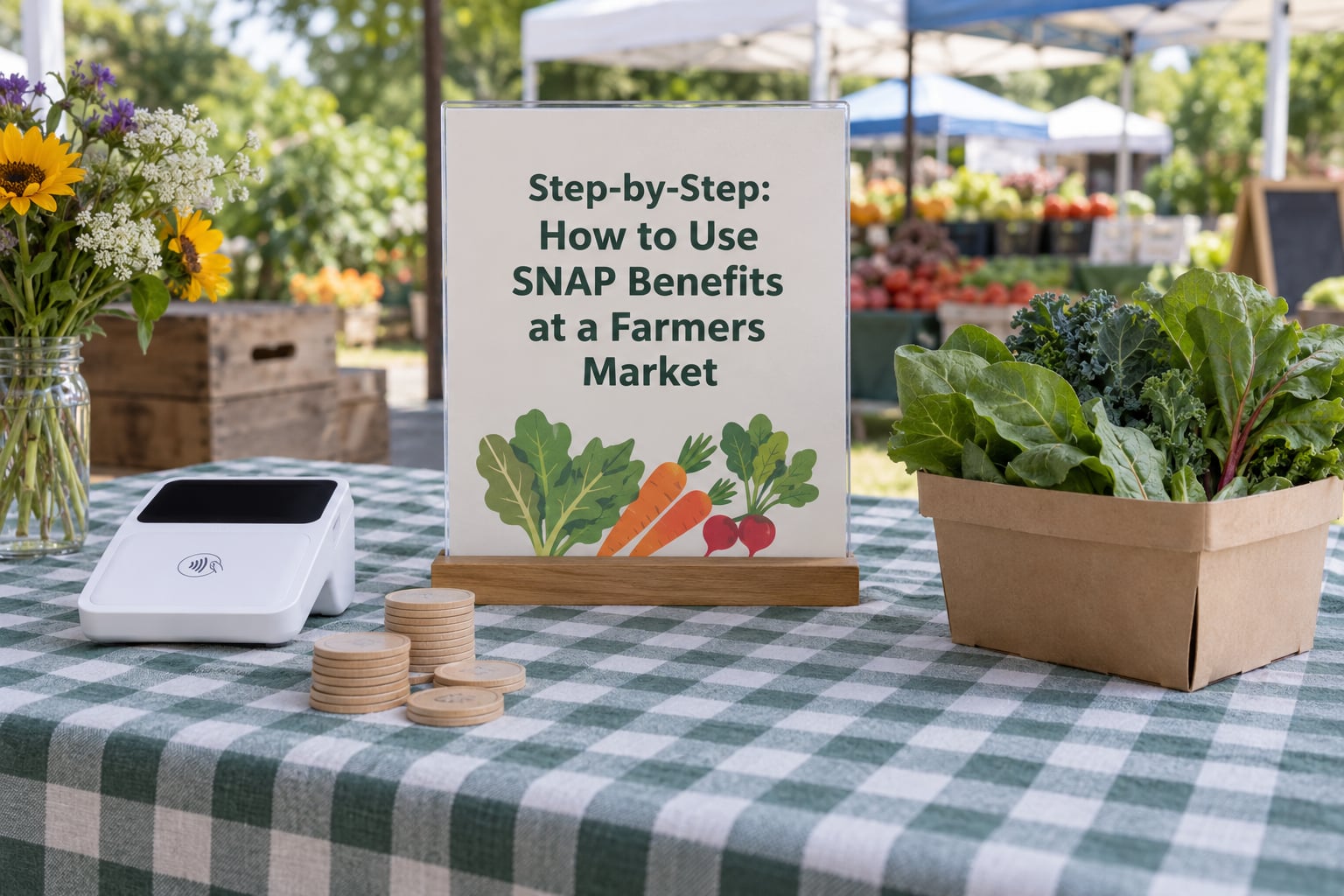
Six steps cover almost every visit. The order matters more than the details: swap first, shop second, and claim any match dollars last.
1. Confirm That the Farmers Market Accepts SNAP
Check the market’s website or its social media accounts before you drive out. Most list market hours and whether an EBT booth operates that season. If the page is vague, call the market manager’s office or the city office that runs the market; a two-minute call saves a wasted trip.
Your state SNAP office and county extension office both publish lists of authorized markets. Some states run a searchable map by county, which is the fastest way to check your area.
Look for the market’s signage too. A sign reading “EBT accepted here” at the entrance tells you the market participates, which is different from saying every stall does.
2. Check Which Vendors Accept SNAP
Not every stall takes tokens. Vendors selling only nonfood items, such as crafts, prepared drinks, or decorative goods, generally cannot accept SNAP for those goods. That is why markets run a token system rather than putting a reader at every stall.
Ask at the info booth before you fill your basket. Market staff know which vendors are participating that day, and this is the moment to ask about the match program too, because the rules often depend on the vendor’s category.
Common reports from shoppers describe markets where only participating booths are covered. Treat any market with rotating or seasonal vendors as a case where the accepted stalls can change week to week.
3. Plan Eligible Purchases
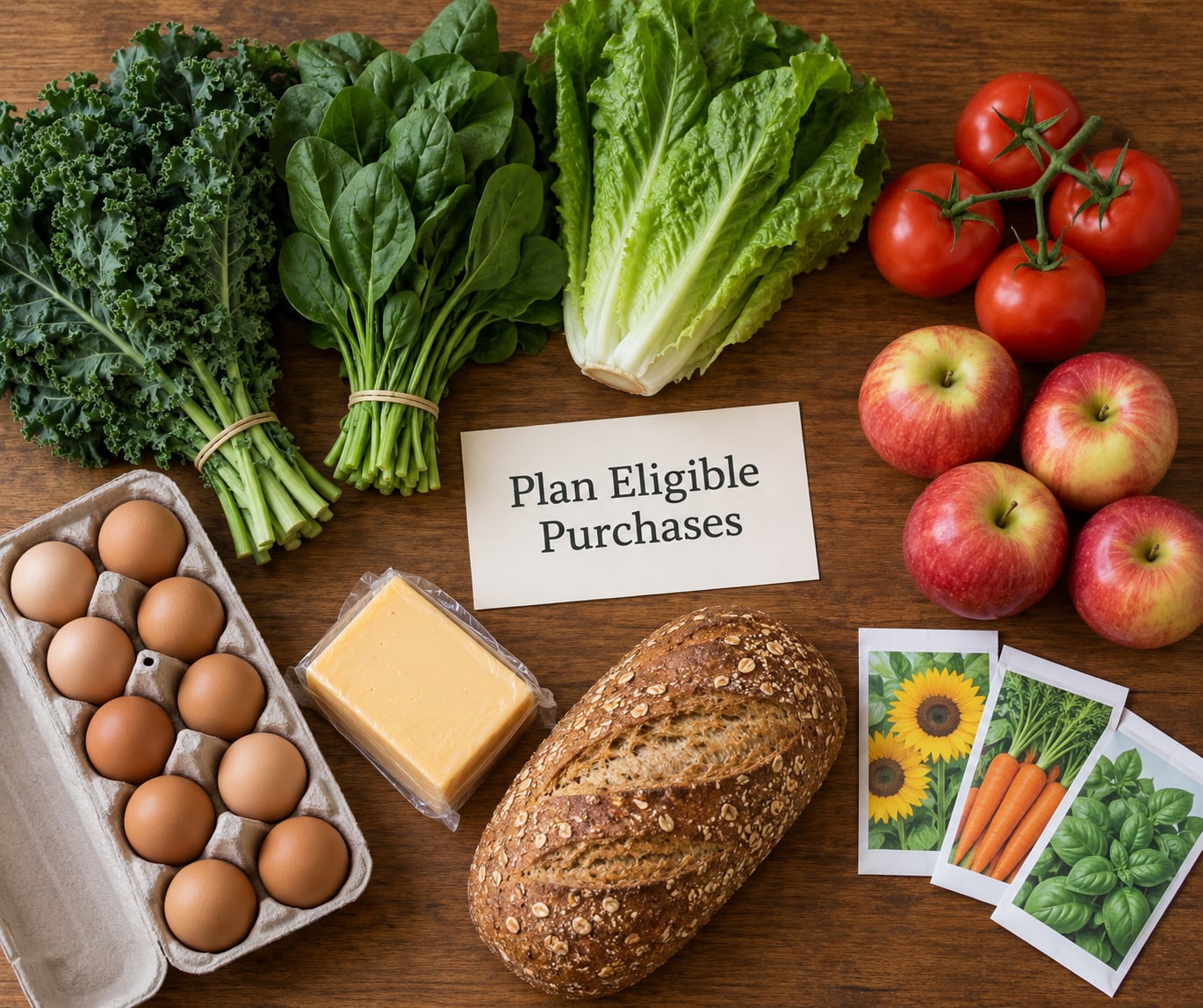
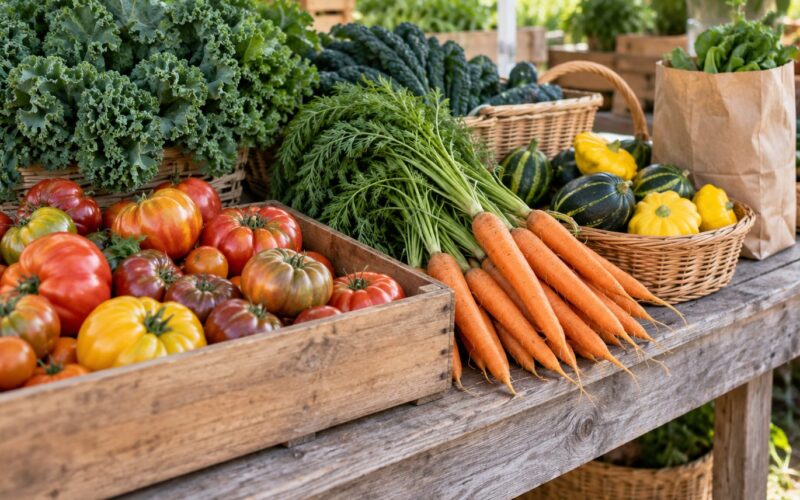
Fresh fruits and vegetables are the obvious core. Meat, poultry, fish and shellfish, eggs, dairy, breads and cereals are also eligible for SNAP, and so are seeds and seedlings that grow food for your household.
Here is the short version of what does not qualify at the stall:
| Usually eligible | Usually not eligible |
|---|---|
| Fresh fruits and vegetables | Prepared meals, hot food and beverages sold to go |
| Meat, poultry, fish and shellfish | Beer, wine and other alcohol |
| Eggs, milk, cheese and other dairy | Cigarettes, tobacco and vape products |
| Bread, tortillas and baked goods | Soap, shampoo, toothpaste and cleaning items |
| Honey, jams and dried beans | Flowers, candy and nonfood items |
| Seeds and plants that grow food | Pet food and live animals |
A farmers market is one of the few SNAP retailers where prepared food is usually off limits, even though the vendors sit next to a vendor selling raw cuts you can take home and cook. Sandwiches, hot soups, and cut fruit served with a fork do not qualify. Bread from the bakery stall does.
Seeds and plants surprise people. A Reddit household using EBT reported the card paid for seeds and a fruit tree alongside groceries, which they did not expect. Rules vary a little by state, so check your local program if plants are the goal.
4. Pay at the Vendor’s Table With SNAP
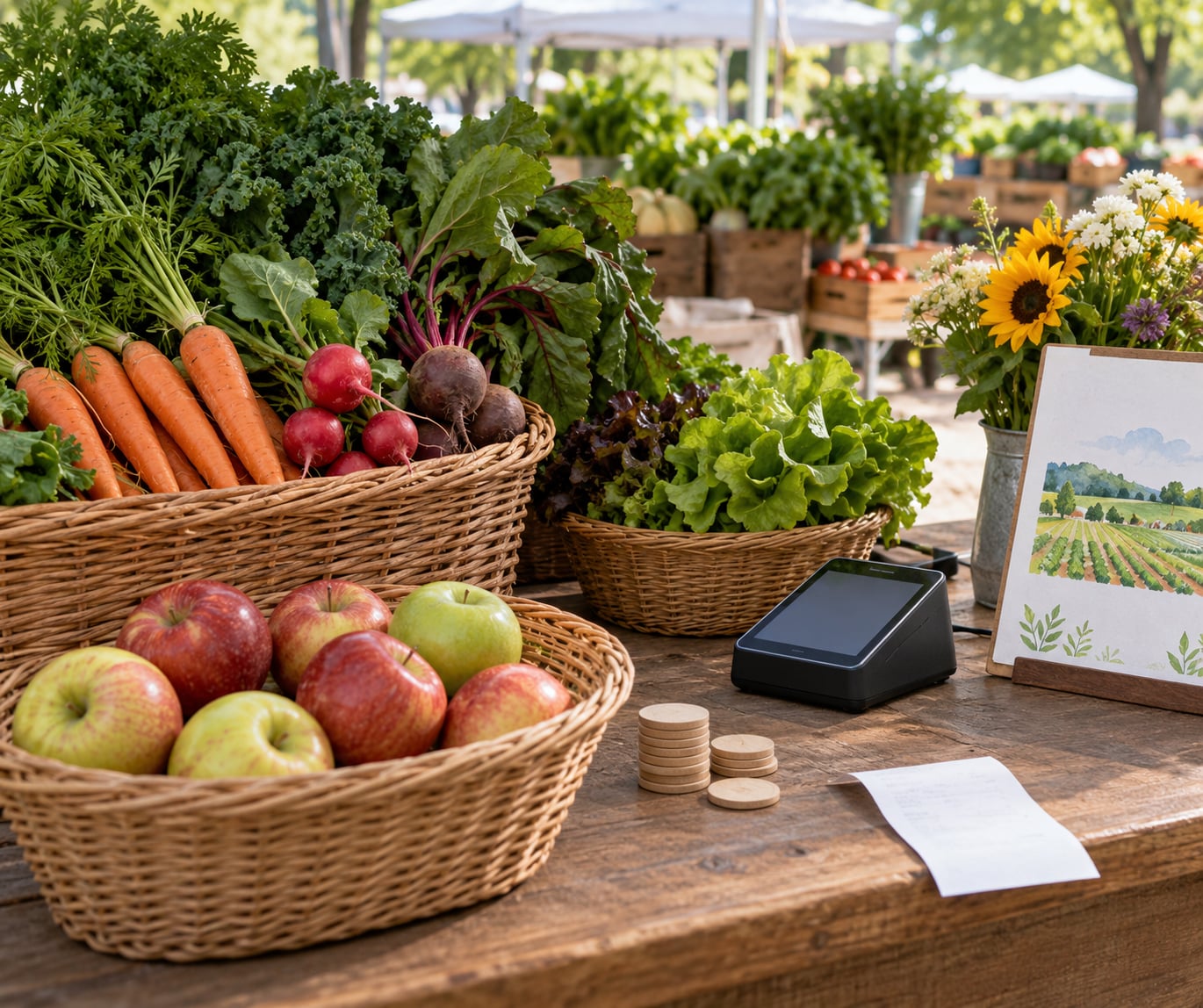
Go to the central booth before you shop. Tell the staff how much you want in tokens, swipe your card, enter your PIN when prompted, and choose SNAP rather than cash benefits if the terminal asks which account to use.
You will walk away with paper tokens or market scrip. Spend them like cash at each participating stall, and tell the vendor the amount before they add anything to your total. Vendors cannot swipe your card themselves in a token market, so the swap has to happen once at the start.
One market system gives out one-dollar tokens with no minimum purchase, while debit and credit customers in the same booth receive five-dollar tokens. That difference catches people off guard, because the tokens do not look or feel different from cash.
You do not need to hand anyone your PIN, and you should not read it aloud in a crowded market lane. You enter it yourself at the terminal at the booth.
5. Review the Receipt and Balance
Keep the itemized receipt from the booth. Some markets require it to release match or incentive dollars, and it is your proof of what was charged if the total looks wrong.
Compare the receipt against what you asked for before you leave the booth. It is much easier to fix a mis-keyed amount while you are standing there than a week later by phone.
Check your remaining balance on your benefit account after you get home. If the number is lower than expected, you have a receipt, the vendor’s name, the date and the market’s contact details, which is everything a state agency asks for when you report it.
6. Shop Again and Ask About Market Resources
Come back the following week before your balance gets low. Produce shoppers in online discussions regularly say the matching program is the main reason they choose the market over the grocery store, and that only works if you use the incentive every time you shop.
At the booth, ask about produce vouchers, market incentives and how the redemption works. Some markets issue fresh-market incentives up to a set cap, dollar for dollar, or hand out a fixed voucher per visit. Others match only fruit and vegetables, so check before you assume the match applies to your whole basket.
Ask the staff how to file for reimbursement if a vendor refused tokens in error, and where to find the market’s written rules. Current rules always come from your state or local authority, and the booth staff can point you at the right page.
Common Mistakes
Almost every frustrating market trip traces back to one of six assumptions. Each has a quick fix you can make before you leave home.
Assuming every vendor takes SNAP. A market accepting SNAP does not mean every stall does. Ask at the info booth first and shop the participating stalls, which are usually marked with a sign.
Buying ineligible items. Prepared food, hot drinks, flowers and pet products do not qualify even when they sit on the same table as eligible produce. Plan around the eligible list and treat cooked food as a cash purchase.
Paying before confirming the total. Count your tokens out first and hand over only what the total requires. Many markets do not give change on token purchases, so an overpayment is simply gone.
Sharing your PIN. You enter it yourself at the booth terminal. No vendor, volunteer or market staff member needs to know it, and anyone who asks is not working the legitimate program.
Expecting a match everywhere. Incentive programs are funded locally and have been politically contested, so some markets fund them with donations and can pause them. Ask whether the match is running this season and what its cap is.
Swiping at the stall instead of the booth. In a token market there is no reader at the stall. Swap your card for tokens first, then shop.
How to Handle a SNAP Payment Problem
If a card is declined, work through it in this order: ask the vendor or booth staff to try the terminal again, confirm you selected SNAP instead of cash benefits, and check that your card is activated and your account is in good standing.
If the market’s machine is down, ask staff whether they can issue a paper voucher or refer you to a backup terminal. Some markets use a cellular terminal that works without a network connection, so a dead connection does not always mean a dead card reader.
For a charge that looks wrong, keep the receipt and go back to the booth the same day. Report it to the market manager and, if the market cannot resolve it, to your state SNAP agency. Do not share your PIN with anyone while making the report.
For items you believe were eligible but were refused, write down the vendor, date and item before you leave. Eligibility disputes are much easier to resolve with specifics.
Ways to Make the Most of Your Market Budget
Shop what’s in season. Peak-season tomatoes, corn and stone fruit cost less and last longer, which matters more at a market where prices run higher than the supermarket.
Compare the unit price rather than the sticker. A small stack of peaches can cost more per pound than a large bag of peaches from the grower two stalls over.
Buy staples you will actually eat. A market full of beautiful produce is not a deal if half of it goes bad in your kitchen. Choose two or three vegetables your household finishes and let the rest wait for a future week.
Use the incentive every time. Shoppers who redeem match dollars only occasionally end up with less than they could, because the match is a per-visit benefit.
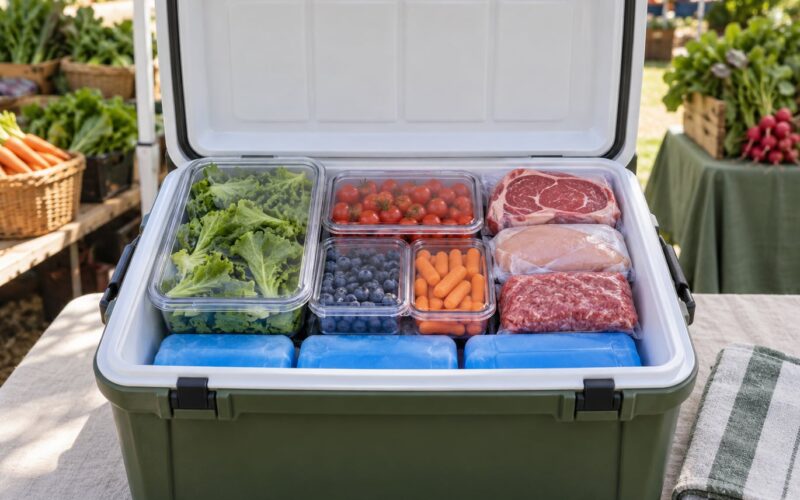
Take care with perishables. Refrigerate raw poultry and meat the same day, keep it below 40 degrees Fahrenheit, and freeze what you cannot cook in a day or two. Wash produce before storing it, and refrigerate cut melon and cut greens promptly.
Do not assume every discount applies to SNAP. Some markets run vendor promotions that are cash only, so ask whether the sale price works with tokens.
Frequently Asked Questions
Can I use SNAP at any farmers market?
No. Only farmers markets authorized to accept SNAP participate, and not every vendor inside an authorized market does. Check the market website, your state SNAP agency list, or call the market manager before you go. Many markets run the EBT booth only during the main market window or during certain seasons, so confirm today’s hours too.
What foods can I buy with SNAP at a farmers market?
Fresh fruits and vegetables, meat, poultry, fish and shellfish, eggs, dairy, breads and cereals, plus honey, jams and dried beans. Seeds and plants that grow food are often eligible, though rules differ by state. Prepared meals, hot food, drinks, flowers, alcohol and household items do not qualify, so a cooked sandwich from the stall is usually a cash purchase.
Do all farmers market vendors accept SNAP?
Usually not. In most token-based markets only participating vendors accept the paper tokens, and booths selling crafts or prepared food cannot. Signs often mark accepted stalls, and market staff can tell you which vendors are enrolled that day. Ask at the info booth before shopping so you do not fill a basket at a stall that cannot take tokens.
Do farmers markets offer matching or double-up benefits?
Many do. Common structures are a dollar-for-dollar match up to a weekly cap, a fixed-dollar produce voucher, or a discount on fruit and vegetables. Incentives are usually funded locally, so they depend on grants and donations and can pause. Ask the booth what the match is this season, whether it applies to your items and what the cap is.
What should I do if my SNAP payment is declined at a farmers market?
Ask staff to retry the transaction and confirm you selected SNAP benefits rather than cash benefits on the terminal. If the machine is down, ask whether the market offers a paper voucher or backup reader. Keep your receipt for any charge that looks wrong, report it to the market manager the same day, and contact your state SNAP agency if it is not resolved.
Start With Your Market’s SNAP Information
Do one thing before your next visit: confirm that your market accepts SNAP and that the participating vendors will be there that day. A quick call to the market office, or a check of the state agency’s market list, settles it in two minutes.
Then bring your EBT card and PIN, plan your purchases around eligible foods, and swap for tokens at the booth before you start shopping. If the market runs a match or produce voucher program, find out the rules and the cap so you can use the full value. Those three minutes of preparation are what turn a monthly benefit into a noticeably bigger basket.