Shopping a market on a tight budget means deciding your spending limit and your meals before you leave the house, walking every stall once to compare price per pound, and buying from the cheapest vendor rather than the first one you reach. Markets are not automatically cheaper than a grocery store, and the shoppers who save the most are the ones who go with a plan instead of a hopeful eye. Here is the method that works, whether you mean a farmers market, a curb market or a public market, plus how to pair it with a cheap grocery run for the rest of the week.
One warning first, because the complaint you will hear most often is a fair one: some stalls charge several times what the supermarket does for the same item, and no amount of technique fixes that. The goal is to find the parts of your basket where the market genuinely wins, and pay elsewhere for the rest.
Table of Contents
- What You Need
- How to Shop a Market on a Tight Budget
- How to shop a market on a tight budget: set your limit before you enter
- How to shop a market on a tight budget: make a flexible shopping list
- How to shop a market on a tight budget: compare unit prices
- How to shop a market on a tight budget: choose seasonal and flexible ingredients
- How to shop a market on a tight budget: shop the counters strategically
- How to shop a market on a tight budget: check the total before paying
- Common Mistakes
- Frequently Asked Questions
- What is the best way to shop at a market on a tight budget?
- How can I compare prices at a public market?
- Should I buy large quantities of produce to save money?
- Are market prepared foods cheaper than making them at home?
- How do I save money on meat, seafood, and bakery items?
- What should I do if prices are higher than expected?
- Conclusion
What You Need
Six things, and none of them cost money you are trying to protect.
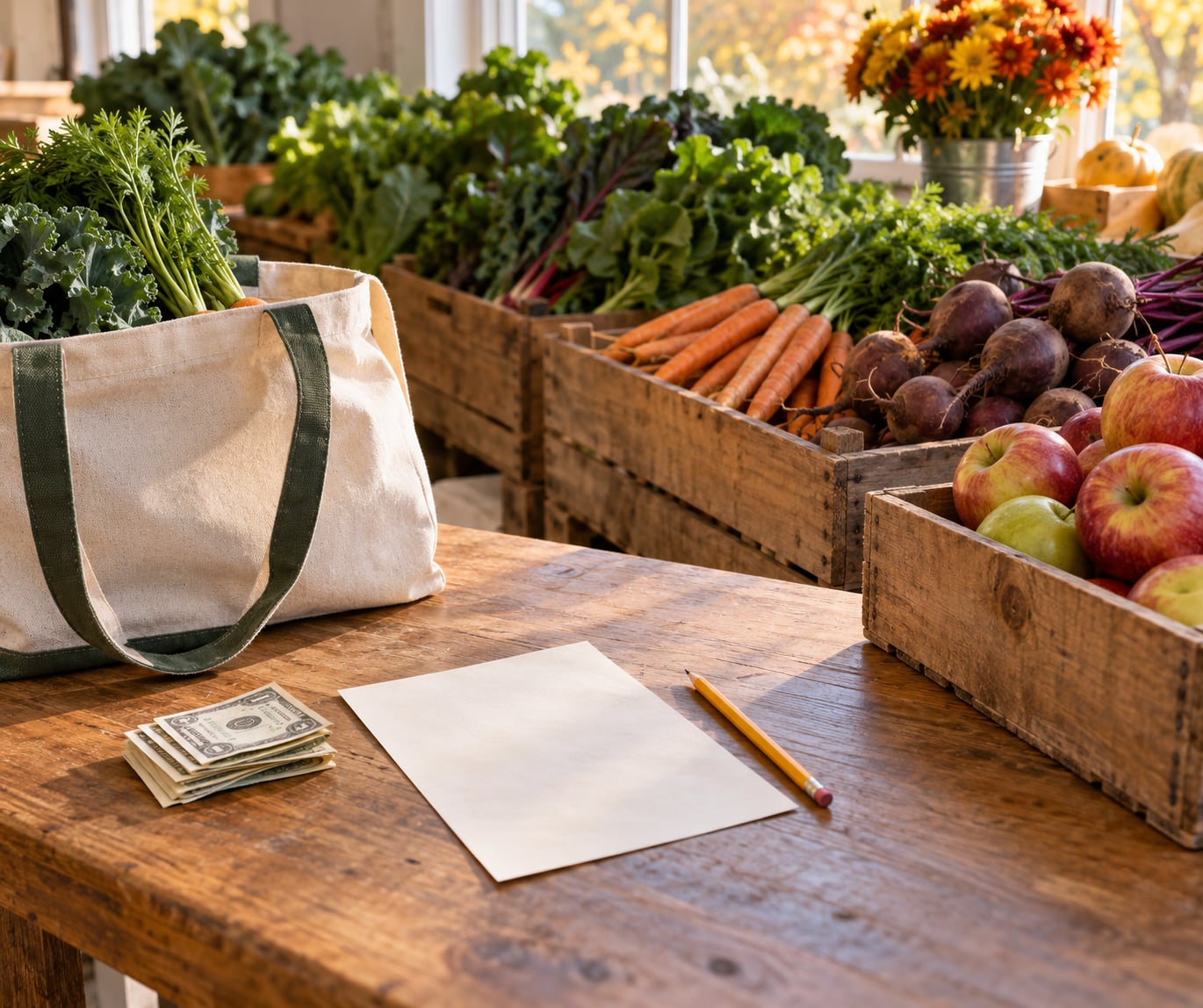
- A fixed number. Decide what you will spend before you walk in. Cash in small bills, in an envelope or a jar, stops the number from being theoretical.
- A flexible list by meal, not by item. Write categories and intentions instead of exact products, such as greens for sauteing or a fruit for lunches.
- Cash, in small denominations. Plenty of small vendors are cash-only, and cash is the easiest opening for a discount conversation.
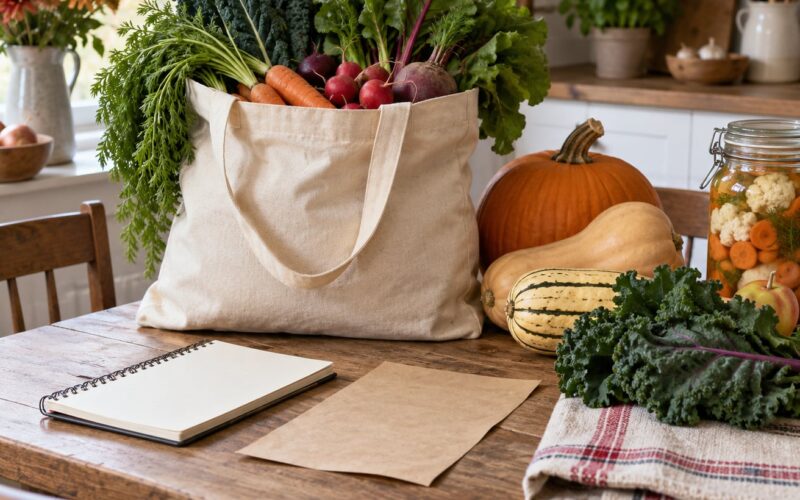
- Reusable bags. Two that hold a decent weight, plus a box or tote for anything delicate like berries.
- A way to track prices. The notes app on your phone is fine. Write down the price per pound at each stall as you pass, because you will not remember it by the till.
- Fridge and freezer space. Real savings depend on eating or freezing what you buy, so check what you already have before you plan to buy more.
Note the household split. A one- or two-person home should buy small quantities and skip almost every bulk offer, since produce that goes into the compost bin is the most expensive produce you ever bought. A family of four or more can use bulk pricing and freezing safely.
How to Shop a Market on a Tight Budget
Six steps, in the order that works. Skipping ahead to the shopping is where the money goes.
How to shop a market on a tight budget: set your limit before you enter
Write your limit on the back of your hand and split it before you go, not in the moment. I divide mine into three buckets: a priority bucket for the produce I already know I need, a flexible bucket for what turns out to be cheap, and a small reserve I can spend on something unplanned without touching the rest.
Then pick your priority items and let the rest go. Choose six to ten things you will definitely cook this week, and accept that everything else is optional. Shoppers who overspend are rarely tempted by one expensive item; they are usually buying eleven unplanned ones.
One thing to decide now: whether this is a market-only trip or a market trip plus a pantry run later in the week. Most households do better with a split, buying fresh produce at the market and shelf-stable basics at a discount grocer, because nobody at a stall beats a warehouse store on pasta, oil or rice.
How to shop a market on a tight budget: make a flexible shopping list
Exact-item lists fail at markets, because the best deal is usually the thing you did not write down. Organize the list by meal intent instead, and it survives any substitution the day throws at you.
- Greens for cooking tonight, about two bunches
- A root vegetable for a soup that stretches through the week
- Two fruits that keep a week in the fridge, for lunches and snacks
- One thing for the freezer, only if you have a plan for it
- A treat, decided in advance, so it is not a decision made at the stall
On the same list, write down substitutions. If the tomatoes look expensive, you will buy peppers instead without standing there doing math. Give each category a ceiling, and once you hit that ceiling you move on, even if something better appears later.
Where you cannot buy everything, buy less of it and come back. Regular shoppers build a mental map of which stall is cheapest for each category, then walk that route first every time.
How to shop a market on a tight budget: compare unit prices
Compare price per pound or per item, never the sticker. A large package is not automatically the value choice, and a single heirloom tomato at a specialty stall is not automatically a ripoff either. Divide the price by the weight and compare that number across stalls.
| Category | Good market buys | Buy elsewhere instead |
|---|---|---|
| Seasonal produce | Picked ripe, priced per pound, plentiful | Nothing, the market usually wins here |
| Imperfect produce | Cosmetically blemished, discounted, same eating quality | Specialty heirloom varieties |
| Bakery | End-of-day loaves and day-old pastries | Cakes and decorated items for gifting |
| Meat and seafood | Whole cuts you can portion yourself | Pre-marinated and pre-portioned items |
| Prepared food | Only if it beats your own ingredients on price | Anything costing more per serving than homemade |
| Pantry staples | Rarely competitive | Oil, rice, pasta, spices, canned goods |
The honest way to test whether your market is worth it is a fifteen-minute audit. Pick the five items your household buys most, note the price per pound at two or three stalls, then compare those numbers with the same five items in your regular grocery store. Most markets win on in-season vegetables and lose badly on single specialty items, and now you know which is which before you spend anything.
How to shop a market on a tight budget: choose seasonal and flexible ingredients
In-season produce is cheaper because it does not travel far and the vendor has more of it. That single habit does more for a food budget than any coupon trick, so buy the vegetable that is abundant rather than the one you planned on.
Favor ingredients that earn their place in more than one meal. A bunch of turnips becomes roasted with oil, grated into slaw, and simmered into soup. A single expensive specialty item usually feeds one meal and then sits forgotten in the crisper.
Buy imperfect produce deliberately. Blemished, misshapen or small items cook and taste the same as the graded ones, and they are the ones most often marked down or thrown into a seconds bin at the end of the day.
Leafy greens, beet tops, broccoli stems and celery leaves are all edible and all often discarded. They are free once you buy the whole bunch.
How to shop a market on a tight budget: shop the counters strategically
Build a route rather than wandering. Small single-farm stands are usually the best value; big specialty stalls with a long queue are usually the worst. Learn where the cheap stall is for roots, greens, squash and fruit, and hit those first while the money is fresh and the good stuff is unbought.
Timing matters, and the two good times pull in opposite directions. Arrive early for selection, when the best produce is still there and you can pick through it. Come back thirty minutes before closing for markdowns, because vendors do not want to haul unsold crates home.
Ask at the stalls instead of guessing. Questions that get answered well:
- Do you have a seconds bin or a discount box today?
- Is there a bulk price if I take several bunches?
- Do you do a standing weekly order, or a cheaper price for regulars?
- Can I buy the block and have it sliced, or is there a small size?
Asking about a discount is normal at a market, not rude, especially if you buy regularly. What does read badly is haggling over a small amount or demanding a discount before you have bought anything all season.
How to shop a market on a tight budget: check the total before paying
The last check happens at the till, not in your head. Add up what is in the basket, compare it to the number you wrote on your hand, and pull out whatever does not fit. An unplanned item you can walk home without is always cheaper than one you regret on the way home.
Pay cash where you can. Small vendors often have no card reader, and handing over bills is the easiest way to start a conversation that ends with a better price. If you use an EBT card, swipe it at the central information booth instead of the stall and you will receive tokens to spend with individual vendors; matching programs such as Double Up Food Bucks can then double your produce spending, and WIC recipients have a separate farmers market program worth checking on. Ask at the booth first, because the mechanics vary by market.
Then store the haul well. Refrigerate leafy greens only after washing and drying them completely, and keep other vegetables unwashed until you are ready to use them. Keep fruit and vegetables that release ethylene gas, such as apples, bananas and pears, away from greens and herbs. Freeze anything you will not eat within a few days, blanching it first, and refrigerate raw poultry to 165 F, ground meat to 160 F and whole cuts and fish to 145 F.
Common Mistakes
These are the errors that cost the most, with the correction for each.
- Shopping with no limit. Fix: decide the number before you leave and carry only that much cash.
- Buying unfamiliar bulk items. A large quantity of something nobody in the house cooks is pure waste. Fix: buy bulk only for ingredients already on your meal list.
- Comparing sticker price instead of price per pound. Fix: divide price by weight for every item you compare across stalls.
- Buying everything at the market. Fix: market for produce, bakery and bulk, discount grocer for pantry staples.
- Reaching for prepared foods. A prepared dish regularly costs several times what the same ingredients cost at home. Fix: compare per serving before you buy.
- Ignoring what is already in the fridge. Fix: check your shelves and freezer the night before, and shop around what you have.
- Leaving food to spoil. Waste turns a saving back into an expense. Fix: freeze, preserve or plan a meal around the surplus the same day.
One habit ties all of it together: write down what you spent and what you actually ate while you still remember. Four weeks of that is the cheapest budgeting tool you will ever own, and it shows you which stall is worth the walk.
Frequently Asked Questions
What is the best way to shop at a market on a tight budget?
Set a spending limit before you leave the house, write a flexible list organized by meal rather than exact item, and walk the entire market once to note price per pound before buying anything. Buy from the cheapest stall for each category, take imperfect produce and end-of-day markdowns, pay cash, and check your running total at the till before you pay.
How can I compare prices at a public market?
Compare price per pound, not sticker price. Pick the five items your household buys most often, note the price per pound at two or three stalls for each, then check the same items in your regular grocery store. That fifteen-minute audit shows you which categories the market wins and which ones you should buy somewhere else entirely.
Should I buy large quantities of produce to save money?
Only if someone in the household will actually cook it. Bulk pricing saves money per pound, but produce that spoils in the crisper bin costs more per pound than anything you bought singly. One- and two-person households should buy small quantities and shop more often. Larger households with a freezer can safely buy roots, squash, greens for cooking and fruit for preserving.
Are market prepared foods cheaper than making them at home?
Usually not, and it is worth checking every time. Prepared dishes carry labor, packaging and a rent component, so the price per serving often lands two or three times higher than the same ingredients prepared at home. Buy prepared food when you are short on time or when the vendor sells something you cannot make cheaply, such as a well-made sausage or a large loaf of good bread.
How do I save money on meat, seafood, and bakery items?
Buy whole cuts of meat and fish and portion them yourself, since pre-marinated and pre-portioned items carry a preparation premium. Ask whether the vendor will slice a block you buy by the pound. At the bakery, go late in the day for end-of-day loaves and day-old pastries, which are usually cut in half or more. Ask about combo deals such as four items for the price of three.
What should I do if prices are higher than expected?
Decide on the spot which categories are still worth buying and drop the rest before you reach the till. Ask about a seconds bin, a smaller size or a bulk price, and pay cash where you can. Then move the item to your pantry run at a discount grocer, and remember next week’s market trip starts with a fresh limit rather than an assumption that the market is always cheaper.
Conclusion
Start with three things this week. Write your limit down and bring only that much cash, build a list by meal instead of by item, and walk the whole market once comparing price per pound before you buy a single thing. Everything else, the seconds bin, the end-of-day bakery run and the vendor conversation, is a bonus on top of those three. Prices quoted anywhere, including here, move with the season and the region, so treat any number as a starting point rather than a fact.