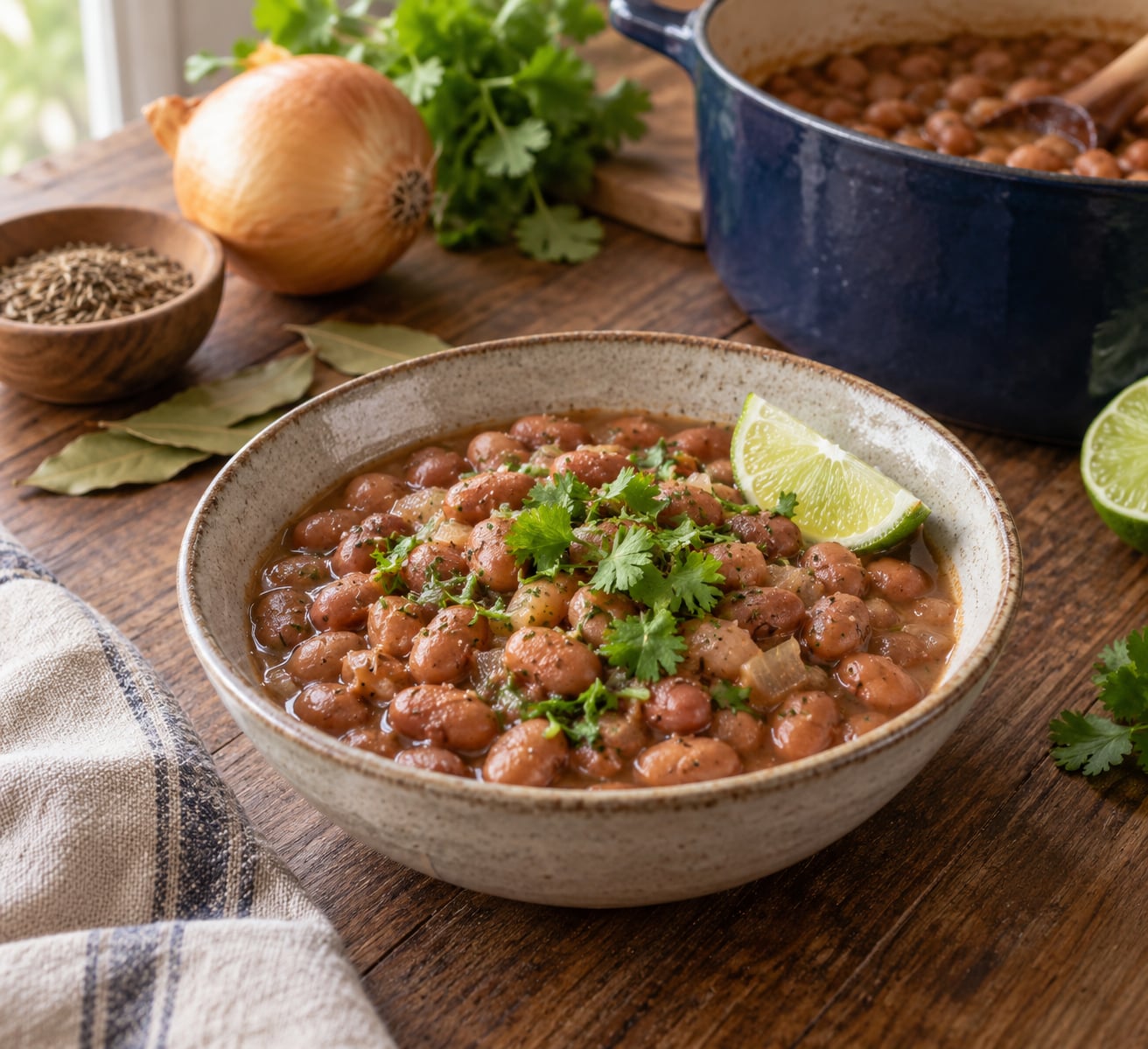
Seasoning a pot of pinto beans comes down to timing. Onion, garlic, bay leaf and a fat go in when the beans hit the heat, ground spices go in once the pot is simmering, and salt plus a squeeze of acid go in at the end. Do it in that order and a pot of mild beans turns into something worth serving, using less seasoning than you would expect.
The six ingredients that do most of the work, measured for about 1 lb of dried beans:
- Yellow onion — 1 whole or 1 cup diced, added at the start
- Garlic — 4 fresh cloves or 1 tbsp garlic powder
- Bay leaf — 1 to 2, added at the start
- Cumin — 2 tsp, added when the liquid reaches a simmer
- Chili powder — 2 tsp, added when the liquid reaches a simmer
- Salt and acid — 1 to 2 tbsp salt and 1 to 2 tbsp lime juice or vinegar, added in the last stretch
Fat counts too. Lard, bacon grease or olive oil gives the spices something to cling to, and it is the difference between seasonings that taste layered and seasonings that taste like they were dumped in at the end.
Table of Contents
- What You Need
- Step-by-Step: How to Season a Pot of Pinto Beans
- 1. Choose and Prepare the Beans
- 2. Build an Aromatic Flavor Base
- 3. Add Beans, Liquid, and Seasonings
- 4. Simmer Until Tender and Flavored
- 5. Taste and Adjust the Seasoning of a Pot of Pinto Beans
- Common Mistakes
- Flavor Variations for Pinto Beans
- Frequently Asked Questions
- How much salt should I use when seasoning pinto beans?
- Can I season pinto beans after they are cooked?
- What is the best seasoning combination for pinto beans?
- Do canned pinto beans need to be rinsed before seasoning?
- Should I add cumin, chili powder, or paprika?
- How can I make seasoned pinto beans thicker and creamier?
- Conclusion
What You Need
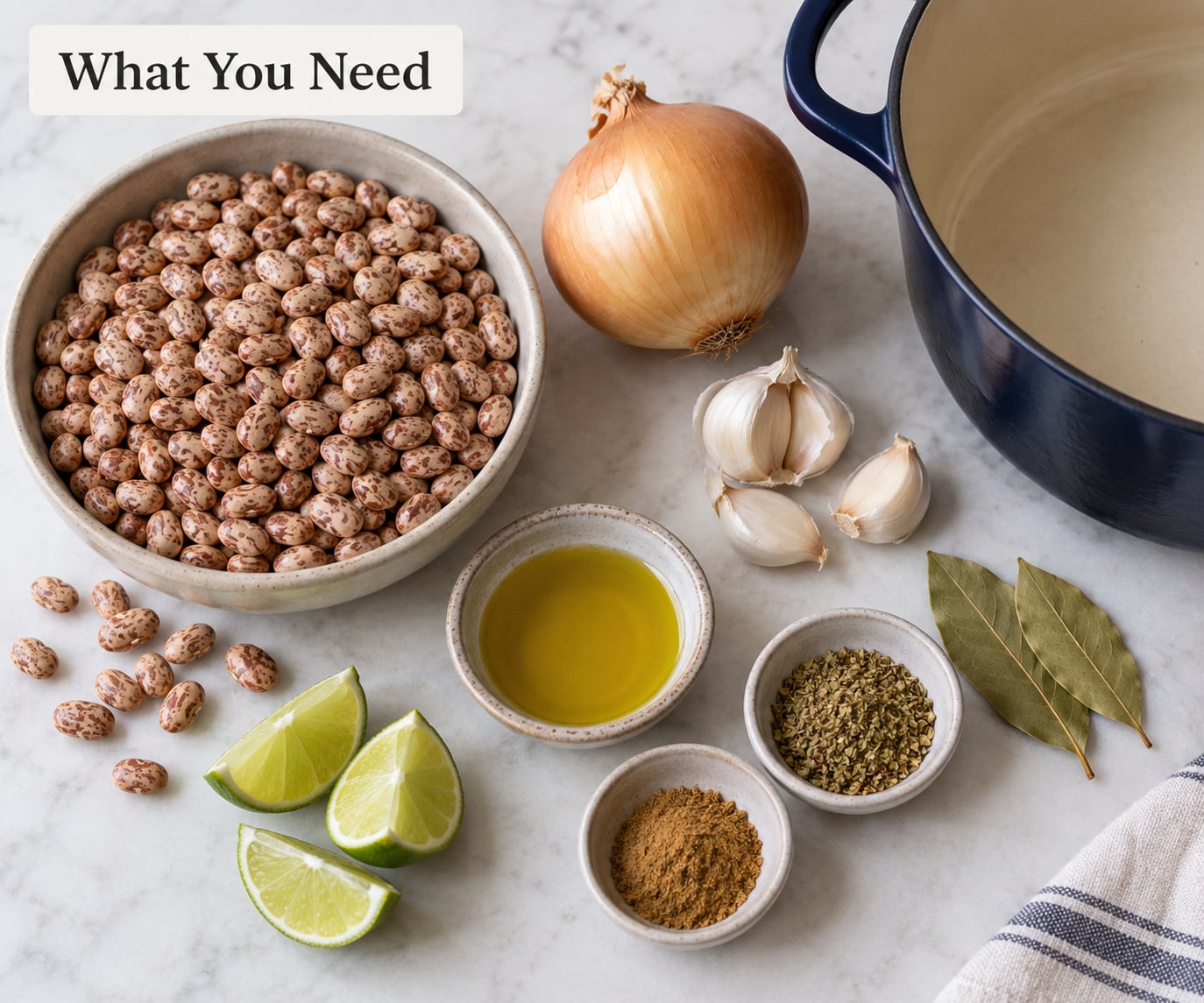
You do not need a long list. Six or seven things carry the whole pot, and most of them are pantry staples you probably already have. Everything else is a variation.
The essentials are beans, an onion, garlic, a bay leaf, some fat, cumin, chili powder and salt. Those seven will get you a pot of beans that tastes deliberate. Acid is close to essential, because it is what makes the finished broth feel bright instead of heavy.
| Ingredient | Amount per 1 lb dried beans | When to add |
|---|---|---|
| Yellow onion | 1 whole halved, or 1 cup diced | Start, sautéed in fat |
| Garlic | 4 cloves, or 1 tbsp garlic powder | Start, or powder mid-simmer |
| Bay leaf | 1 to 2 | Start |
| Fat | 1 to 2 tbsp lard, bacon grease or olive oil | Start |
| Ground cumin | 2 tsp | Mid-simmer |
| Chili powder | 2 tsp | Mid-simmer |
| Dried oregano | 1 to 2 tsp | Mid-simmer |
| Garlic and onion powder | 1 tsp each | Mid-simmer, optional boost |
| Smoked paprika or chipotle | 1 to 2 tsp | Mid-simmer |
| Smoked meat | 1 ham hock, turkey wing or 4 strips bacon | Start with the aromatics |
| Broth or water | Enough to cover beans by 2 inches | Start, plus top-ups |
| Salt | 1 to 2 tbsp, divided | Last 30 to 60 minutes |
| Lime juice or vinegar | 1 to 2 tbsp | Off the heat |
Two optional items are worth knowing about. A spoonful of nutritional yeast adds a nutty, savory depth that reads as more cooking time than you actually did. And a leftover baked potato, mashed and stirred in near the end, thickens the broth without flour.
Step-by-Step: How to Season a Pot of Pinto Beans
1. Choose and Prepare the Beans
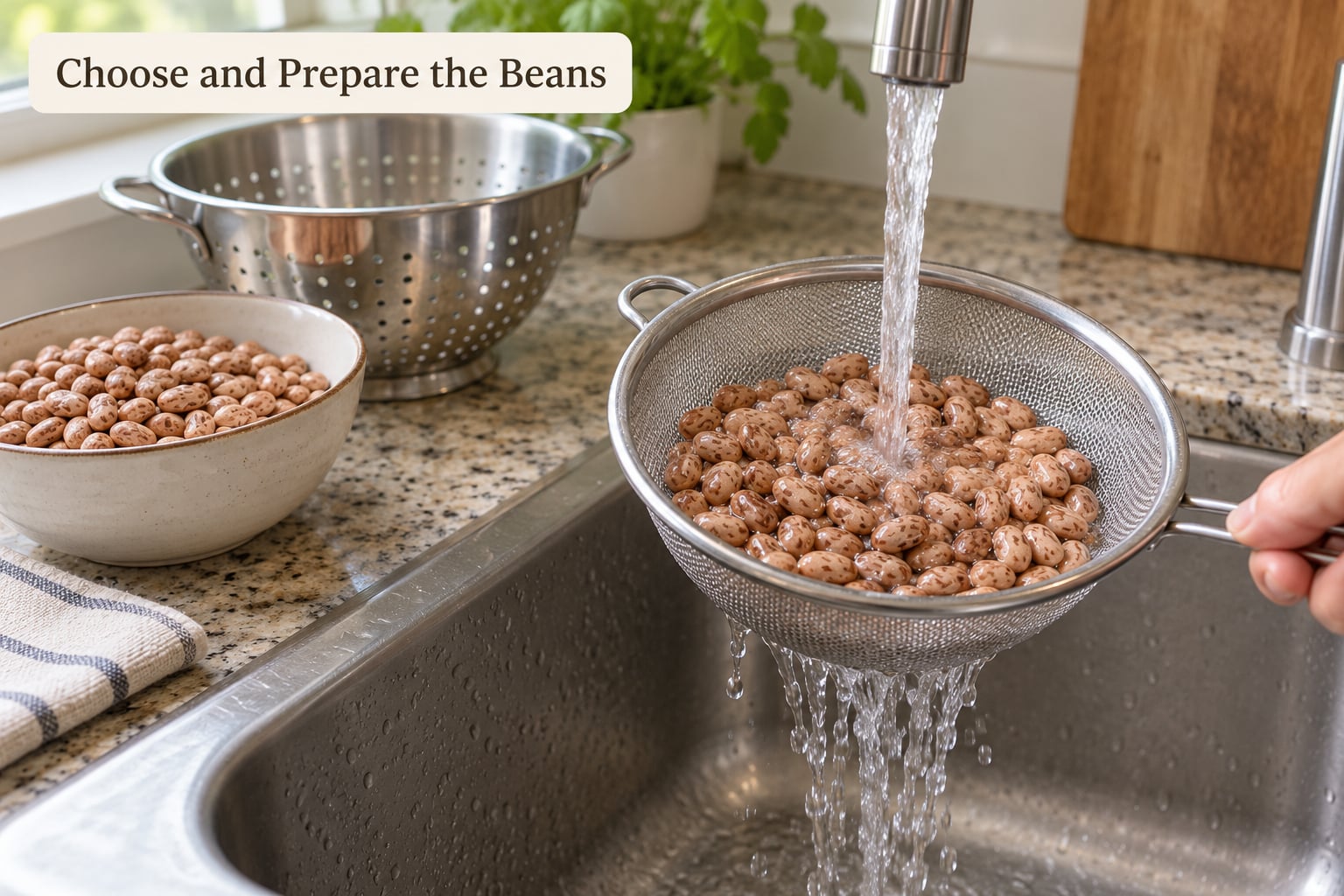
For dried beans, sort them on a dry towel and pick out any stones or shriveled ones. Rinse under cold water until the water runs clear. That rinse matters more than it sounds: the cloudy starch on the surface is what keeps a pot of beans from tasting seasoned.
Then soak. An overnight soak of 8 to 12 hours gives you beans that soften evenly and cook in about 90 minutes. If you forgot to soak them, boil for 2 minutes, let them sit covered for an hour, then drain and cook as usual. It saves a few hours.
Canned beans get a shorter version of the same treatment. Drain, rinse well, and skip soaking entirely. Rinsing washes away the starchy packing liquid that makes canned beans taste flat, and that single step fixes most canned bean complaints.
2. Build an Aromatic Flavor Base
Heat 1 to 2 tablespoons of fat in your pot. Add the onion and cook it over medium heat for 5 to 6 minutes until soft and translucent, not browned. Add the garlic for the last minute, and the bay leaf.
If you are using ground spices rather than whole ones, this is where they earn their keep. Add cumin, chili powder and oregano to the hot fat now and stir for 30 to 40 seconds. Toasting spices in fat before liquid goes in takes about a minute of work and makes the finished pot taste noticeably rounder.
A diced jalapeño or serrano can go in with the onion if you want heat. Skip it if you would rather the beans stay mild, since the spice profile is much harder to walk back once the pot has been simmering.
3. Add Beans, Liquid, and Seasonings
Add the beans and enough broth or hot water to cover them by about 2 inches. Broth buys you seasoning depth that water cannot, and the cost is a little more salt in the pot, so go easy on the salt at the end. If you drained soaking liquid, reserve a cup of it — it carries more bean flavor than tap water.
Now the mid-simmer layer. Add your remaining ground spices, black pepper, and any of garlic powder, onion powder, smoked paprika or chipotle. A teaspoon of each is plenty; these flavors build over an hour of simmering, so what tastes weak going in tastes right coming out.
If you are using meat, it goes in now with the aromatics and liquid. A smoked ham hock or turkey wing contributes both flavor and body, and the collagen in it thickens the broth as it cooks. Bacon works too, rendered first if you want the grease in the pot.
Keep the beans submerged as they cook, and add liquid only in small top-ups. Every extra cup of water dilutes the seasoning you already added, and that is the single most common reason a pot of seasoned beans tastes weak.
4. Simmer Until Tender and Flavored
Bring the pot to a bare simmer, then turn it down so you see occasional bubbles and a lazy movement of the surface. A rolling boil is what breaks beans down into mush, and it is the difference between creamy and mealy.
Simmer uncovered and stir occasionally, every 15 to 20 minutes, so nothing catches on the bottom. Add hot water when the level drops below two inches. Warm water keeps the skins from tightening mid-cook.
You know they are done when a bean gives easily to a spoon but still holds its shape. If you press one and it disintegrates, it has gone past the point you want. Timing varies by soak status and bean age, so use texture rather than the clock as your guide.
| Method | Approximate time | Seasoning notes |
|---|---|---|
| Stovetop, soaked | 90 minutes | Full three-phase seasoning |
| Stovetop, unsoaked | 2 to 2.5 hours | Full three-phase seasoning |
| Slow cooker | 6 to 8 hours | Add all seasoning at the start; liquid cannot be adjusted until the end |
| Pressure cooker | 25 to 30 minutes at high pressure | Use 3 cups liquid, not 6; add delicate herbs after release |
| Canned beans | 15 to 20 minutes | Simmer with aromatics and spices; season to taste at the end |
A pressure cooker concentrates flavor differently, and less liquid means more of it. If you use one, cut the liquid roughly in half and skip delicate herbs like oregano until after the pressure releases, or they turn bitter.
5. Taste and Adjust the Seasoning of a Pot of Pinto Beans
Start tasting about 30 minutes before you think they are done. Taste the broth on its own first, then taste a bean. The broth tells you about salt and acid, and the bean tells you about the spice blend.
How to season a pot of pinto beans at this stage is simple: correct one thing at a time, then taste again. Salt in small increments, roughly half a teaspoon at a time, until the broth tastes like it should. Add acid separately. A tablespoon of lime juice or cider vinegar fixes beans that taste heavy or flat more often than another pinch of salt will.
For beans that taste watery, do not add liquid. Take a small scoop of beans and mash them against the side of the pot, then stir them back in. That thickens the pot and concentrates the flavor at the same time, without diluting anything.
If the chili powder has gone harsh from sitting too long, a spoonful of fat and another splash of broth will soften it. If the beans taste flat in a deeper way, a tablespoon of nutritional yeast or another strip of bacon does more than any extra spice.
When the pot is right, kill the heat and add the fresh finish: lime juice, chopped cilantro, red pepper flakes, or raw diced onion. Fresh ingredients added off the heat keep their character instead of cooking into the background.
Common Mistakes
Underseasoned beans. The fix is almost always acid rather than salt. Add a tablespoon of lime juice or cider vinegar, stir, wait a minute, then taste before reaching for the salt cellar.
Seasoning only at the end. A pinch of cumin stirred into finished broth sits on the surface. The same cumin added during the simmer ends up inside the bean.
Adding salt at the very start. Salt early in cooking pulls moisture out of the bean skins and slows softening. Add it in the last 30 to 60 minutes instead, in divided doses.
Too much liquid. If the beans are covered by more than two inches, they are cooking in soup. Thicken with mashed beans rather than reducing, and skip further top-ups.
Skipping the aromatics. Onion, garlic and bay leaf are the base notes. Without them, the pot is seasoned but not cooked, and it tastes thin no matter how much cumin goes in.
Adding cool water mid-cook. Cold water shocks the skins and makes them resist softening. Top up with hot water or broth from a kettle.
Beans that stay firm. Age is usually the culprit. Beans more than a year old will not soften regardless of technique or seasoning, and a very alkaline old bean can stay hard for hours. Buy fresher beans rather than cooking them longer.
Beans that turn to mush. Keep the simmer gentle, stir less often than you think, and pull the pot off the heat as soon as they give. Beans that are meant for refrying can go further; beans served in broth should not.
Flavor Variations for Pinto Beans
The method does not change between these; only the blend does. Keep the aromatics, keep the simmer, and adjust the middle and finishing layers.
| Profile | Spice blend | Add-in | Finish |
|---|---|---|---|
| Mexican frijoles | Cumin, oregano, chili powder, garlic powder, onion powder | Jalapeno, lard or vegetable oil | Lime juice, cilantro |
| Southern brown beans | Cumin, black pepper, crushed red pepper | Smoked ham hock, onion, bacon grease | Raw diced onion, vinegar |
| Southwestern | Cumin, smoked paprika, chipotle in adobo | Diced green chile, corn | Lime, cilantro, cotija |
| Smoky | Smoked paprika, chipotle, oregano | Turkey wing or bacon | Apple cider vinegar |
| Mediterranean | Oregano, thyme, black pepper, garlic | Olive oil, tomato, white beans | Lemon juice, parsley |
| Spicy hot | Extra chili powder, cayenne, red pepper flakes | Habanero or serrano | Lime, pickled jalapeno |
| Vegetarian pantry | Cumin, smoked paprika, nutritional yeast, chipotle | Extra olive oil, 1 tbsp nutritional yeast | Lime juice, fresh herbs |
For a sweet pot, which some families serve alongside savory beans at holiday meals, skip the cumin and chili entirely. Simmer the beans with a whole peeled onion, a bay leaf and a small piece of pork, then finish with dark brown sugar and a splash of molasses in the last 15 minutes. It is a different dish built with the same timing rules.
Frequently Asked Questions
How much salt should I use when seasoning pinto beans?
For a pot made from 1 lb of dried beans, start with about 1 to 2 tbsp of salt, divided into two or three additions during the last 30 to 60 minutes of cooking. Add it in small doses and taste the broth between each one. If you cooked the beans in broth, go lighter, since the liquid already carries salt.
Can I season pinto beans after they are cooked?
Yes. Warm the beans in their broth over low heat, then add cumin, chili powder, garlic powder and a splash of hot broth, and simmer for 10 to 15 minutes so the spices dissolve into the liquid. Finish with salt and lime juice off the heat. Canned beans need only 15 to 20 minutes of simmering for the same effect.
What is the best seasoning combination for pinto beans?
The combination most cooks land on is cumin, oregano and chili powder, usually measured at 2 tsp, 1 tsp and 2 tsp for 1 lb of dried beans, with garlic powder and onion powder as backups. Build it on a base of onion, garlic, bay leaf and fat so the spices have something to attach to.
Do canned pinto beans need to be rinsed before seasoning?
Yes. Rinsing removes the starchy packing liquid, which is the main reason seasoned canned beans still taste bland and thick. Drain and rinse under cold water, then simmer them 15 to 20 minutes with fresh aromatics, spices and broth rather than the original liquid.
Should I add cumin, chili powder, or paprika?
Use cumin for earthiness and chili powder for warmth and a little heat, and add smoked paprika for a smoky note that neither of the others provides. A balanced pot uses all three, but they serve different jobs. Toast any of them briefly in fat before liquid goes in for a deeper result.
How can I make seasoned pinto beans thicker and creamier?
Mash a scoop of beans against the side of the pot and stir them back in. That thickens without flour or cream and concentrates the existing seasoning at the same time. A leftover baked potato, mashed and stirred in near the end, works the same way. Simmering the beans with a smoked ham hock also adds body as the collagen dissolves.
Conclusion
Sauté onion, garlic and bay leaf in fat first, add your beans with enough liquid to cover them by two inches, and layer in cumin, chili powder and oregano once the pot is simmering. Salt in the last half hour, taste as you go, and finish with lime juice off the heat.
Cooked pinto beans keep three to four days refrigerated in a sealed container, and they freeze well for three months. Freeze them with a little broth so they do not dry out, and reheat with a splash of water or broth rather than a microwave on high.