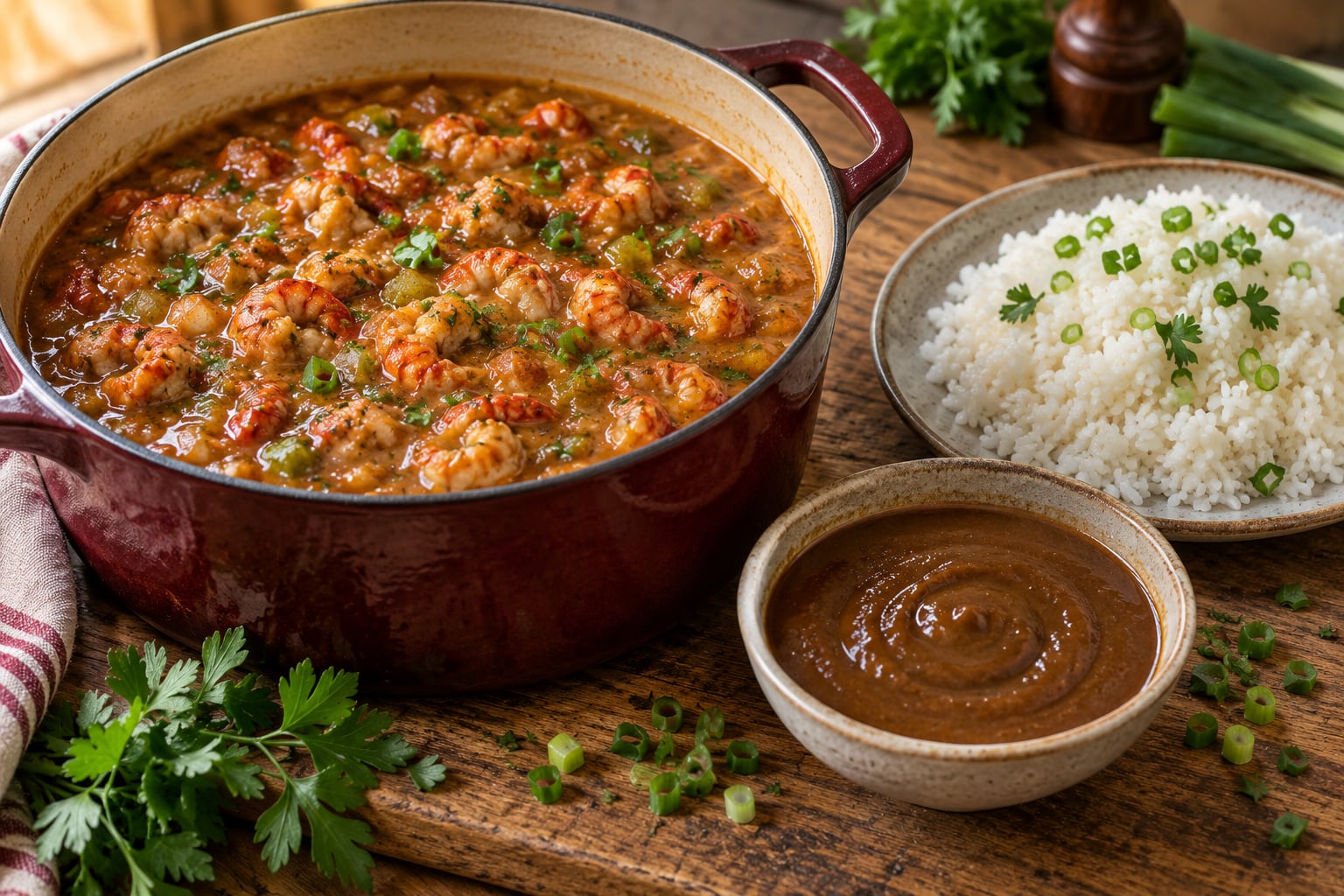
Etouffee is French for smothered, and the dish is exactly that: crawfish, shrimp or chicken cooked in a thick, glossy Cajun sauce made from roux, then served over white rice. Learning how to make etouffee at home is mostly about the roux, which is a fat-and-flour paste you cook until it turns the color of peanut butter. Get that step right and the rest is straightforward. Budget about 75 minutes, most of it unattended while the sauce simmers.
I make this several times a month, and the version below is the one I keep coming back to: a dark roux, the holy trinity cooked soft rather than crisp, and protein folded in at the end so it stays tender. It was the recipe I rebuilt for 2026 after too many bowls of thin, grey sauce.
Table of Contents
- What You Need to Make Etouffee at Home
- For the protein, about 1 pound
- For the roux and sauce
- Equipment that actually helps
- How to Make Etouffee at Home Without Crawfish
- Step-by-Step: Etouffee From Roux to Serving
- 1. Build the Dark Roux
- 2. Saute Vegetables and Seasonings
- 3. Cook the Chicken and Shrimp
- 4. Add Broth and Simmer
- 5. Finish and Serve
- Common Mistakes When Making Etouffee at Home
- The roux stays too pale
- The roux burns
- The sauce turns out thin
- The sauce breaks or goes lumpy
- The shrimp or chicken turns rubbery
- The whole pot tastes flat
- Frequently Asked Questions
- What is the difference between etouffee and gumbo?
- Can I make etouffee without crawfish or shrimp?
- How do I keep my roux from burning?
- Why is my etouffee too thick?
- Should there be tomatoes in etouffee?
- Is etouffee hard to make at home?
- Conclusion
What You Need to Make Etouffee at Home
The ingredient list is short, and almost everything is available in a normal supermarket outside Louisiana. The one ingredient that genuinely matters is the crawfish tails, and even those are now sold frozen year-round.
For the protein, about 1 pound
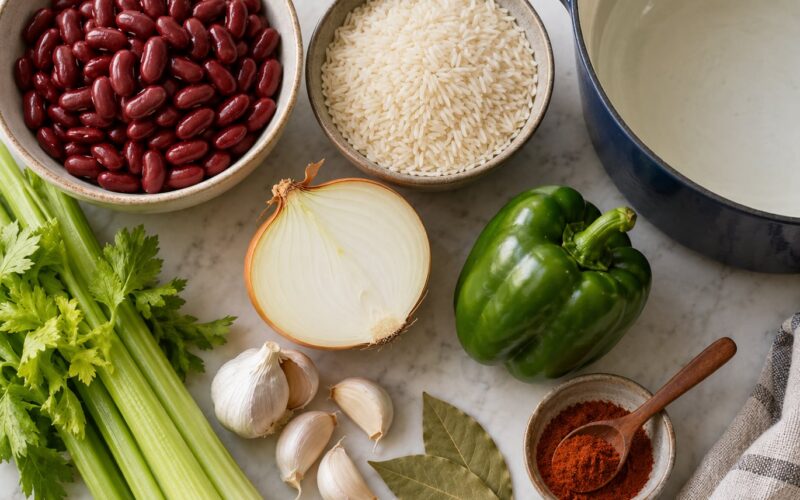
- Crawfish tails, ideally with some of the sweet crawfish fat still attached
- Or 1 pound peeled and deveined shrimp
- Or 2 bone-in chicken thighs plus 4 ounces of andouille sausage, sliced
For the roux and sauce
- 4 tablespoons unsalted butter, plus 1 tablespoon for the pan
- 1/2 cup all-purpose flour, measured and level
- 1 yellow onion, diced small
- 1 green bell pepper, diced small
- 2 stalks celery, diced small
- 3 to 4 garlic cloves, minced
- 2 cups chicken or seafood stock, plus more if needed
- 1 to 1.5 tablespoons Cajun or Creole seasoning blend
- 1/4 teaspoon cayenne pepper, optional
- 1 bay leaf, 1 teaspoon Worcestershire sauce, hot sauce to taste
- 1/4 cup chopped parsley and 1/2 cup sliced green onions
- Salt and black pepper to taste
- Cooked white rice, for serving
Equipment that actually helps
A heavy pot with a thick bottom, a long wooden spoon or whisk, and a sharp knife are the whole list. The pot matters more than anything else here, because a thin pan bottom spikes in temperature fast and is the usual reason a roux burns before you notice the color changing.
How to Make Etouffee at Home Without Crawfish
Shrimp is the easiest swap and needs the least adjustment. Crab meat works but adds salt quickly, so leave the seasoning light. Chicken thighs plus sliced andouille give you the deepest, most Cajun-flavored version, and they are hard to overcook, which makes them a forgiving weeknight choice.
For broth, clam juice or a seafood stock adds a briny note that plain chicken stock does not. Half-and-half stirred in at the end gives a creamier sauce, though it lowers the boil and thickens the final result more slowly. A spoonful of tomato paste is a legitimate regional variation that adds color and a little acidity, though plenty of Louisiana cooks treat it as a Creole habit and skip it.
On boxed roux: it works, and it is faster. It also arrives pre-seasoned, so skip your own Cajun blend, and add it to already-warm stock rather than cooking it in butter first. Expect the sauce to be slightly grainier than a roux you made yourself, which is why serious cooks on cooking forums tend to make theirs from scratch and keep the boxed mix for emergencies.
Step-by-Step: Etouffee From Roux to Serving
1. Build the Dark Roux
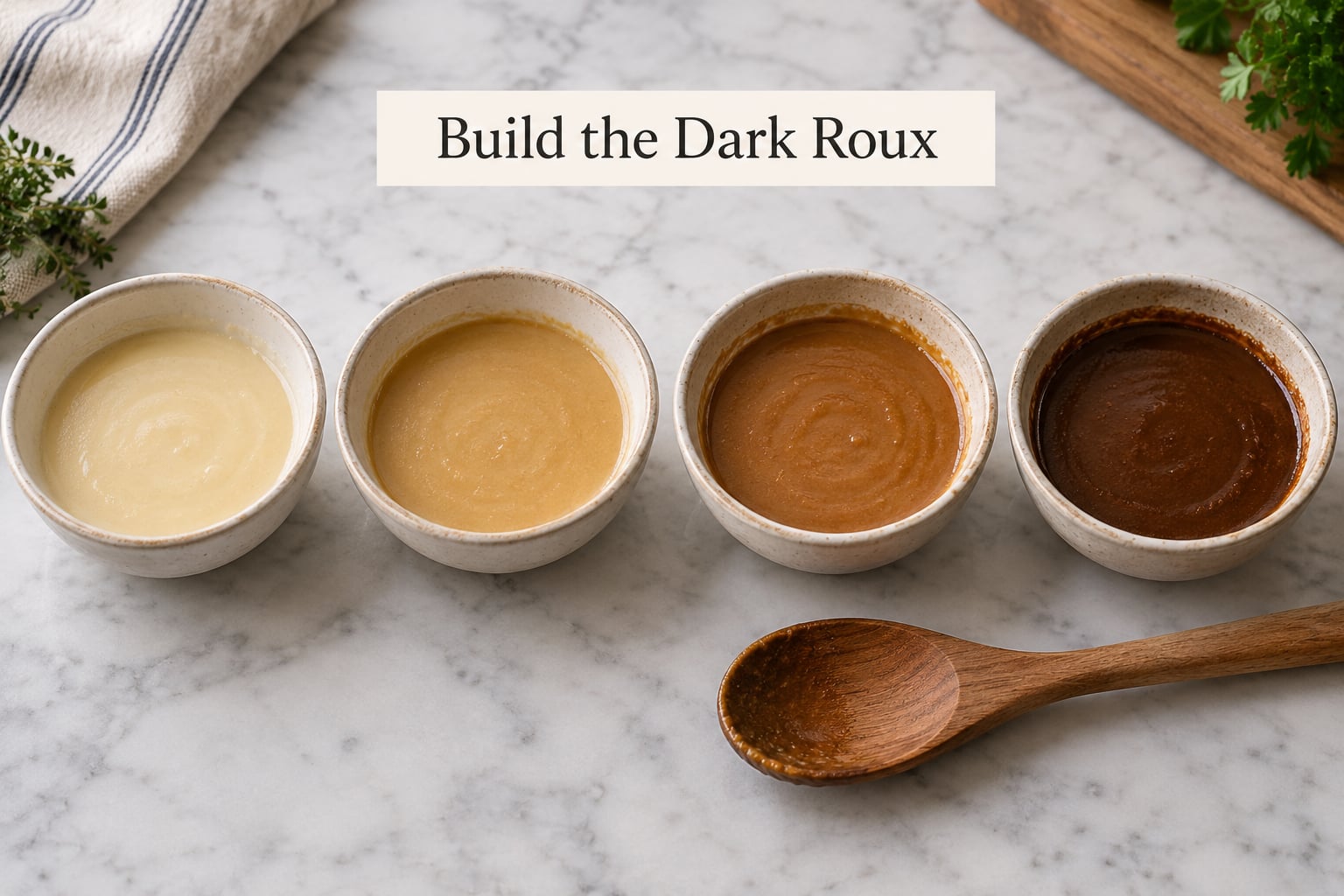
Melting 4 tablespoons of butter in the pot over medium heat is step one of learning how to make etouffee at home, and it is where the timing starts. Whisk in the 1/2 cup of flour a little at a time until no dry pockets remain, then lower the heat to medium-low.
Stir almost continuously and watch the color, not the clock. It moves through pale cream, then blonde, then a tan shade that smells like toast, then peanut butter, and finally a deep chestnut brown. Etouffee wants that last stage. Stop at peanut butter and you get a delicate sauce; push to chestnut and you get the nutty, faintly smoky depth that makes the dish worth the effort.
If you see black specks, stop and start over. That is the one mistake with no repair, and it happens in seconds, which is why a heavy pot matters.
2. Saute Vegetables and Seasonings
Stir the onion, bell pepper and celery into the roux with a wooden spoon. This trio, equal parts, is called the holy trinity, and it is the aromatic base of nearly every Louisiana dish that starts with a roux.
Cook for 8 to 10 minutes until the vegetables look soft and translucent and the roux smells nutty rather than raw. Add the garlic for the last minute, then the Cajun seasoning, cayenne, bay leaf and Worcestershire, stirring them in while the pan is still hot.
3. Cook the Chicken and Shrimp
If you are using chicken thighs, brown them in a separate skillet over medium-high heat until both sides are deeply golden, then set them aside. Cook andouille in the same pan until the edges crisp, about 3 minutes.
For shrimp, toss them with a spoonful of the seasoning and sear in a hot skillet for about 90 seconds per side, just until they turn pink and curl. Pull them out at that point, even though they look underdone.
Everything goes back into the sauce later. That is what keeps it tender. Whether you use crawfish, shrimp or chicken, cook poultry to an internal temperature of 165 degrees Fahrenheit, 74 degrees Celsius.
4. Add Broth and Simmer
Warm the 2 cups of stock in a separate saucepan. Ladle it into the pot a little at a time, whisking steadily, until the roux loosens into a smooth sauce with no lumps.
Return the browned protein to the pot, bring the mixture to a gentle boil, then drop the heat to low. Cover and let it simmer for 25 to 35 minutes, stirring now and then so nothing catches on the bottom. If it tightens too much, add warm stock half a ladle at a time.
The sauce is ready when a spoon drawn through the back of the pot leaves a clean line that stays visible for a few seconds. It should fall slowly off the spoon, not run off like broth.
5. Finish and Serve
Fish out the bay leaf and taste for salt. Add the parsley, green onions and hot sauce, and rest the pot off the heat for about 5 minutes so the sauce settles and thickens slightly.
Spoon it over hot white rice, letting a little of the sauce run into the rice while the rest stays glossy on top. Leftovers keep 3 to 4 days in the refrigerator; reheat gently on the stove with a splash of stock, never on high heat, and stir often. Roux-based sauces tighten as they cool, and this one reheats well enough to freeze for up to two months, though fresh is always better.
Common Mistakes When Making Etouffee at Home
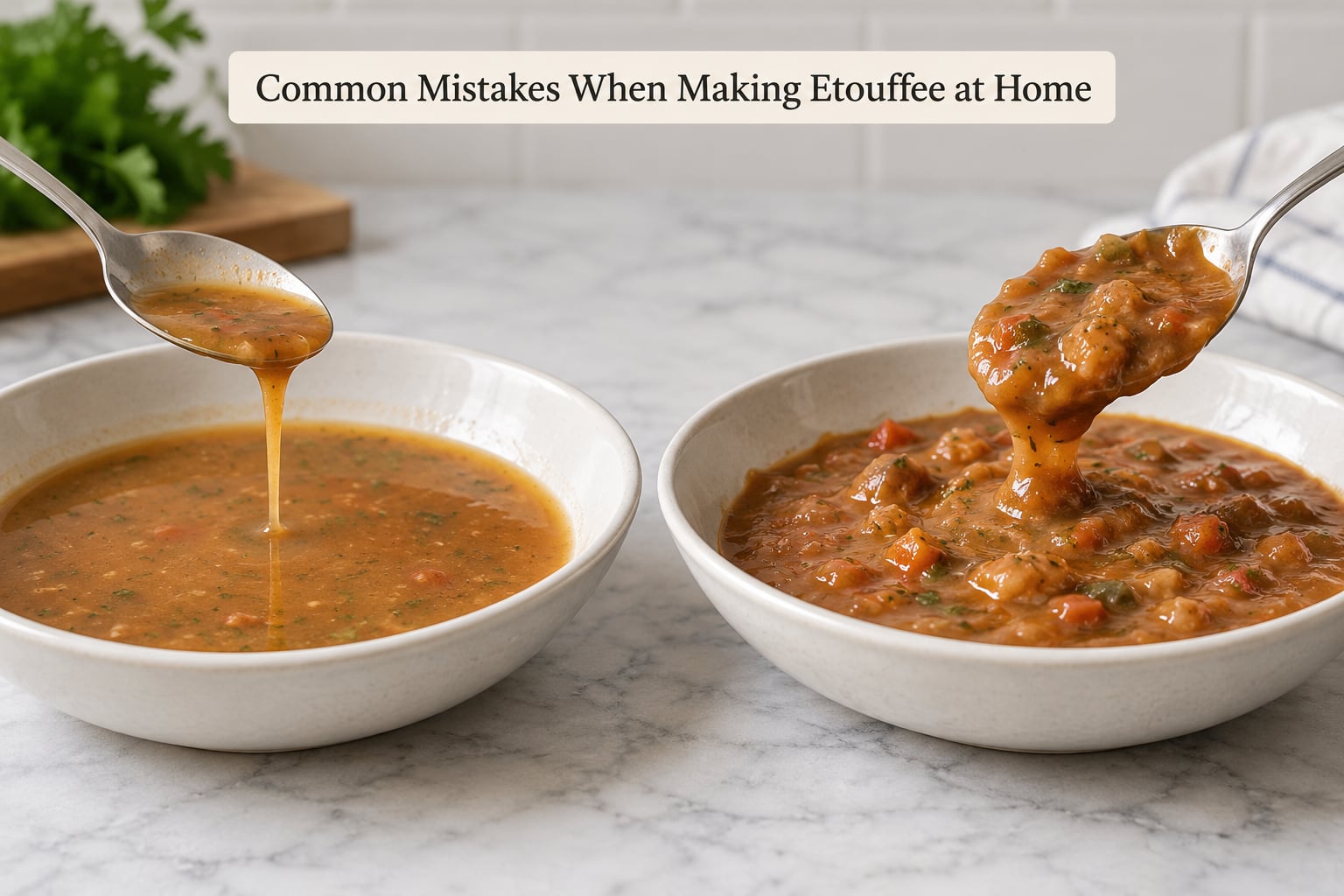
Almost every bad bowl of etouffee traces back to one of six things.
The roux stays too pale
A blond roux gives you a thin, gently flavored sauce. Cook it another three to five minutes past the peanut butter stage, watching for chestnut brown and a toasted rather than raw smell.
The roux burns
Black flecks mean bitter, and there is no fix. Lower the heat, use a heavier pot, and stir with a wooden spoon rather than a whisk so you can see the bottom as you go. The last minute before burning is shorter than you think.
The sauce turns out thin
Not enough roux or too much stock. You cannot thicken it after the fact by simmering harder, so add a slurry: 1 tablespoon flour whisked into 2 tablespoons cold stock, poured in while the sauce bubbles, then simmer 5 minutes.
The sauce breaks or goes lumpy
That is stock added too fast into a hot roux. Always warm the stock first, add it in stages, and whisk without pausing.
The shrimp or chicken turns rubbery
It sat in the sauce too long. Sear the protein separately, add it back near the end, and pull it at the first sign of doneness. It will finish cooking in the residual heat.
The whole pot tastes flat
Season in layers rather than at the end. Taste the roux before the stock goes in, taste the sauce after it simmers, and taste again after the garnish. Acid is often the missing note, so a small splash of lemon or hot sauce does more than another pinch of salt.
Frequently Asked Questions
What is the difference between etouffee and gumbo?
Etouffee uses a darker roux and produces a thick, glossy sauce that is served in a small amount over rice, while gumbo is thinner and more brothy, often holding several meats or seafoods at once. Etouffee has one star protein and the sauce is the point. Gumbo is a stew where the broth is the point, and rice is served alongside it rather than underneath.
Can I make etouffee without crawfish or shrimp?
Yes. Chicken thighs with sliced andouille sausage are the classic substitute and give the deepest flavor, while crab meat works but seasons quickly, so go light on the salt. If you only use poultry, cook it to an internal temperature of 165 degrees Fahrenheit, 74 degrees Celsius. Crawfish is traditional but not required for a good etouffee.
How do I keep my roux from burning?
Cook over medium or medium-low heat and stir nearly continuously with a wooden spoon so you can watch the color change as it happens. Use a heavy pot with a thick bottom, since thin pans spike in temperature fast. The roux moves from peanut butter to burnt in under a minute, so the color and smell are more reliable than any timer.
Why is my etouffee too thick?
Too much roux or not enough stock is almost always the cause. Whisk in additional warm stock gradually, a couple of tablespoons at a time, and simmer briefly before checking again. The finished sauce should be thick enough to coat the back of a spoon and hold a clean line, but it should still run slowly off the edge when you tilt the pot.
Should there be tomatoes in etouffee?
It depends on who you ask. A spoonful of tomato paste adds color and acidity and appears in plenty of Louisiana kitchens, while many cooks consider it a Creole habit and leave it out for a cleaner, pepper-forward sauce. Diced tomatoes or Rotel make the dish noticeably wetter, so add them early with the stock if you want to use them.
Is etouffee hard to make at home?
It is medium, not hard. The technique is simple and there are only about eight steps, but the roux requires undivided attention for 20 to 30 minutes because it goes from perfect to burnt very quickly. Once the liquid goes in, the rest is an unattended simmer. Cook it once on a weekend and it becomes a weeknight dish.
Conclusion
If you only remember one thing from this guide, measure the flour ahead of time and cook the roux steadily to a deep chestnut brown before any liquid touches it. Everything after that is timing you can walk away from. Dice the trinity while the butter melts, keep your stock warm, and taste as you go.
How to make etouffee at home comes down to attention at the stove for half an hour and a heavy pot. Get those two things right and you have a glossy, deeply flavored sauce that deserves the white rice underneath it.