Chicken giblets are the heart, gizzard, liver and neck from the bag inside a whole bird, and there are four reliable ways to cook them: skillet, slow cooker, pressure cooker and oven. Clean the gizzards properly, keep the liver out of long-simmering broth, and take everything to 165°F. Prep takes about ten minutes.
That is the short version of what to do with chicken giblets. The longer answer is below, organized by part, because the liver and the gizzard want opposite treatment and mixing them up is the single most common mistake.
Fast answers, one use each:
- Gravy: brown the organs and a chopped onion, whisk in a roux and broth, then ladle it over mashed potatoes.
- Broth: necks and backs simmer two to three hours for a thick, gelatinous result that sets when cool.
- Pate: sear the liver, deglaze the pan, blend with butter and thyme; a week of sandwiches follows.
- Pan-fried livers and hearts: three to five minutes a side in a hot skillet, salted only at the end.
- Fried gizzards: simmer 90 minutes first so the meat is tender, then flour and fry until crisp.
- Braised gizzards and onions: gizzards in broth, sliced onion stirred in for the last thirty minutes.
- Stuffing and sausage mix: chopped cooked giblets folded into poultry stuffing or loose-meat sausage.
- Rice bowls and tacos: braised giblets over white rice with pickled onion, or tucked into corn tortillas.
- Pet treats: plain boiled giblets chopped small, with no onion, garlic or seasoning, for dogs.
Table of Contents
- What You Need
- Step-by-Step
- What to Do With Chicken Giblets: Clean and Trim Them
- How to Cook Chicken Giblets in a Skillet
- How to Cook Chicken Giblets in a Slow Cooker
- How to Cook Chicken Giblets in a Pressure Cooker
- How to Bake Chicken Giblets
- Ways to Serve Chicken Giblets
- How to Store Leftover Chicken Giblets
- Common Mistakes
- Frequently Asked Questions
- What do chicken giblets taste like?
- Do I need to soak chicken liver or gizzards before cooking?
- How long does it take to cook chicken giblets?
- Can I freeze raw or cooked chicken giblets?
- What is the best way to serve chicken gizzards and liver?
What You Need
You need almost nothing: one cutting board, a sharp knife, a bowl, a pot or skillet, and an instant-read thermometer. That thermometer is the piece most people skip and it is the one that matters most, because color is a poor doneness test on liver.
Use a separate cutting board from your fruit and bread, and wash it and your knife with hot soapy water before and after. If you only have one board, do the organ prep first, wash everything, then move on to vegetables.
For the equipment:
- A firm cutting board and a paring or utility knife
- A small bowl for soaking the liver, plus a colander
- A skillet with a lid, a saucepan, or a pressure cooker
- A rimmed baking sheet for roasting
- An instant-read thermometer that reaches 165°F
- A blender or food processor if you plan to make pate
For the ingredients, keep it simple: salt, black pepper, neutral oil or butter, an onion, garlic, and a mirepoix of carrot and celery if you have them. A splash of lemon juice or vinegar cuts the gamey smell, and milk or a salt-and-sugar brine softens liver.
Step-by-Step
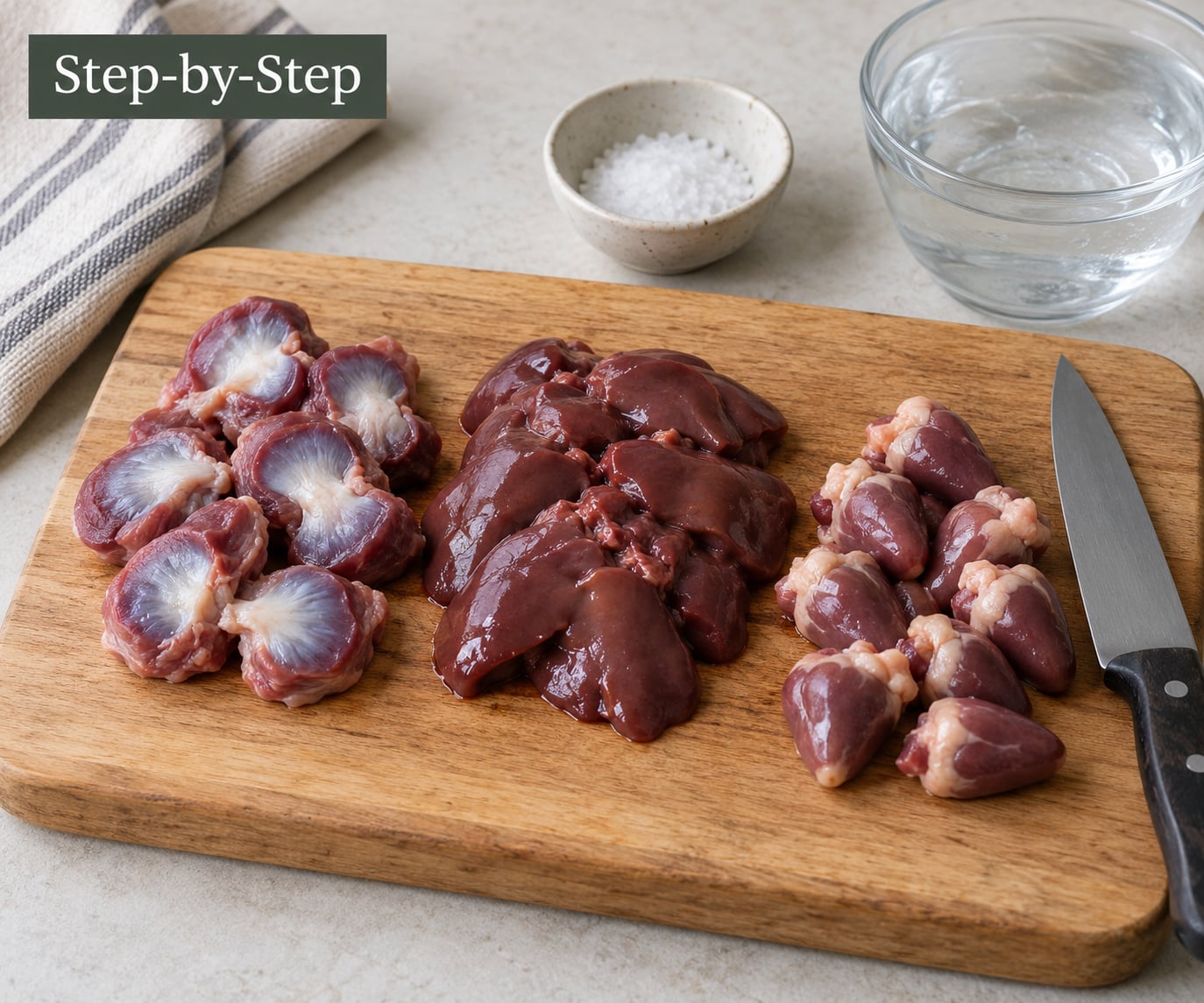
Different parts finish at different speeds, and treating them alike is why home-cooked giblets often disappoint. Here are the times worth writing down.
| Part | What it is | Best method | Time | Done at |
|---|---|---|---|---|
| Liver | Soft, dense organ | Skillet, boiling water, or pate | 3–5 min per side, or 8–10 min simmered | 165°F |
| Heart | Compact muscle with a big blood supply | Skillet, skewer, or slow cooker | 3–5 min per side, or 10–15 min simmered | 165°F |
| Gizzard | Muscular stomach full of grit | Simmer, pressure cooker, or braise | 90–120 min simmer, or 25–30 min pressure | 165°F |
| Neck | Bony, skin-heavy, collagen-rich | Broth, soup, or braise | 2–3 hours | 165°F |
What to Do With Chicken Giblets: Clean and Trim Them
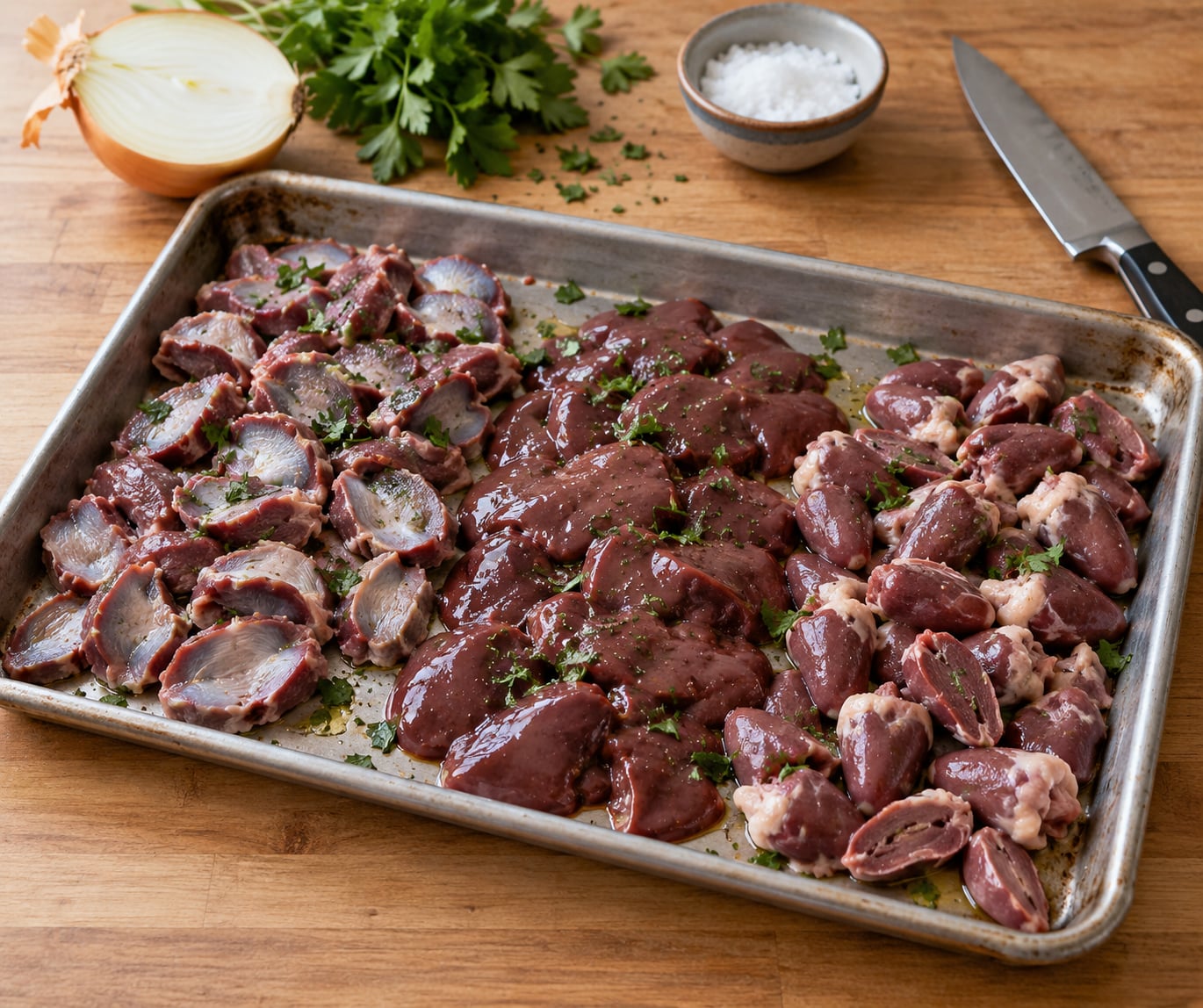
Start by telling the organs apart, because most of the confusion comes from not knowing which one is which. The liver is the big glossy reddish-brown piece with two lobes. The gizzard is a firm, ridged, dark red pouch that feels like a small fist. The heart is small, round and dense, and the neck is mostly bone under skin.
Cleaning the gizzard is the one real job. Lay it on the board, slice it open lengthwise with a sharp knife, and scrape away the grey lining and the sandy grit inside with your fingers or the back of the knife. Rinse the pieces briefly under cold running water, no soaking, or you wash the flavor out.
Trim pale yellow fat and any stringy connective tissue from the hearts, and cut away dark blood clots around the valves. Slice the gizzards into even, bite-size pieces so they finish at the same moment as everything else.
For liver, soak it in milk for 30 minutes to 4 hours, or in a brine of 1 tablespoon salt and 1 tablespoon sugar per cup of water for 4 to 8 hours. Either pulls out the bitterness that turns people off. Dry everything thoroughly before seasoning, and discard anything grey, green or slimy.
How to Cook Chicken Giblets in a Skillet
The skillet is the fastest route and the easiest to ruin, so cook the liver and hearts first and the gizzards last. Heat a tablespoon of oil in a heavy pan over medium-high, then add the gizzards in a single layer and leave them alone for 3 to 4 minutes before turning.
Brown the sliced onion in the same pan after the gizzards come out, then return them for another 5 to 7 minutes with a splash of broth or water. Push them aside, add a little more butter, and cook the halved hearts 3 to 5 minutes a side.
The liver goes in last, in its own butter, and takes 3 to 5 minutes a side at most. Season it with salt and pepper only once it is off the heat. A squeeze of lemon at the end does more for the smell than any spice.
You know it worked when the gizzards bend but do not spring back, and the liver is just firm with a faint pink blush in the very center, which carries through during the rest.
How to Cook Chicken Giblets in a Slow Cooker
A slow cooker turns a tough gizzard into a fork-tender one without you hovering, and the low steady heat is forgiving in a way a stovetop pan is not. Layer gizzards, hearts, onion, carrot and celery in the crock, add 2 cups of broth or water, and cook on low for 6 to 8 hours.
Keep the liver out of that long cook. Eight hours is exactly the simmer that makes liver bitter and chalky, so add it for the final 30 to 45 minutes if you want it in the pot.
Everything should hit 165°F in the center. The meat gives easily under a fork, the collagen has gone gelatinous in the liquid, and the broth tastes richer than any store-bought version.
How to Cook Chicken Giblets in a Pressure Cooker
The pressure cooker is the fastest way to tender gizzards: roughly 30 minutes from frozen instead of two hours. Add cleaned gizzard pieces and enough broth to cover by an inch, which is usually 2 cups, and cook at high pressure for 25 to 30 minutes.
Let the pressure release naturally for 10 minutes before you open the valve, then quick-release the rest. Natural release keeps more moisture in the meat and gives you a safer lift of the lid.
Add hearts for the last 8 minutes of pressure. Add liver only after you have switched the pot back to saute, 5 to 8 minutes, because it does not need pressure at all.
Cut into the thickest piece and check for 165°F with your thermometer. Done, the gizzard is dark and silky with no rubbery core, and the liquid from the pot makes an instant sauce after a quick reduce.
How to Bake Chicken Giblets
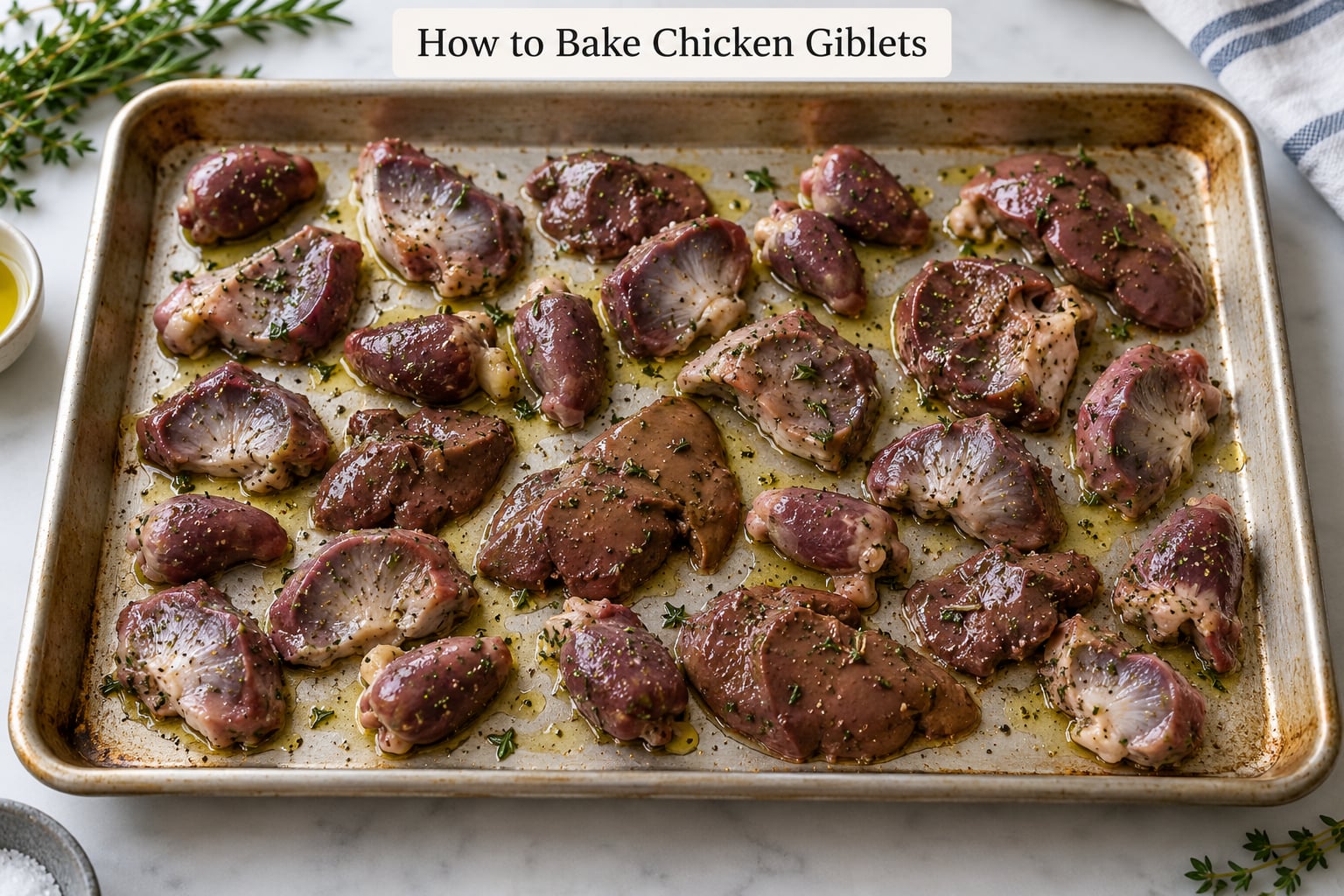
Roasting in the oven gives you browned edges and a firm bite, which is the opposite of what liver and gizzard give you on the stove. Slice everything to an even thickness no thicker than half an inch, toss with oil, salt, pepper and whatever herbs you like, and spread it on a sheet pan in a single layer.
Roast at 425°F for 20 to 25 minutes for gizzards and hearts, turning once halfway. Push the liver in for the last 6 to 8 minutes only, on its own, so it does not dry out before the rest is ready.
Do not crowd the pan. Touching pieces steam instead of browning, and you end up with gray, soft giblets that taste boiled rather than roasted. Two sheets work better than one crowded sheet every time.
Pull them when the thickest pieces read 165°F and the juices run clear. Rest the pan five minutes before serving so the moisture settles back into the meat.
Ways to Serve Chicken Giblets
The best way to serve giblets is to treat them as a component rather than the whole meal. Chop them up and fold them into pan gravy over mashed potatoes, which is the version most people picture first, and it is still the most forgiving.
Beyond that:
- A warm salad: sliced giblets over arugula with a sharp vinaigrette and fried shallots cut the richness better than any heavy sauce.
- A rice bowl: braised gizzard, white rice, black beans, pickled onion and a hot sauce you pour yourself.
- Tacos or enchiladas: chopped cooked giblets tucked into corn tortillas with pickled jalapeno and cilantro.
- A sandwich: chopped giblets with mayo, pickles and mustard on toast reads like a proper lunch counter sandwich.
- A seasoned side: fried gizzards tossed with hot honey, lemon zest and flaky salt.
- Dirty rice: browned liver and hearts cooked into white rice with bell pepper and Cajun seasoning.
- Sausage and bolognese: chopped giblets lighten pork or beef sausage and give a ragù a deeper, darker note.
- Stuffing: fold cooked chopped giblets into bread stuffing for a roast chicken or turkey.
Small batches are fine too. Most recipes assume a whole bird’s worth of organs, so scale everything by weight: about 8 ounces of raw gizzard cooks like a small meal, and two or three hearts is a portion for one.
Plain boiled giblets chopped small are also a safe, nutritious treat for dogs. Skip onion, garlic and all seasoning, and keep the pieces bite-size.
How to Store Leftover Chicken Giblets
Cooked giblets keep three to four days in the refrigerator, and liver is the exception at two to three days since it is the most delicate. Cool everything within two hours, then store it in shallow airtight containers so it chills fast and does not sit in the warm center of a deep bowl.
Freezing works well. Portion the cooked gizzards, hearts and necks into meal-sized bags, press out the air, and freeze for up to 3 to 6 months; thaw in the refrigerator overnight, never on the counter. Liver freezes acceptably but turns grainy after a thaw, so freeze it only if you are planning to blend it into pate or sauce.
Raw giblets from a bulk whole-bird buy keep one to two days chilled, then go straight into the freezer in dated portions. Many backyard keepers simmer and fry a batch, freeze the cooked pieces, and pull out a handful whenever they want the snack.
Reheat cooked giblets to 165°F in a skillet with a splash of broth, in 60- to 90-second bursts in a microwave, or in a covered pan over low heat. Gizzards take a little longer than liver, so add them first if you are reheating a mixed container.
Common Mistakes
Fix these eight and most giblet problems disappear.
- Overcooking liver. It goes from tender to dry and grainy in about two minutes of overcooking. Pull it at 165°F, and add it last in every method.
- Uneven cuts. A gizzard sliced thick and a liver sliced thin never finish together. Half-inch pieces cook at the same rate.
- Crowding the pan. Steam instead of sear, which flavors nothing. Use two sheets or two batches.
- Skipping the temperature check. Color lies on liver, and only a thermometer reading 165°F tells you it is done.
- Leaving grit or membrane in. A sandy, gritty gizzard is the complaint in nearly every forum thread about these organs, and it comes entirely from skipping the clean.
- Bitter liver. Brine it, milk-soak it, cook it briefly, and keep it out of long braises.
- Rubbery gizzard. Under-cooking is the cause, not the pan. Ninety minutes of gentle simmer or 30 minutes at pressure, no shortcuts.
- Keeping it too long. Two to three days for liver, three to four for everything else, then freeze.
Frequently Asked Questions
What do chicken giblets taste like?
Liver is mild and rich with a texture between liverwurst and firm tofu, and it takes on whatever you cook it with, which makes it the easiest part to please a picky eater. Gizzards taste like dark chicken with a firm, chewy bite until slow cooking turns them tender. Hearts are closest to steak, and they slice neatly once cooked. Cook gizzards and livers together in one pan only if you add the liver at the very end.
Do I need to soak chicken liver or gizzards before cooking?
Soak liver, not gizzards. A milk soak of 30 minutes to 4 hours, or a salt-and-sugar brine for 4 to 8 hours, draws out the bitterness many people describe as metallic or gamey. Gizzards need no soaking, only the grit scooped out of the lining with a knife and rinsed briefly under cold water.
How long does it take to cook chicken giblets?
Liver needs 3 to 5 minutes a side in a skillet or 8 to 10 minutes in simmering water. Hearts take 3 to 5 minutes a side. Gizzards need 90 to 120 minutes of gentle simmering, or 25 to 30 minutes in a pressure cooker, and necks simmer two to three hours for broth. Everything reaches doneness at 165°F internal temperature.
Can I freeze raw or cooked chicken giblets?
Yes, and freezing is the easiest answer to a bulk whole-bird purchase. Raw giblets keep one to two days in the refrigerator, then freeze in dated meal-sized portions for 3 to 6 months. Cooked gizzards and hearts freeze very well; liver turns grainy after thawing, so freeze it only if you are blending it into pate. Thaw in the refrigerator overnight.
What is the best way to serve chicken gizzards and liver?
Chop both and fold them into pan gravy over mashed potatoes, which is the most forgiving presentation you can pick. For something lighter, slice gizzards over a warm salad with a sharp vinaigrette, or spoon them over white rice with pickled onion. Chopped cooked giblets also work as a sandwich filling, a taco topping, or a mix-in for dirty rice.
So start with the gizzard and the liver, since they need the most attention and the most time. Clean the gizzards properly, salt them, and give them ninety minutes in a low simmer; slice the liver thin and give it three minutes a side in butter at the very end. Everything left over goes in the freezer in dated portions, and your next whole bird just got cheaper.