Knowing how to label and rotate a home pantry takes one afternoon to set up and about ten minutes a week to keep going. The system is really two habits working together: every shelf, zone, and container gets a label that says what the food is, when you acquired or opened it, and the date you want to use it by, then you rotate the food so whatever is oldest stays at the front of the shelf and gets used first.
That second half has a name. First-in, first-out, shortened to FIFO, means the item you bought or opened first gets used first, and you enforce it physically by putting new purchases at the back of the shelf and taking from the front. FIFO changes the order food gets used, not how long it keeps. A can of tomatoes does not last longer because it sits in front of the shelf.
What follows is the system I settled on after one very long Saturday spent throwing out enough food to feed a small neighborhood. A market sells produce all week, and the honest lesson from watching shoppers is simple: nobody wastes food on purpose. They waste it because they cannot see what they already have, and because a container in the back of a deep shelf has no date and no face.
Table of Contents
- What You Need
- Step-by-Step
- 1. Empty and sort the pantry
- 2. Check dates and storage conditions
- 3. Label every pantry item
- 4. Arrange the pantry for first in, first out
- 5. Create a weekly rotation routine
- Common Mistakes
- Frequently Asked Questions
- What is the FIFO rule for food storage?
- What should I write on a pantry label?
- Do canned goods really expire?
- How do I know when to throw out pantry food?
- How often should I rotate my pantry?
- How do I organize a pullout pantry?
- Conclusion
What You Need
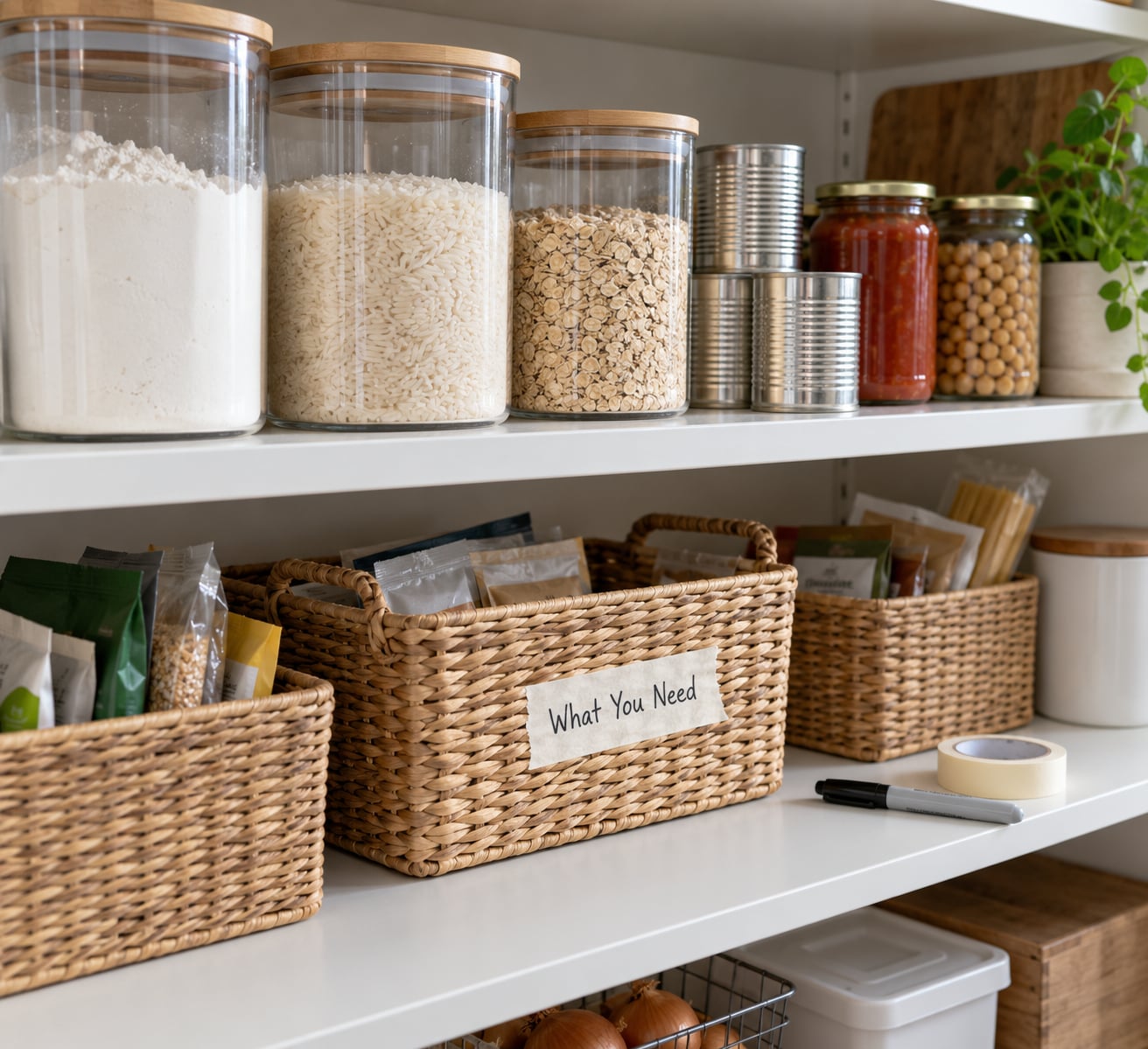
Gather these before you start pulling food out, because the middle of a sorting session is the worst possible time to discover you have no tape. The whole setup costs less than one month of groceries and takes about two to three hours for a two-person pantry.
- One marker per label type. A permanent marker for containers, plus a pencil or dry-erase marker if you plan to write on tape you will replace. Two markers in a small dish by the pantry door is fine.
- Tape or labels. Masking tape is the cheapest route and works on nearly any surface, though it can leave sticky residue on plastic or wood after a year. Peel-and-stick vinyl or waterproof freezer labels cost more and last longer.
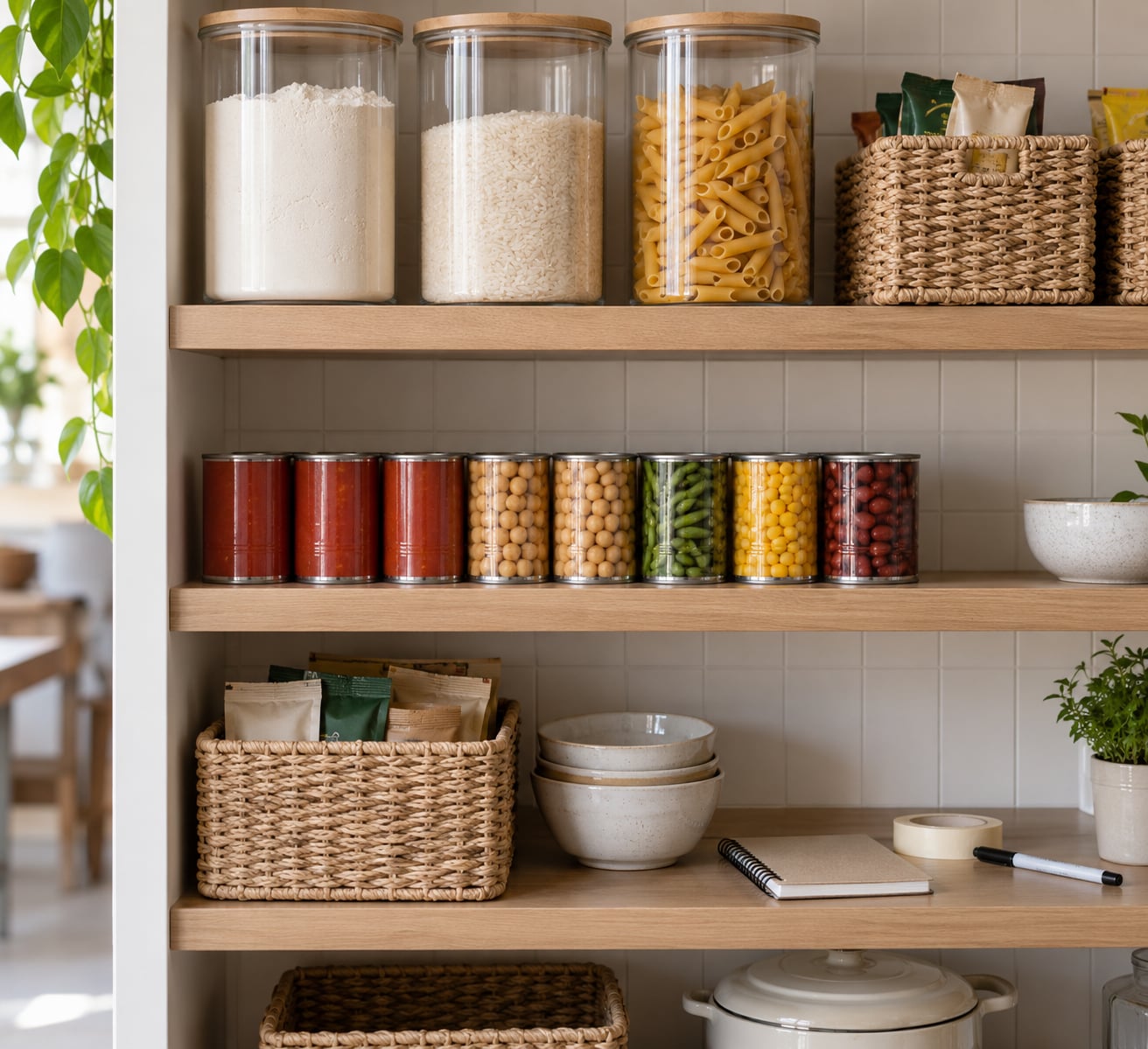
- Airtight containers. Clear containers matched to the shape of what goes inside: square bins for boxes and packets, round jars for dry goods and spices. You want to see the food and you want an airtight seal.
- Baskets or shelf bins. These create zones without hardware and let you pull one whole category forward instead of stacking loose cans.
- Three containers for sorting. A bin for food you keep, a bin for food that moves upstairs to the freezer or down to a specific shelf, and a bin or bag for anything you discard. Line the discard bag first so you are not hunting for a bag with a leaking tuna can in it.
- A plan for surplus. A donation box, a neighbor who preserves, or a community shelf. Food about to expire is not a failure, it is inventory you need to move before the date.
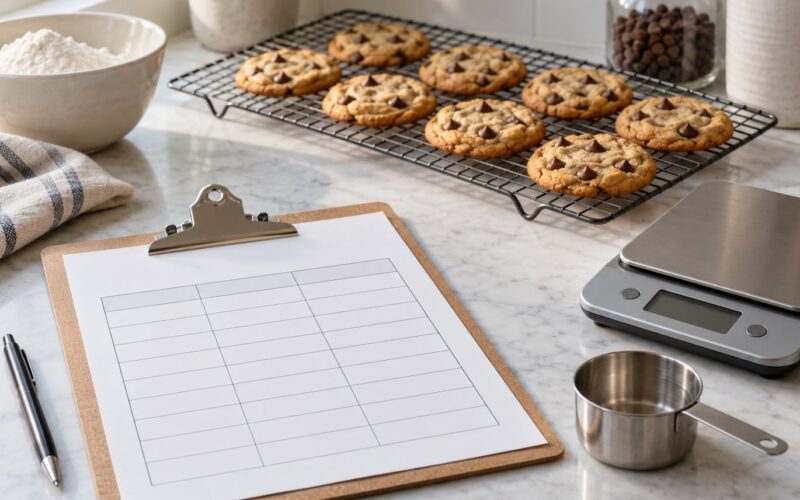
- A notebook or phone notes. Five columns is enough: item, zone, quantity, date acquired, use by. You will rebuild this list while sorting, so write as you go rather than at the end.
Step-by-Step
The order below matters. Sorting before labeling sounds backwards but it is not, because you cannot label food you have not looked at, and looking is how you catch the three bags of rice nobody has opened since last year.
1. Empty and sort the pantry
Clear every shelf onto a table, the floor, or the bed. Work in one direction, top shelf down, and put each item straight into one of your three bins instead of making piles you will clean up later.
When you pick something up, ask four quick questions. Is it within date and does it look, smell, and feel normal? Do you already have two of the same thing? Did you cook with it in the last two months? Would you buy it again at the market this week? An item that fails the last question is inventory that was never going to get used, and giving it a label only postpones the decision.
Watch for the physical warning signs while you sort, because dates are not the whole story. A bulging or leaking can, deep rust on the seams, mold, an off or fermented smell, webbing or small holes in a bag of flour, and insects near a grain bin all mean the food goes in the discard bag regardless of the printed date.
2. Check dates and storage conditions
Three different date codes show up on pantry food and they mean different things. A best-by date is the manufacturer quality suggestion, the window where flavor and texture hold up, and it is not a safety date. A use-by date is the manufacturer estimate for peak quality, which is the one most home cooks write on their own labels. A sell-by date is a shipping and stocking date meant for store staff and it says nothing about your safety at home.
None of the three is a legal safety deadline for most shelf-stable pantry food, with the notable exceptions being infant formula and a few products directed at very young children. If a can is bulging, leaking, badly rusted, or smells off, it goes out no matter what the code says. USDA guidance on low-acid canned food is to throw it out if the container is compromised, and that holds whether the code expired last month or last year.
Check the room while you are at it. A good pantry is cool, dark, and dry, and if yours is warm, damp, or in a garage or porch without climate control, move glass jars and anything that spoils from heat to a cooler spot. Whole-grain flour and cornmeal turn rancid faster in a warm room, which is why bakers move flour into the freezer for long keeping and keep the working supply on the shelf.
A rough shelf-life guide for common staples, using dry goods at roughly room temperature and cool, dark storage:
| Pantry staple | Usable window after opening or purchase |
|---|---|
| Dried beans and lentils | About 2 to 3 years; 1 year once they are cooked and frozen |
| White rice | About 2 years; brown rice closer to 6 months to 1 year because of the oils in the bran |
| Dried pasta | About 1 to 2 years |
| All-purpose flour | About 6 to 12 months; whole wheat 3 to 6 months |
| Low-acid canned goods | Typically 2 to 5 years, longer if the seal held and the can never bulged or rusted |
| High-acid canned goods, such as tomatoes and fruit | About 12 to 18 months for best flavor |
| Opened honey | Essentially indefinite; crystallizing is not spoilage |
| Cooking oils | About 6 to 12 months after opening for freshness |
| Whole spices | About 2 to 3 years; ground spices 1 to 2 years |
| Refrigerated condiments | Follow the jar, and label the date you opened it because the open date is what you cannot see |
These are windows for quality, not a promise of safety, and a pantry that is hot or damp cuts them short. Label your own realistic use-by date based on the shelf life you expect to hit in your kitchen, not the optimistic one.
3. Label every pantry item
This is where most pantries fail. A shelf can say CANS and tell you nothing about whether the can in front is two months old or two years old. Every label carries the same three parts, in the same order, so your eye learns to read them:
- What it is. Be specific. Spicy black bean soup, not soup.
- When you acquired it or opened it. The date you bought it or the date you opened it, whichever matters more for that food.
- When you want to use it by. Your own deadline, the date you decided, not a code copied off the packaging.
Some before and after labels from real pantries. Before: Rice. After: Basmati rice, bought Mar 4, use by Mar 4 next year. Before: unknown, no date, dented corner. After: Diced tomatoes, 2 cans, opened Oct 2, use by Feb 2. Before: Exp 6/24. After: Tomato sauce for the chili, made Sep 28, freeze by Mar 28.
That last example adds a fourth part people miss: what the food is for. A date tells you how old something is, not why you made it, so a container of sauce with no intention attached sits in the back of the freezer until somebody moves house. Naming the meal turns a leftover into a plan.
Match the label material to how fast the food turns over. A handwritten note on tape suits leftovers and quick meals. Waterproof or freezer-safe labels suit anything you store long, since a date that smears or peels is worse than no date at all. Here is how the common choices compare:
| Label type | Cost | Can you rewrite it? | Handles moisture or freezing | Best zone |
|---|---|---|---|---|
| Masking tape and marker | Lowest | Yes, peel and restick | Weak, ink can smear when damp | Baskets, shelf fronts, dry goods |
| Vinyl peel-and-stick | Moderate | No | Good on most surfaces | Containers and cans you keep a long time |
| Waterproof freezer labels | Highest | No | Best of the three | Freezer, damp pantry, canned goods |
| Chalkboard or painted shelf labels | One-time | Yes | Good | Zone names on shelves and cabinet doors |
| Date dot stickers | Moderate | No, they stack | Good | Cheap batching when you label many cans at once |
| Dissolvable labels | Moderate | No | Good, then rinse away | Reusable glass jars and containers |
| Label maker | Highest one-time | No, cut and replace | Varies by tape | A whole pantry if the handwriting bothers you |
A five dollar roll of tape and a marker does the same job as a label maker for most homes. Buy the nicer labels once you know your system has survived a month.
4. Arrange the pantry for first in, first out
FIFO on a shelf takes four moves. Put new purchases at the back. Move the older ones forward so nothing old hides behind something new. Keep cans and boxes in a single row rather than two deep, because a second row is where food goes to be forgotten. And when a new package arrives while an older one of the same thing is still there, put the older one back in front instead of letting the new one win.
Decanting is what makes FIFO possible for bulk buys. One ten pound bag of rice is either eaten all at once or wasted all at once, because you cannot pull a portion off the front. Split it into four or five smaller airtight containers, date each one, and now the front container is a week of dinners rather than a season of guilt.
Physical setup beats willpower here. Cans on a tiered riser or a lazy Susan that holds them in one ring keep the oldest facing you. Pull-out drawers work against FIFO because things get buried, so date-sticker the drawer face and refill front to back, and keep no more than a week of anything in a drawer. Put heavy items low and rarely used items high, and keep daily cooking at eye level between waist and shoulder height.
5. Create a weekly rotation routine
The five minute weekly sweep is what keeps the system alive. Walk the pantry front to back, pull anything within two weeks of its use-by date to the counter, and decide right then what happens to it. Plan a meal around it, move it to the freezer, or give it away the same day.
Do a fifteen minute inventory once a month to write down what you are actually short on, which is the only reliable way to stop buying duplicates. Do a deeper audit each quarter where you check for pests, wipe the shelves, and retire any zone that stopped earning its space. Labeling has a real failure mode that organizing guides call labeling fatigue, a burst of energy followed by slow drift, and the cure is a small enough routine that you cannot talk yourself out of it.
Common Mistakes
Almost every pantry problem traces back to one of these, and each has a fix you can make the same day.
- Relying on the purchase date alone. A date tells you how old something is, not what it was for. Add the intended use to the label and leftovers get eaten instead of forgotten.
- Labeling zones but not contents. A shelf marked SNACKS tells you nothing about the bag in the corner. Label the zone and the container.
- Hiding labels on the back of containers. Write on the front face or on the lid, whichever you see first when you pull it from the shelf.
- Ignoring opened packages. Cans, jars, bags, and bottles have a second clock that starts when you open them. Write the open date on the container in permanent marker so a dried-out bag of brown rice or a jar of oil does not get refilled forever.
- Stocking new purchases in front. This quietly breaks FIFO in every household. New goes to the back, every time, even when the new package is easier to reach.
- One giant bulk container. Decant bulk buys into weekly portions or FIFO cannot work at all.
- Dating everything indiscriminately. Over-labeling trains you to ignore labels. Sealed, in-date canned goods and unopened dry goods do not need a date. Date the food that opened, the food you decanted, and anything you will actually cook.
- Letting one person own the system. If only one person labels and rotates, the other person will undo it within a week. Explain the back-of-the-shelf rule once, keep a note on the pantry door, and give children their own labeled basket.
- Storing what will never get cooked. A stock-up of foods you do not eat becomes waste with a receipt. Store what you eat, and eat what you store.
Two more worth naming. Do not store raw meat, seafood, or perishable dairy in the pantry, and skip glass jars in a damp pantry or a garage without climate control, because temperature swings crack glass and moisture rusts the seam on a can. And do not skip the weekly sweep because the shelves look tidy. Tidy shelves are how food expires in plain sight.
Frequently Asked Questions
What is the FIFO rule for food storage?
FIFO means the food you bought or opened first gets used first. You enforce it by placing newer purchases at the back of the shelf, moving older items to the front, and taking from the front when you cook. It changes the order food gets used, not how long it keeps, and it works best when you decant bulk buys into smaller containers so you can pull one portion at a time.
What should I write on a pantry label?
Three parts in the same order every time: what the food is, when you acquired or opened it, and the date you intend to use it by. Add the intended meal for leftovers and cooked batches, since a date alone tells you age but not purpose. Write your own use-by date rather than copying the manufacturer code, because you know your kitchen and your cooking habits.
Do canned goods really expire?
Mostly no, not the way people fear. A best-by or sell-by date on a sealed can is a quality suggestion and a stocking date, not a safety deadline, and low-acid canned food often keeps well past the printed year in a cool, dark pantry. Food safety fails through damaged containers instead, so discard any can that bulges, leaks, smells off, or shows deep rust along the seams, no matter what the date says.
How do I know when to throw out pantry food?
Use the label, the package, and your nose together. If the use-by date has passed and the food is at the low end of its quality window, use it now or give it away. If the package is bulging, leaking, rusted, moldy, smells fermented or musty, or shows insect damage, discard it immediately regardless of date. Dry grains and flour also smell bad before they look wrong, so trust the scent.
How often should I rotate my pantry?
Run a five minute sweep every week, pulling anything within two weeks of its use-by date to the counter and deciding its fate that day. Do a fifteen minute inventory monthly to write down what you are short on and cut duplicate purchases. Every quarter, wipe the shelves, check for pests, and prune any zone that stopped earning its space.
How do I organize a pullout pantry?
Pull-out drawers break rotation because items get buried at the back, so date-sticker the drawer face and refill front to back every time. Keep only about a week of food in each drawer, and put the oldest portion nearest the front handle. Use shallow bins inside the drawer so a buried bag does not disappear behind a tall cereal box.
Conclusion
Labeling and rotating a pantry is one reset afternoon plus ten minutes a week, and the payoff shows up in two places: less food in the bin and a shorter grocery list next time you shop the market.
Start small. Label the food you cook with most this week, put the newest of it at the back, and write a use-by date you actually believe. Then pick a recurring slot, Sunday evening works well, for the five minute front-to-back sweep. Add the zones, the decanting, and the monthly inventory once the habit is boring instead of exciting, because a boring system is the one that still works in March.