How to make apple butter in a slow cooker comes down to four things: about 5 pounds of apples, roughly a cup of brown sugar, warm spices, and low heat for around 10 hours followed by a 1 to 2 hour uncovered reduction. You do not peel the apples, and the crockpot does nearly all of the stirring. The whole job is about 20 minutes of hands-on work spread across half a day.
It is also the easiest batch method I know. Oven apple butter scorches on a rimmed sheet, and a stovetop pot needs a wooden spoon and constant attention over six hours. The slow cooker holds a steady low temperature all day and lets you go to work.
One note before you start, since the name confuses people: there is no dairy in this. Apple butter is a fruit preserve, and it is naturally dairy-free and gluten-free. If you have a glut of market apples, this is what you do with them in October.
Table of Contents
- What You Need
- Step-by-Step: How to Make Apple Butter in a Slow Cooker
- 1. Choose and Prepare the Apples
- 2. Combine the Apples and Flavorings
- 3. Cook the Apples on Low
- 4. Blend Until Smooth
- 5. Finish the Flavor and Check the Texture
- 6. Cool and Store the Apple Butter
- Common Mistakes
- Frequently Asked Questions
- How long does it take to make apple butter in a slow cooker?
- Do I need to peel the apples for slow cooker apple butter?
- How do I know when my crockpot apple butter is done?
- How do I thicken apple butter that is too thin?
- How long does homemade apple butter last, and can I freeze it?
- Can you can apple butter made in a slow cooker?
What You Need
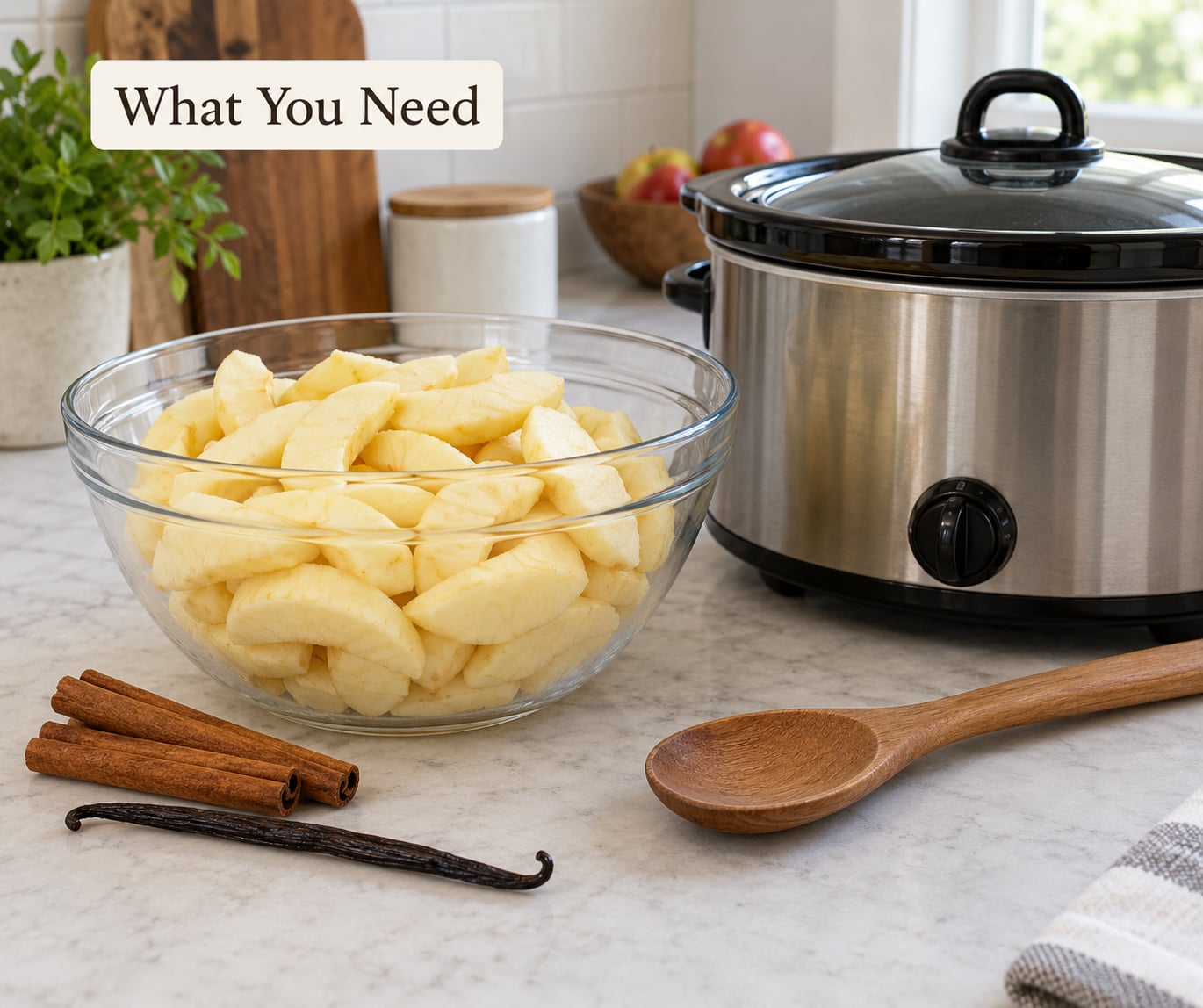
You need a 6-quart slow cooker, an immersion blender, a wooden spoon, and a canning jar if you plan to store it beyond a week. A 4-quart cooker works for a 3 pound batch, but do not crowd a larger insert, since the heat needs to circulate and a full pot steams instead of reducing.
For the apples, buy 5 pounds, about 2.3 kg, of mixed sweet and tart fruit. Granny Smith and Honeycrisp hold up well, and McIntosh collapses into a naturally silky texture. Fuji and Gala go sweet and fast, which is fine if you dial back the sugar. Golden Delicious and Mutsu are mild and buttery.
A mixed bag is the way to go for depth. A straight bag of Granny Smith needs noticeably more sugar, and a straight bag of Gala makes a candy-sweet spread that caramelizes before it thickens.
For the base recipe:
- 5 pounds apples, cored and chopped
- 1 cup packed brown sugar, about 200 g
- 2 tablespoons lemon juice
- 1 tablespoon ground cinnamon
- 1 teaspoon ground nutmeg
- 1/2 teaspoon ground cloves or allspice
- 2 teaspoons vanilla extract, added at the end
You do not need liquid. The apples release their own water, which is what you want to cook off. A splash of apple cider works if your fruit is unusually dry, but skip the water entirely, since every extra ounce is another hour of reduction.
For flavor, a tablespoon of molasses adds depth that reads as apple rather than sugar. Vanilla, a scrape of a vanilla bean, a pinch of flaky salt, or 2 tablespoons of bourbon or brandy at the end all work. Keep these in your back pocket rather than in the pot from the start, where the alcohol burns off long before anyone tastes it.
Sugar is adjustable, and that is the part most recipes get wrong. Start with half the amount here, then taste the finished butter and add more. You cannot un-sweeten it, but you can always reduce a cloying batch down with a little lemon.
Step-by-Step: How to Make Apple Butter in a Slow Cooker
1. Choose and Prepare the Apples
Rinse the apples, pull the cores out with a paring knife, and chop the fruit into one-inch pieces. Peeling is optional, and most cooks skip it. The peel has pectin in it, which is part of what makes the finished butter gel, and the skin breaks down completely during the long cook.
Only peel if you want an unnaturally silky texture, and even then, a few strips left on does the same work. If you do peel, toss the cut apples with a spoonful of lemon juice to keep them from browning while you finish chopping.
2. Combine the Apples and Flavorings
Put the chopped apples in the slow cooker insert. Sprinkle the brown sugar, lemon juice, cinnamon, nutmeg, and cloves over the top, then stir everything together so the sugar coats the fruit instead of sitting in a layer at the bottom.
That mixing step matters more than it sounds. Sugar poured onto apples and left alone melts in patches and scorches against the crock before the fruit cooks. Scrape down the sides of the pot, and make sure the bottom layer is coated too.
3. Cook the Apples on Low
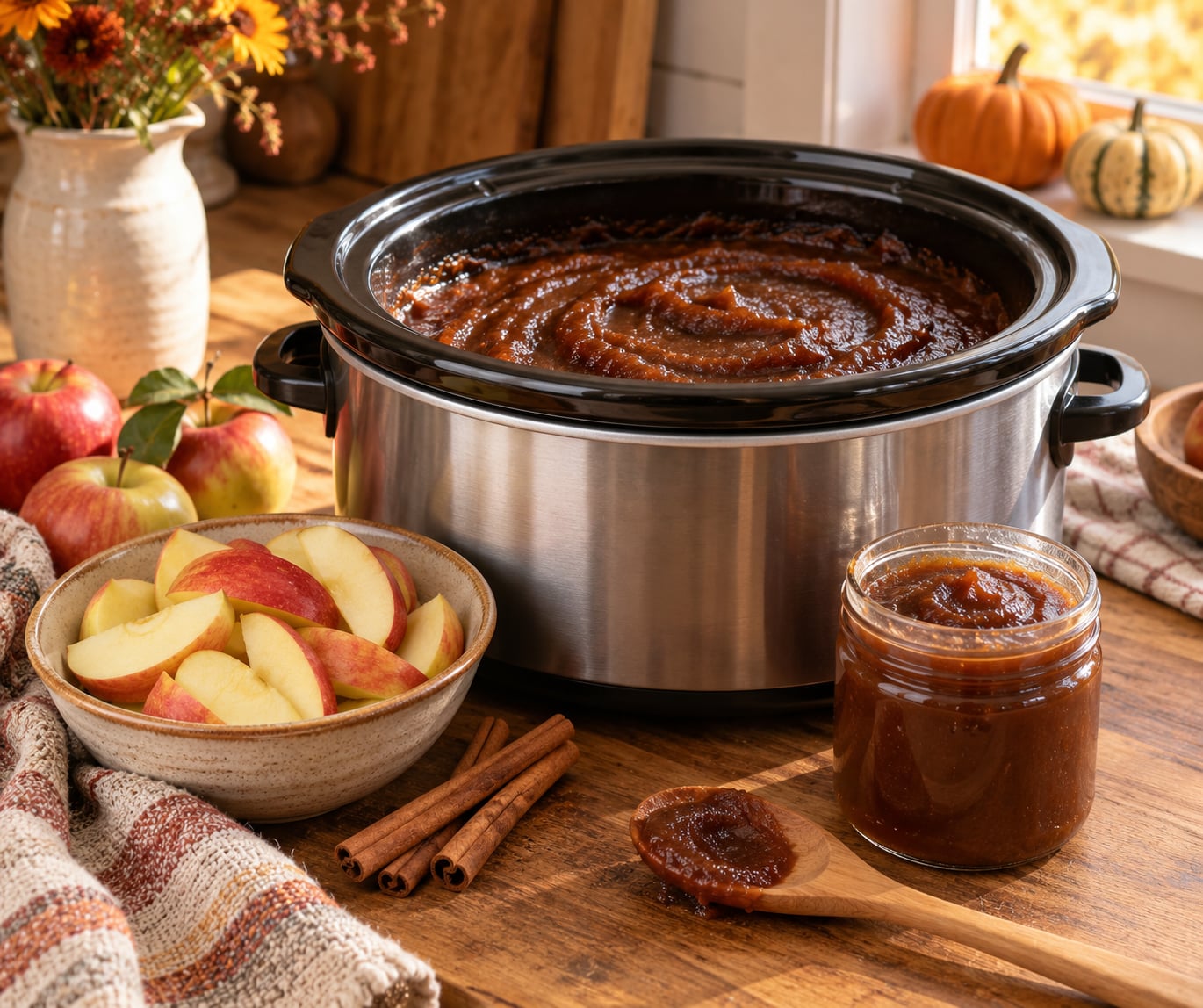
Cover the insert and set the cooker to low for 8 to 10 hours. This is the main event, and it needs no attention beyond the first stir.
High works too, at 3 to 4 hours, and reaches the same place. I prefer low because the gentle heat gives the sugars time to caramelize instead of rushing the fruit to mush, and because an unattended pot is a low pot. If you start in the morning, low finishes in time for dinner; high finishes while you are out.
At around hour 8, lift the lid and stir. The apples should be collapsing under a spoon and turning translucent at the edges. If the pot looks dry and the fruit is still holding its shape, give it another 2 hours.
4. Blend Until Smooth
Purée the cooked fruit right in the pot with an immersion blender. Tilt the lid back a few degrees to use it as a splash shield, and pulse in short bursts rather than blending continuously, or you will spray spiced apple across your kitchen ceiling.
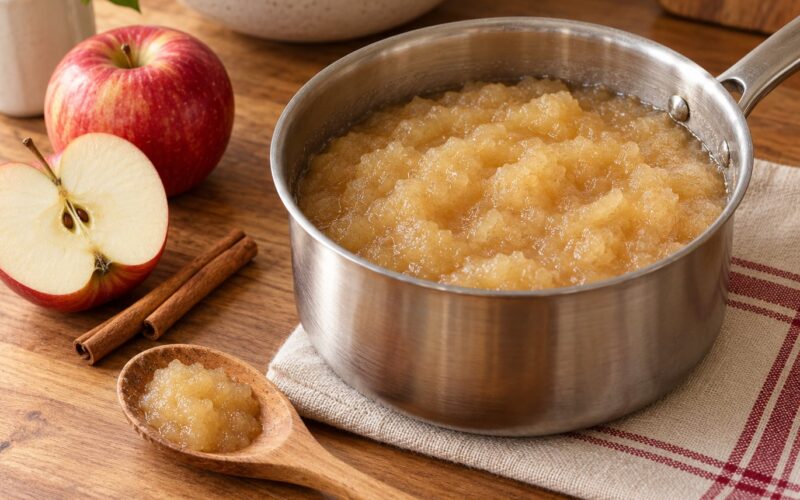
How long you process depends on the texture you want. Ten seconds gives a smooth jam-like spread, a minute gets you silky. Stop early if you prefer chunks, which is a legitimate style and looks better on toast with crumbly biscuits. Chunky is also more forgiving, since it reads as intentionally rustic rather than improperly blended.
5. Finish the Flavor and Check the Texture
Stir in the vanilla extract now, along with any bourbon, brandy, or extra salt. Taste it before adding more sugar. It is usually much sweeter than it smells, since your palate is calibrated to straight fruit.
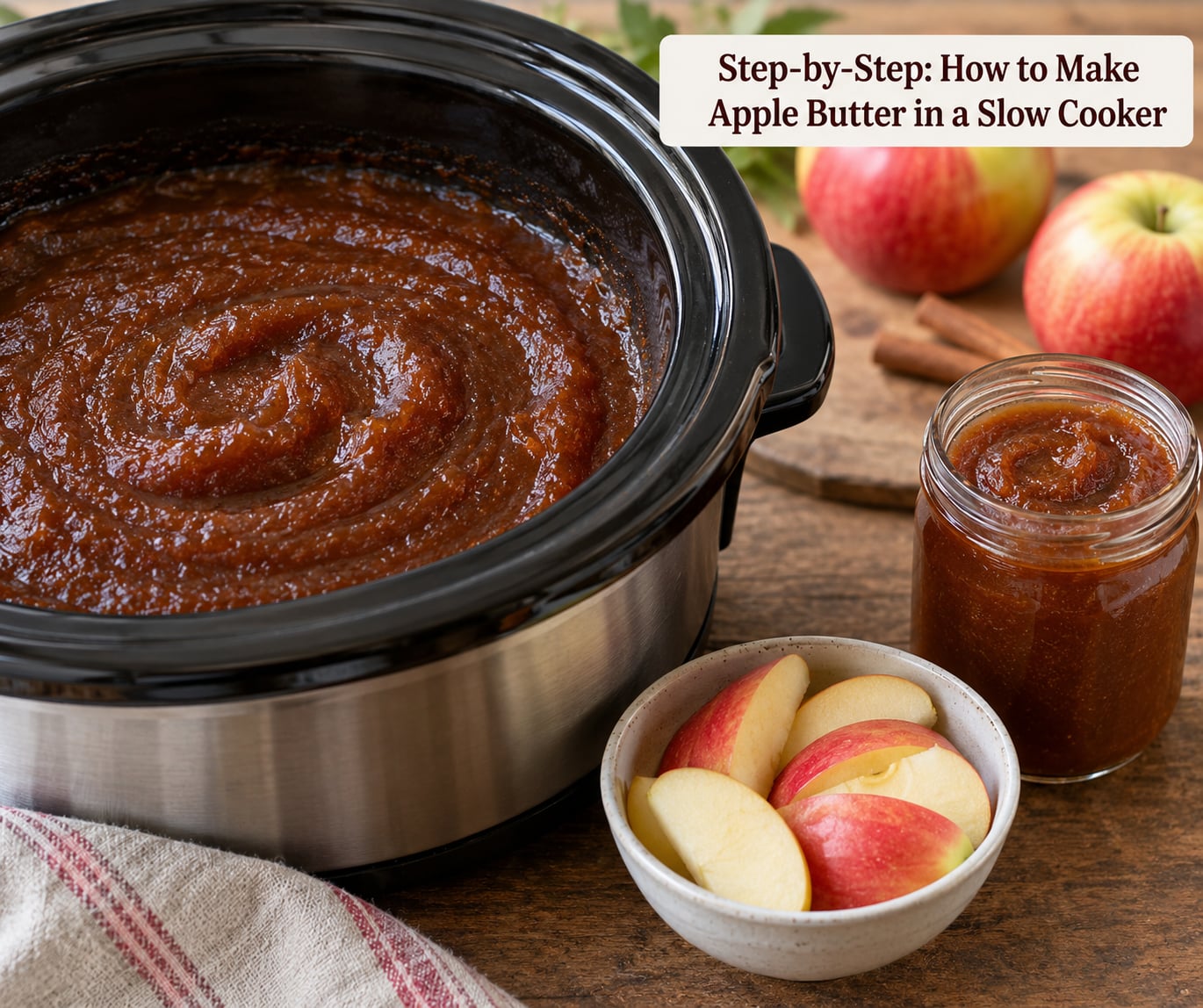
Then uncover the pot and let it cook down for 1 to 2 hours, stirring every 30 minutes. This is where thin, watery batches become apple butter. The color should run from golden to a deep, dark brown, and a spoonful should hold its shape on a spoon and slowly slump off the edge rather than running flat.
If it tastes of raw, sharp apple, it is not done. Another 30 minutes of uncovered cooking fixes both the flavor and the texture at once, since water is what carries the raw taste.
6. Cool and Store the Apple Butter
Turn off the cooker and let the apple butter cool in the pot with the lid off, or transfer it to a bowl, for an hour or two before jarring. Hot fruit poured into a cold jar can warm the air inside it and break the seal, and it can also shatter the glass if the glass is cold.
Spoon it into clean jars and refrigerate. Home cooks generally get 1 to 2 weeks in the fridge, in a clean airtight jar.
For the freezer, leave about a half inch of headspace, cool it fully, and freeze flat in bags or jars. It keeps 3 months and thaws quickly in the fridge, though the texture separates a little and wants a stir.
One safety note, and it matters. Do not treat a slow cooker as a canning substitute. Water-bath canning is what kills the bacteria in an acid-free low-acid spread like apple butter, and a crockpot never gets hot enough to do it. If you want shelf-stable jars, use a tested recipe and follow the processing guidance from the National Center for Home Food Preservation. Fill hot jars, leave headspace, process 10 to 15 minutes, and let the jars sit undisturbed 24 hours before checking the seals.
Common Mistakes
Thin apple butter is the most common problem, and it is almost always a skipped or rushed reduction step. Lift the lid, stir well, and cook uncovered for another 30 to 60 minutes. If it is still loose, pour it into a saucepan on the stovetop and reduce over medium heat, stirring, which is faster and gives you more control.
Too sweet is harder to undo than too thin. Lemon juice is the fix, a tablespoon at a time, because acid and sweetness balance each other. If you overshot by a lot, the batch still works as a filling for baked apples or oatmeal.
Bitter or scorched flavor comes from the bottom of the pot. Use a silicone or wood spoon that reaches the base, stir every 30 minutes during the uncovered phase, and check that your cooker insert sits properly on the base ring. If only a thin layer at the bottom burned, scoop it off and continue.
Granular or gritty butter means the fruit was undercooked, not underblended. Raw pectin leaves a hard, glassy texture that blending cannot fix. Give the purée more uncovered time until the sharp edges are gone, and next time cook the fruit two hours longer before blending.
Over-spiced batches lose their balance quickly, since the warm spices sit and deepen for the whole day. Keep the cinnamon to a tablespoon, add cloves and nutmeg in tiny amounts, and add the last third of the spice after pureeing so it does not have ten hours to sharpen.
A few habits that make batches consistent. Weigh the apples instead of counting them, since a cup of McIntosh and a cup of Honeycrisp are very different weights. Start with less sugar than the recipe calls for. And stir the uncovered phase more often than you think you need to, because the scorched line almost always starts where the spoon has not been.
Frequently Asked Questions
How long does it take to make apple butter in a slow cooker?
Plan on 10 to 12 hours total. The covered cook on low takes 8 to 10 hours, and the uncovered reduction after pureeing takes another 1 to 2 hours. On high, the covered stage shortens to 3 to 4 hours, with the same reduction time on top. Start it in the morning if you use low.
Do I need to peel the apples for slow cooker apple butter?
No. The skin breaks down over the long cook and the pectin in it helps the spread set, so most cooks leave it on. Peel only if you want an extra-silky texture, and even then leave a few strips on. A large batch does take noticeably longer to chop, which is the real cost of peeling.
How do I know when my crockpot apple butter is done?
Look at the color and the spoon test, not the clock. Good apple butter is a deep dark brown, and a spoonful should hold its shape on the spoon and slowly slump off the edge instead of running flat. If it tastes raw or sharp, it needs more uncovered time, since that raw edge comes from water.
How do I thicken apple butter that is too thin?
Cook it uncovered. Put the lid off or ajar, stir well so the bottom does not catch, and let it reduce for another 30 to 60 minutes, checking every half hour. You can also move it to a saucepan on the stovetop for medium heat, which thickens faster and gives you better control. Sugar and lemon help with taste, not thickness.
How long does homemade apple butter last, and can I freeze it?
In a clean airtight jar in the refrigerator, expect 1 to 2 weeks. For freezing, cool the butter completely, leave about a half inch of headspace, and freeze flat; it keeps about 3 months. Thaw it in the fridge overnight. The texture separates a little in the freezer and just needs a stir once it loosens up.
Can you can apple butter made in a slow cooker?
The slow cooker does not get hot enough to make the batch shelf stable, so the crock itself is not the safe answer. Water-bath processing is the step that makes it safe, and it needs a tested recipe plus the processing guidance from the National Center for Home Food Preservation. Fill hot jars, leave headspace, process 10 to 15 minutes, and let jars sit 24 hours to check the seal.
Start with 5 pounds of mixed apples, half the sugar you would normally use, and low heat with the lid on. Check the color and the spoon test after 8 hours, not the clock, then give it 1 to 2 hours uncovered to turn from cooked fruit into something you can spread on a warm biscuit. Jar it cool, and keep the fridge jars within reach for the next two weeks.